



















Elena Ortega is an artist whose enduring connection to the guitar has been shaped by years of rigorous training and a profound love for Spanish music. Born and educated in Madrid, she earned her Bachelor’s degree from the Royal Superior Conservatory of Music before continuing her studies in Seville, where she completed a Master’s in Classical Guitar Performance. Her dedication to the rich traditions of Spanish music led her to pursue another Master’s degree in Solo Performance of Spanish Music at the Katarina Gurska Superior School of Music.
Ortega’s career has been marked by performances in prestigious venues such as the Cibeles Center, the Circulo de Bellas Artes and the Ateneo de Madrid, where she’s dazzled audiences with her talents. She’s also taken part in international festivals, including the Andrés Segovia International Guitar Festival in Madrid, the Mediterranean Guitar Festival in Barcelona, the Hanoi International Guitar Festival in Vietnam and the Festival de Guitarra de Guanacaste in Costa Rica. Her role as a soloist with the Symphonic Orchestra of Getafe and the Athanor Orchestra in Split, Croatia, where she performed the legendary Concierto de Aranjuez, further confirms her standing as a world-class musician.
With Light After Darkness, her sophomore album, Elena takes listeners on a personal journey through a blend of contemporary compositions by Juan Erena, Sergio Assad and Carlo Domeniconi with works from the classical guitar repertoire, including pieces by Albéniz and Barrios-Mangoré. Through music, she explores themes of reflection, loss, transformation and joy, crafting an emotional experience that many listeners will find moving and relatable.

The album’s title distils a voyage through solitude and uncertainty toward eventual clarity and light. Each track represents a stage in this evolution, from the melancholy of “Carta a Lucina,” a tribute to what could have been but never was to the resilience of “La Serenor,” which reflects the quiet strength found in overcoming hardship.
One of the album’s most poignant selections, “Choro da Saudade,” written by Agustín Barrios-Mangoré, perfetly captures the bittersweet feeling of longing for someone who is gone. Set to the rhythmic foundation of the Brazilian choro, the piece carries an air of sorrow that transcends its lively structure. Similarly, “Remembrance,” composed by Sergio Assad, evokes the presence of loved ones who, though physically absent, continue to inspire and shape those left behind.
Ortega also explores themes of self-discovery, as in Carlo Domeniconi’s “Variations on an Anatolian Folksong,” which reflects the disorientation of losing oneself before finding clarity again. “La Calma,” part of Vicente Asencio’s Collectici Intim, reinforces this message, its gentle melodies mirror the serenity that emerges after a period of struggle.
Going beyond a collection of individual pieces, Light After Darkness is a musical memoir with each selection representing a chapter in Ortega’s life, an emotion lived and transformed into sound. Through her masterful interpretations, she extends an invitation for listeners to reflect on their own journeys, on the challenges they’ve faced, the memories they cherish and the light that inevitably follows the darkness.
Listen to Luz Tras La Oscuridad below
More from Albums

New full-length record from Divergent
While some musical ambitions take a little longer to find their moment, the journey for Iowa-based trio Divergent has been …
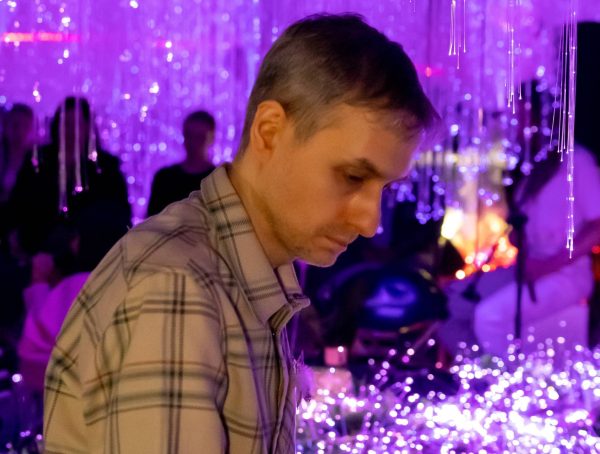
New album from Ashot Danielyan
Based in Moscow, pianist, composer and improviser Ashot Danielyan has spent more than a decade developing a musical output that …

Bryan Howell returns with new studio album
Originally hailing from central New York and now based in Nashville, Bryan Howell has spent more than a decade developing …