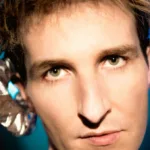







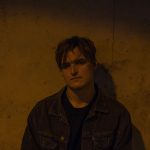


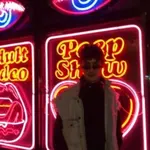








Based in New York City, Adrielle Bow Belle creates music that feels like atmosphere slowly settling over a room. Her work exists in that delicate overlap where intimacy and social commentary coalesce, balancing emotional context with an awareness of the systems shaping everyday life. Working within the worlds of alternative R&B, neo soul and cinematic indie music, she forges immersive soundscapes informed by memory, determination and life from her perspective.
Across her growing catalogue, there’s a recurring sense of tension beneath the surface, the feeling of existing in spaces where belonging is at once offered and withheld at the same time. Raised between cultures and deeply attuned to the invisible boundaries shaping how people move through the world, her music speaks from the margins while retaining a sense of compassion. Her vocal delivery plays a major role in creating her unique sound; soft, crystalline and almost weightless at times, her voice carries an emotional impact that contrasts beautifully against the minimalism of her production.
Atmospheric synth textures drift around intricate percussion while poetic lyricism tethers everything firmly to a relatable experience, resulting in music that feels suspended between dream and observation. Previous releases including “Breaking News,” “Small Talk” and “Runaway” have already established her interest in exploring the emotional consequences of systems, inherited fear and identity. Across those songs, Adrielle transforms testimony into atmosphere, creating profoundly human art that’s struck a chord with fans around the world.

Now she returns with her brand new single titled “Icey Roads,” a track that may well stand as her most distilled and cimpelling artistic statement thus far. Revolving around frosty synth textures and a slow-burning sense of momentum, “Icey Roads” plays out with remarkable patience, surrounding the listener in an icy stillness that becomes increasingly unsettling the deeper the track moves forward.
Thematically, the song examines the fragile and often conditional nature of belonging in America and Adrielle eschews turning the subject into overt spectacle or slogan in favour of allowing the emotional nature to emerge through implication, atmosphere and detail. Opened by the laid back brush of lightly gritty guitar chords, Adrielle’s layered vocal leads flicker above as the gentle pulse of bass and punch of drums injects a smooth groove.
Flowing with bright piano plinks and surging instrumental energy, Adrielle’s dazzling vocals swirl above to spin catchy melodic leads carrying poignant storytelling lyricism, resulting in a thrilling slice of engrossing alternative R&B music. Once again serving up a captivating musical moment, Adrielle Bow Belle continues to shine as an exciting artist who shows no signs of slowing down.
We caught up with Adrielle Bow Belle to find out more about her musical journey so far, her new single “Icey Roads” and what she’s got lined up for the future. Check out our interview with Adrielle Bow Belle below.

Hey Adrielle, how’s things?
I’m doing well — just trying to keep up with the whirlwind of releasing new music. It’s been a busy season, but in the best possible way.
What’s your earliest memory of making music?
I’ve been humming melodies for as long as I can remember. My earliest clear memory is being about four years old, singing along to anything I could find and making up my own little songs. Even then, music felt like a language I understood before I understood myself.
Which artists do you draw most inspiration from?
Tracey Chapman, Lauryn Hill, Mariah Carey, and Janet Jackson are huge influences for me. They all blend emotional honesty with musicality in a way that feels timeless. Janet especially shaped how I think about storytelling through performance — I may or may not know every step of the Rhythm Nation choreography.
People forget that Janet (and Michael) were incredibly political artists, but you have to pay attention to the lyrics and visuals to catch it. I love that subtlety — the message is there for those who are listening.
How else do you find inspiration for your music?
A lot of my inspiration comes from lived experience — the things I’ve survived, the things I’ve witnessed, and the things I’m still trying to make sense of. I moved around a lot growing up and dealt with instability and abuse, so I learned early on to observe people deeply. That instinct to look beneath the surface still guides my writing.
I’m also inspired by political conversations, biopics about the artists who shaped my sonic world, poetry, literature, and the quiet moments where the world finally feels still enough to hear your own thoughts.
What do you love about the New York music scene?
New York has this raw, unfiltered energy. Everyone here is hustling, creating, experimenting — and no one’s waiting for permission. You can walk into a tiny venue on a random Tuesday and hear something that completely shifts your perspective.
There’s also a real sense of community among independent artists. We’re all carving out space for ourselves, and that creates a kind of solidarity.
What would you say is the perfect setting for listeners to enjoy your sound?
Late at night, headphones on — maybe on a long walk or a train ride. My music tends to live in that space between introspection and emotion, the moments when you’re alone with your thoughts and everything feels a little cinematic.
How has your own style and sound evolved since you started out?
When I first started, I was writing from a place of survival — music was my outlet. Over time, I’ve grown into my voice and learned how to shape my experiences into something intentional.
My sound has become more cinematic, more layered, and more rooted in storytelling. I’m not afraid to blend genres or let vulnerability lead the way.
Who would be your dream artist to collaborate with?
Janet Jackson, without hesitation. She’s the blueprint for so much of what I love — artistry, performance, activism, emotional depth.
I also love that in a world where “good singing” is often measured by how loud or high you can belt, she chose to deliver powerful messages in a soft falsetto. Mariah Carey does the same. I love when a vocal feels less like an acrobatic feat and more like an emotional journey with natural highs and lows.
How did you find making your new single “Icey Roads”?
“Icey Roads” came together in a really emotional way. The first draft was recorded into old wired iPhone headphones while my cat, Poptart, was purring on my lap. I was watching videos of Minneapolis neighbors warning each other about ICE presence, and it gave me this eerie feeling that reminded me of stories from Anne Frank’s diary — danger outside, people hiding inside.
When I went into the studio to record the final version, I tracked most of the vocals late at night. Some takes were whispered, some were urgent — I let the emotion guide everything. The production already had this cold, cinematic tension, and the vocals just fell into place.
The night after I recorded that first draft, Poptart passed away. He’d been with me for 17 years and had purred through every song I’d ever written. This was our last one together, and that made me feel like the song needed to be shared.
What message did you want to get across with this release?
That fear often starts quietly. Oppression doesn’t always announce itself — it creeps in through silence, hesitation, and the moments when people are too afraid to speak.
“Icey Roads” is about that tension, that awareness, and the responsibility we have to look out for one another. It’s a reminder that the personal and the political are always intertwined.
What artist have you been listening to most recently?
I’ve been revisiting a lot of older music — Lauryn Hill, Tracey Chapman, and even the Hamilton soundtrack. The political and socioeconomic themes in those works really resonate with me. There’s something grounding about returning to the artists who shaped you.
What’s the main thing you want people to get out of listening to your music?
I want people to feel seen. Whether it’s comfort, clarity, or just the sense that someone else understands what they’re feeling — that’s the goal.
If a song of mine can make someone feel less alone, then I can say I’ve done what I was put on this earth to do.
What’s been your favourite live performance so far?
I don’t get to perform live as often as I’d like — juggling day jobs to stay fully independent is part of the journey. But my favorite performance was singing “O mio babbino caro” at Madison Square Garden for Season 9 of America’s Got Talent.
The audience gave me a standing ovation. The judges said I could clearly sing, but that they weren’t “emotionally moved enough” to put me through. They expected a dramatic reaction, but instead I smiled, thanked them, and kept my head held high as I exited stage left.
A cameraman later told me it was all part of a plan to “reject the seasoned singer” and capture the meltdown. When I didn’t give them that, the episode never aired.
That moment showed me I didn’t want shortcuts. I didn’t want a career built on spectacle. I wanted something real — even if it meant taking the long way.
Who would be 3 artists to headline your dream festival? And where would it be?
I’d want to headline alongside artists who speak truth to power — a mix of conscious hip‑hop and R&B legends who put storytelling first. Too many to name, but the lineup would be theatrical, emotional, and rooted in something real.
Location-wise? Somewhere outdoors at night, where the sky feels endless.
Do you have any advice for a new artist wanting to follow your footsteps?
There’s no such thing as an “aspiring” artist. If you make art, you’re an artist.
Find your audience — big or small — and don’t let rejection convince you otherwise. Not everyone will understand your work, and that’s okay. Everyone won’t love what you do — but you have to keep doing what you love.
Finally, what do you have lined up next?
I’m continuing to build out the world around “Icey Roads” and working on a larger body of music that expands on its themes. I’m also running an FYC campaign this year in several songwriting categories, hoping to show that there’s still space for music with a human heartbeat — music shaped by lived experience, not algorithms.
More songs, more visuals, and more storytelling are on the way.
Listen to Icey Roads below
More from Interviews
INTERVIEW: Cong-Fusion returns with new music
The story of Cong-Fusion begins back in 2006, when bandleader Ryan McCaffrey started writing the music while studying at what's …
INTERVIEW: Music by Jeremy completes debut album
Based in Banbury, UK, singer-songwriter and multi-instrumentalist Music by Jeremy has built his musical world around a deep curiosity for …
INTERVIEW: New music from Until They Burn Me
Some musical partnerships are built over time, influenced by shared experiences and an understanding of how each other works. The …