


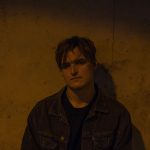


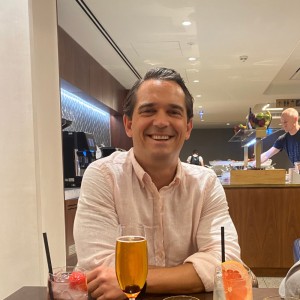


Based in Cologne, Paul Durnham has spent more than three decades working across film and music, building a creative career that brings visual storytelling and songwriting into the same space. A film producer and director as well as a passionate musician, Paul has increasingly developed songs and soundtracks for film projects over the past ten years, drawing on his experience behind the camera while continuing to develop his own musical voice.
That crossover between disciplines is central to his creative approach; he writes all of his songs himself, developing their musical aesthetic either independently or alongside fellow musicians and creative partners depending on the project. His process also embraces the possibilities of cutting edge technology, with vocals and orchestral elements using the latest generative AI tools alongside traditional production methods, while maintaining his own musical direction throughout the process.
It’s an approach that sits between established creativity and new possibilities, reflecting a career that’s continued to move across different forms of expression. Paul’s work has earned international recognition, including three nominations at the Los Angeles Music Awards for his direction of the music video for Dezmond Meeks’ “Try Me” while he also received an honourable mention at the European Music Video Awards for his overall production “I Got the Power.”
His creative path has brought him into collaboration with a range of artists, including David Garrett, Dezmond Meeks, Max Mutzke, Reamonn and Sabrina Setlur and across those projects, Paul has continued to develop an output that connects music with the wider possibilities of visual and creative production, while increasingly placing his own songwriting at the centre.

That personal side now comes into focus with his new single titled “No Safe Ground,” an alternative rock track that turns its attention towards emotional uncertainty and the search for stability when the things that once seemed dependable begin to crumble. By not viewing those feelings from a distance, Paul builds the song around the difficult experience of finding yourself without anything solid to rely on. Thematically, the song is concerned with the things that cannot be controlled, exploring the uncomfortable space between losing something familiar and trying to understand what comes next.
While the track begins with a profoundly personal experience, its context reaches towards something widely relatable, distilling the feeling of standing on uncertain ground and searching for something, anything, to hold on to. Opened by murky atmosphere and the twang of plucked guitar notes, the arrangement builds with intricate tones before the snap of rustling drums ushers in emotive vocal leads, crafting an emotive rock scene that flows with delicate melodies and poignant lyrics.
Building with chugging guitar rhythms and impassioned vocal leads, the track surges into a gripping chorus packed full of crashing drums, driving guitars and belted vocals, resulting in an anthemic musical moment that’s engrossing, memorable and highly affecting all at once. It’s a powerful release that opens an exciting new chapter for Paul Durnham on his enduring artistic adventure. Showing no signs of slowing down, his next single, “Can Someone Turn The Silence Down,” is set to land on October 9th with what’s sure to be another incredible outing from this artist on the rise.
We caught up with Paul Durnham to find out more about his musical journey so far, his creative process and his new single “No Safe Ground.” Check out our interview with Paul Durnham below.

What’s your earliest memory of making music?
When I was 12, my mate and I nicked some wooden boards from a building site and built our own electric guitars. The strings were made from fishing line and we built the pickups out of sheet metal. We painted the whole thing pretty wildly and fancy. Then we took them down to the basement and rocked out to Jukebox Jive by The Rubettes. We had a lot of fun with that.
What do you love about the Cologne music scene?
I can’t really say that much about it, as I mostly stay within my own comfort zone. That means a handful of good friends, musicians and artists who are like family to me. But generally, Cologne is pretty lively. Sometimes even a bit too lively for my taste.
You’ve spent more than three decades working across photography, film, music and visual storytelling. Where did that creative journey originally begin?
I got my first camera when I was just ten years old, and I started getting into music and art very early on. Not consciously, really, but I was fascinated by great posters, record covers, fashion photography and all that kind of stuff from a very young age.
You’ve been playing guitar and keyboard since your youth. What first drew you to making music, and how has your relationship with those instruments changed over the years?
As a teenager I was uncool, and like a lot of kids back then, I wanted to become a rock star. The Beatles, The Stones and so on. So I annoyed my parents until they finally bought me a second hand guitar. Unfortunately, it wasn’t an electric guitar but a classical one with nylon strings. Which, looking back, actually turned out to be quite a good thing, because it meant I had to learn fingerpicking right from the start.
Anyway, I stuck with it, and over the years the first proper acoustic and electric guitars followed, along with playing gigs in my first bands. Proper old school stuff. I only started playing keys much later. More by accident, really, inspired by my grandmother, who was a very good player. Somehow I found it very easy to learn. These days, I always start with the keys when I’m writing a song.
How did your work as a photographer and filmmaker influence the way you approach music and songwriting?
That has completely changed compared with how I used to work. Today, every idea, every project always starts with the sound, the harmony, a riff or a melody, something like that. The visual worlds then grow out of it.
It used to be the other way around. Most of the time there was a film script or a project story, largely dictated by the client. I would then create the soundtrack for it. Somehow, I get more energy and inspiration through music.
Do you approach writing music differently when you know a piece will accompany images compared with when the music itself is the central focus?
Yes, absolutely. If the story or the images are already there, the song or soundtrack has to breathe soul into the images or carry them. If it’s purely about the song, I usually already have a story in my head anyway. And personally, I find that much more relaxed because I can be completely focused and just get into the flow. I don’t have that feeling that I have to reach a particular destination.

How important is storytelling to you when you’re writing a song?
For me, it’s the most important thing of all. The story is always clearly at the centre of everything. Unfortunately, though, the listener or consumer hardly ever picks up on it. And I have to admit, I know that feeling myself. I hear a song that really kicks me and I don’t notice anything about the story at first. LOL.
Having worked on both sides of the camera and behind the scenes, how has your understanding of performance changed over the years?
For one thing, it has helped me understand what it actually feels like when you’re the one standing in front of the camera. But most of the people I’ve worked with actually really enjoy being in front of it. I’m not like that. I don’t need it, and more importantly, I don’t necessarily have to do it. But when I do have to step in front of the lens, I actually have a pretty relaxed time.
You’ve received three Los Angeles Music Award nominations for directing Dezmond Meeks’ “Try Me.” What did that recognition mean to you at that stage of your career?
To be honest, at first I felt pretty cool and important. But once you’ve been in this business for a while, especially in L.A., you quickly realise that a nomination, or even an award, isn’t really useful for anything.
How do you think your experience directing and shooting music videos has influenced the way you hear music?
Interestingly, not at all. When I listen to music, I’m in a world of my own, just being there, experiencing it and enjoying it. Automatically, it’s only about what I’m feeling in that particular second.
You’ve increasingly been bringing together your own music and your own film and art projects. What does that combination allow you to express that either medium might not achieve alone?
For me, first of all, it’s pure happiness that I can actually do this and that I’m allowed to. The funny thing is, the decisive part isn’t really the result itself. The picture, the film or the song. It’s the making of it that fulfils me. Just starting something and making some kind of nonsense. Playing a few chords, taking a photo, shooting some video sequences, writing some lyrics or following a spontaneous idea. Somehow, everything automatically leads to the destination.
Where did the idea for your new single “No Safe Ground” first come from?
There wasn’t really an idea. Unfortunately, there was a very frightening and shocking experience that triggered a kind of panic reflex. After two heart attacks in a row, the universe once again showed me that nothing, absolutely nothing in our lives, is safe. And even though I had already experienced something similar when I was younger, when my daughter was diagnosed with cancer, this moment was different. No Safe Ground, basically.
The song is described as deeply personal and connected to experiences of trauma. How difficult was it to turn those experiences into something creative?
In the end, it was actually very easy. I was so angry with myself that I just wanted to scream. But physically, I couldn’t. So I wrote the song, built the riff and, once I was able to, let it all out through the groove.
What does the title “No Safe Ground” represent for you?
I’ve already answered that in the previous question.
What role did the atmospheric guitars and haunting melodies play in establishing the emotional world of the track?
At the beginning, there wasn’t really a role for anything. It was purely an emotional process of trial and error until the result simply felt right.
The song ultimately seems to be about choosing to keep moving despite the absence of any guaranteed safe place. Was that sense of forward movement important to you when writing it?
No, not at all. And that’s actually a really interesting question. It was a bit like being in a delirium. Maybe the medication was actually to blame at the beginning. LOL. I just wanted and needed to get my frustration out, and somehow, after playing around with a few standard chords and doing some classic jamming, I got stuck on the riff. When I think about it now, that’s pretty wild.
After decades of putting other people’s creative ideas first, what does it feel like to deliberately give your own ideas that space?
Ultimately, it means freedom and independence. And in a way, it’s also part of my professional success. But ultimately, I owe a big part of that to my wife Simone.
After more than thirty years of making images, films and music for other people, what do you want this next chapter of your artistic life to look and sound like?
I honestly have absolutely no idea at the moment. But I’m pretty sure we’ll figure it out.
Listen to No Safe Ground below
More from Interviews
INTERVIEW: Brand new single from Queen City Rising
Raised on Long Island, New York, before eventually settling in Cincinnati, Mike Paris has built up Queen City Rising as …
INTERVIEW: Debut album from The DB Coopers
London-based newcomers The DB Coopers are a rock outfit who've found an unusual source of inspiration in one of …
INTERVIEW: Bash Co. shares new single “Dungeon”
Bash Co. is a Portugal-based songwriter whose creative life has developed largely away from the usual avenues of the music …