















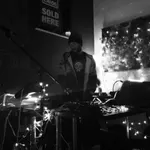


Jánnos Eolou is an accomplished artist and composer hailing from Thessaloniki in Greece, who’s made a name for himself with his multifaceted talents. As a member of the European Film Academy and the Hellenic Film Academy, Eolou’s creative prowess spans various art forms, with music being his major passion. With a background in mechanical engineering and music composition, he’s a versatile musician who’s composed for cinema, theatre and contemporary dance as well as his own standalone musical endeavours. His extensive experience as a producer, orchestrator and sound engineer further highlights his technical expertise. However, Eolou’s true focus lies in exploring the human soul and the profound impact of life experiences.
After nearly a decade of honing his craft, Eolou has unveiled his latest masterpiece, Tangos of the Magic Reality. This album represents a personal interpretation of Tango, influenced by the Magic Realism movement. Composed as a full-length concert work, the hour-long opus showcases Eolou’s remarkable talent for creating evocative compositions. The album features a string orchestra, piano and accordion, and takes listeners on a mesmerising journey through enchanting melodies and intricate arrangements.
Eolou’s transformation as a composer and individual is clear throughout the album. Like the magical mirrors depicted in the works of Borges, the musical themes morph and shift, creating a fluid labyrinth of tonalities that organically captivate the listener. The result is a collection of 18 instrumental tracks that blend classical influences with a modern sonic approach.
The album opens with “Long Summer Shadows,” a vibrant piece that sets the tone with its lively staccato rhythms and playful orchestral arrangement. As the journey unfolds, Eolou guides us through a series of stunning compositions. “Maze” dazzles with its grand melodic leads, while “Star Necklace” soars with its powerful lines and emphatic arrangement. “Elysee” exudes urgency, with brooding bass strings and striking lead flourishes, while “Peacock” delights with its rich sound and poignant writing. The album concludes with “Elysee II,” a reimagined version of the earlier track, offering a rousing and enveloping finale to the cinematic journey that the record has taken us on.
Performed by the Sofia Soloists Chamber Orchestra, Strings, under the baton of conductor Konstantin Dobroykov, and featuring Margarita Ilieva on piano and Dimitris Arabatzis on accordion, the album showcases the masterful performances of these talented musicians. The recordings were captured at Four For Music in Sofia and Cue Productions Studios in Thessaloniki, with session producer Georgi Elenkov and sound engineers Plamen Penchev, Angelia Vihrova, and Vladislav Boyadjiev ensuring a high-quality production.
With its rich textures, dynamic compositions, and masterful performances, Tangos of the Magic Reality is a sensational showcase of Jánnos Eolou’s artistic talent and his ability to transport listeners to a realm where music becomes an immersive and transformative journey.
We caught up with Jánnos Eolou to find out more about his musical journey so far and his new record Tangos of the Magic Reality. Check out our interview with Jánnos Eolou below.
Which artist first made a lasting impression on you?
It is very difficult to be sure that I remember well, but I remember listening again and again to an audio cassette of the Adagio by Albinoni. I must have been 5 or 6 and I kept on listening to the same tape for a whole summer.
What’s your earliest memory of making music?
Around the same age. Somehow, I was shaken by Adagio. I felt it as if it was mine. I identified completely, and this feeling, that I could relate to something so completely – a sound, a score, an atmosphere that I could be totally immersed, lost in – opened a whole universe for me that I wanted to explore since. I couldn’t (and still can’t) understand how this is possible, but I am a junkie of this ‘state of mind’, I live for these moments when I am totally in this musical space, ‘living music’. Often, when I get out, I am given a gift, a musical score to share with the rest of the world. I feel so grateful for this. It makes my whole life worth living.
As a composer, do you prefer writing music for the moving image, or music as a standalone work of art?
The two tasks are so different but also so connected to each other… I often find inspiration to the stories and characters in the script, and often I find myself composing for situations that I wouldn’t have imagined myself in. On the other hand, composing pure music is so much liberating, I can really experiment, try out different orchestrations, test my limits with no deadlines approaching, but becoming better in what I do, obviously makes me a better film composer and vice versa.
What would you say is the perfect setting for listeners to enjoy your sound?
I enjoy intimate venues, usually up to a few hundred people, with small orchestras, sextets, octets or up to 18-20 musicians. When I was younger, I thought that a composer shows his ability when composing for large symphony orchestras, and obviously I wanted to prove to myself by doing so. But as years go by, I am convinced that less is more, and that the perfect setting (for my work) are smaller, more intimate orchestras with musicians that perform with great virtuosity. The more the musicians the simpler the music lines. If a composer wants to compose more complex material it is necessary to compose for less musicians, and this suits me more and more, possibly because I get bored easily, and want to try out different things constantly.
How has your own style and sound evolved since you started out?
I think I have walked a long way since I have started composing. It started with simple music lines, then into rock and soon in jazz, but soon I realised that the symphonic music was my ‘magic land’. But since then (30 years ago) I have changed so much as a composer and as a person. I very rarely listen to my own music when a project is completed (except for live performances) because I do not want to repeat myself, if possible. When I listen to my music of 20-25 years ago, I often smile as if one would be looking at a photograph of his childhood. I strived since my beginning to find my own individual music voice, often ignoring styles and rules that the market dictated. I am proud of this – if I am allowed to say so – and even if I see my obvious evolution over the years, having composed in so many different styles for different projects, I can always identify to all of them, I always find my personal voice in the scores, my own truth.
How did you find making your new album ‘Tangos of the Magic Reality’?
I worked on ‘The Tangos of Magical Reality’ for more than ten years, because I wanted to create a new, ‘personal symphonic Tango language’ as I felt I was influenced by the international movement of Magical Realism.
It is a work for String Orchestra, Piano, and Accordion (Bandoneon).
In music there are no recorded works that draw their inspiration from the Magic Realism movement, perhaps because the magical and the real are difficult to define in music.
When the Magical Realism movement was born, Tangos was a music of the margins, of the oppressed, and as such Borges often uses it, as for example in his short story ‘Man in a Pink Corner’.
For me the Tango form is as intertwined with Magic Realism as Borges himself. It is a personal journey and view on art and life.
In Magic Realism the ‘Magical’ elements are intertwined with the ‘Real’ parts of the story integrally, accepted equally as valid.
For me, ‘realistic’ is the land of ‘tonality’. For those who are not familiar with the musical structure I explain: the music is made of 12 notes. (Western music, not the modal of various traditions).
These 12 notes make up the entire musical universe. They are repeated in multiples up and down creating higher pitched instruments or more bass. But the whole musical language is made up of twelve notes, semitones, like a language with twelve letters. Of these 12 notes, each ‘musical scale, key’ uses only 7 notes.
The other 5 (in any system of any tonality) are not used, because they produce sounds that do not belong to this ‘musical universe’, and are immediately heard as ‘wrong’ as ‘out of place, strange, foreign…’ If we change tonality, then another unique set of 7 notes will be used and so on. Changing from one tonality to another usually creates a ‘strange’ feeling, and is rarely used, but…
In this work, I use ‘polytonality’, the change from one tonality to another, changing the ‘musical reality’ of each part of the work. The ways I do it are the result of a lot of thinking and experimentation on many levels, technical, philosophical, aesthetic, emotional… I try to keep the focus the same, whether it’s the melodic line or the harmonic envelope and change elements in such a way that it is almost imperceptible or with the least possible ‘strangeness’, even to the experts.
In this way I introduce new ‘unrealistic’ elements into my ‘tonal reality’ in such a way that the ‘new reality’ is the ‘new tonality’, having transported the listener to a new ‘place’.
Do you have any advice for a new artist wanting to follow your footsteps?
Try to be as honest to yourself as possible. Try always to remember why you want to do this trip into the music world. There will be so many moments that you will be discouraged and disappointed that if you are not clear about your intentions, you will not last long. Music requires complete devotion of yourself. If you can live happily doing something else, do it. A music composer is a person that is incapable of doing something else, it is like a fish that requires water to survive. My ocean is music. It is not salvation. It is more like a destination, a trip. But you never know if you will arrive or what is at the other end.
Listen to Tangos of the Magic Reality below
More from Interviews

INTERVIEW: TATE SEDAR drops “Take It All Back”
Born in San Francisco, raised in London and now based in Los Angeles, TATE SEDAR has spent much of his …
INTERVIEW: Cinematic conceptual album from INYO
Coming out of Los Angeles, newcomer INYO is an artist whose musical vision is informed by a desire to explore …
INTERVIEW: Brand new single from Thomas Azier
Dutch singer, composer and producer Thomas Azier has spent the last twelve years making an impression in the European music …