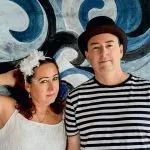






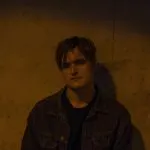


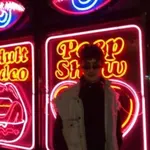

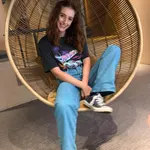




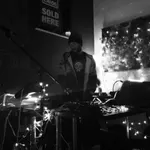

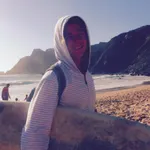
In the sphere of experimental music, Nnja Riot is the moniker of London-based artist Lisa McKendrick who uses the project to craft visionary electronic sounds. As both a celebrated painter and a synth designer, Nnja Riot’s artistic output ties various elements into an original avant-garde adventure. Originating from New Zealand and currently based in London, Nnja Riot’s diverse cultural background, incorporating Mexican and Scottish heritage, infuses her music with a global perspective.
Her sonic exploration sees her dive into the untapped potential of musical instruments, electronic components, samples and vocal expression. The artist’s live performances morph into rituals where custom-made attire and artefact become integral parts of the artistic experience.
Bringing us her latest release, she shares her brand new record Violet Fields, released via Cruel Nature, a label based in Morpeth, Northumberland that champions unconventional artists and has published almost 300 releases since 2013. With Violet Fields, Nnja Riot distils her wildly creative and highly original sonic vision across seven tracks. Using the Octatrack as a base instrument, she stitches together melodic layers, pulsating beats and raw noise energy to create a sound that flows from underground to industrial and ambient to deconstructed club music.
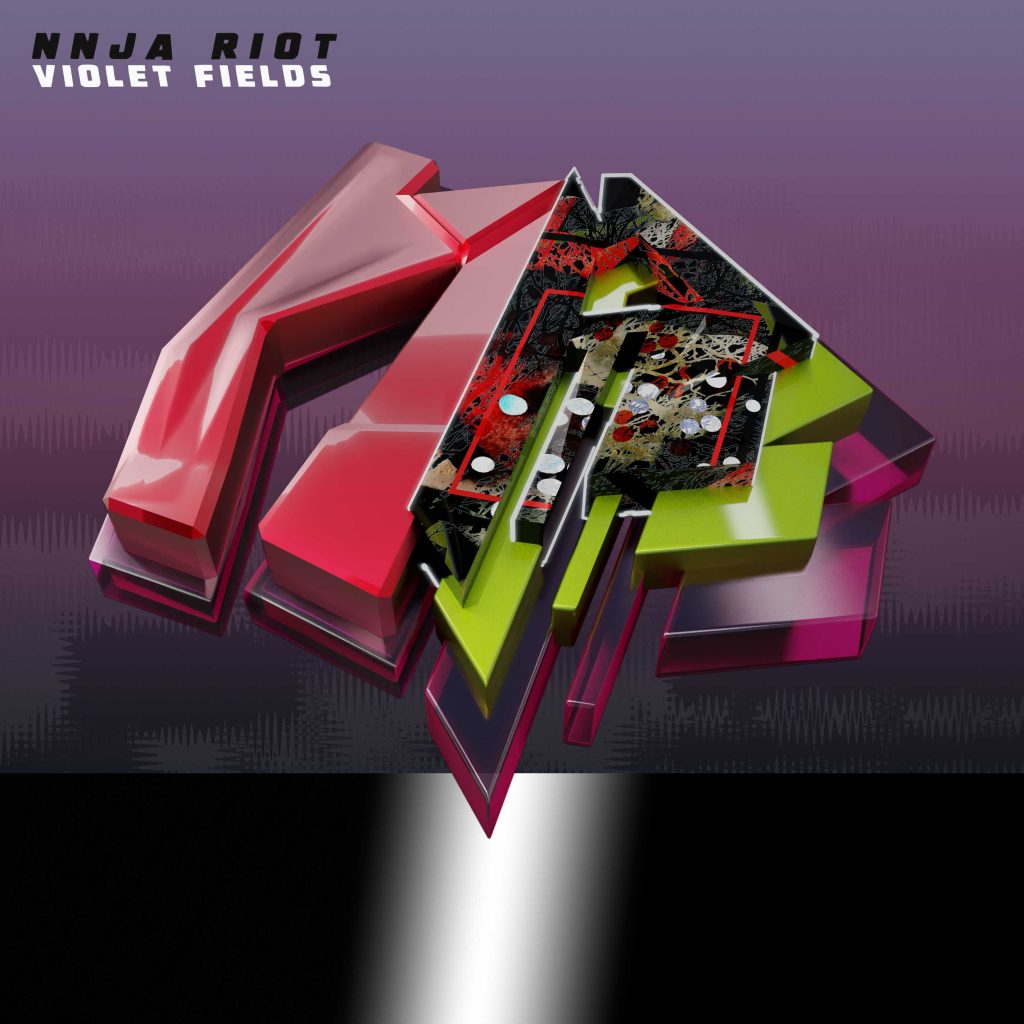
Started off with “Horror Heart,” the soft kick of the beat and gentle buzz of a synth casts a dreamy, stripped-back arrangement as Nnja Riot’s delicate vocals stretch out above. As her trademark sound begins to crystallise, warbling noises and distorted beats inject intensity as the sound of processed vocal loops ride the swell of sonic elements.
“The Evolve” brings a dark aesthetic with the rumble of bass and bleeps of machine style synth. Spinning hushed vocals above the brooding avant-garde electronic sound, crunchy effects wrap her voice in jarring sound before the track develops with a rhythmic shift that launches into a flurry of rattling percussion and pulsing synth tones.
Other highlights on the record include the title track “Violet Fields” where a haunting sonic fabric is cut from a minimalist blend of shuffling drum loops, whispered vocals and the contrast of wailing synth texture and bright notes. As Nnja Riot continues to explore the vivid musical landscape, wubbing synths bring in aggressive vocal delivery that a punk attitude to this foray into experimental synth-based music.
The album closes with “Slow Release” as the soft heartbeat of bass synth shots are capped by glistening airy textures, crafting a truly hypnotic listening experience. Eerie vocal chants glide in as the punch of drums gradually becomes more distorted, lifting the intensity of the track before floating back down to provide a mesmeric finale to this extraordinarily unique and progressive work of music that strays to the fringes of what’s come before and crosses the line into something entirely new.
We caught up with Nnja Riot to find out more about her musical journey so far, her new record Violet Fields and what she’s got lined up for the future. Check out our interview with Nnja Riot below.

What’s your earliest memory of making music?
My older brother and I went and stayed with my mums friend who had a guitar and I learned a few chords. Then when we went back home my brother found a piece of wood that was a bit like a guitar neck and he marked out all the frets in pen, (but there were no strings). We would just learn chord shapes on this piece of wood and pretend to play guitar tablature. After a few months he saved enough money from his school holiday job to buy a guitar, and I used to spend hours playing it. I would learn music from books by Neil Young or Eric Clapton etc. Unfortunately my brother died before I was able to release any of my music but I always remember the piece of wood with the frets marked out; my first introduction to the DIY approach. I think after waiting so long to get a guitar I was quite determined to learn it once I had one in the house.
Which artists do you draw most inspiration from?
I’m mostly inspired by artists I’ve seen in a live setting where I can see what they are doing and the gear they are using. I’ve been to quite a few gigs that range dramatically from the very unpredictable and diverse to more well established artists.
Where do you draw inspiration for the darkly cinematic atmospheres that permeate your music?
I’m quite interested in collected sounds and try to bring in sounds from places I’ve visited into the music. Sound recordings of a place take me back in my memory in a way that a photo cannot. I like to capture that moment in time in sound. I recorded various instruments as overdubs on the album like the violin as the it is an instrument that can add some nice earthy undertones, but I don’t play the violin in any sort of orchestral way, more in a way that adds an emotive atmosphere. I work in a way where I like to let a track go where it wants to go and often ideas surface as I’m working, I get quite inspired by the creative process – when things start to happen. Often I work best late at night when writing music but good things can also happen during the day, I just feel like there’s less distractions late at night.
Reflecting on your musical journey, what standout moments were there for you in 2023?
It was that moment when I realised my album was finished and that I was happy with it. Finishing it was probably the hardest bit for me and to get it done felt quite rewarding. I learnt a lot in the process of making it.
What do you love about the underground London music scene, particularly its experimental electronics aspects?
There are a few people over the years that have dedicated so much of their time to giving artists a platform for their music and it is often unpaid work. These people are the real gems out there and many music scenes would not exist without them. They are the unsung heroes of the space making things diverse and open to a wide range of people. Music should stay real, not only be in the hands of corporate power and greed, I think these people deserve a medal.
Everything is changing in London now and venues are under a lot of pressure financially or under threat of being bulldozed. I think thinking outside of the box for where to hold music events will be the way forward like I just played at Ealing Extranormal and it was a multiple use room rather than an official music venue but there is a small PA there.
What would you say is the perfect setting for listeners to enjoy your sound?
On a good pair of headphones or speakers while walking or driving around the city, town, farm, sand dunes wherever you happen to be. I like doing that myself when listening to music and allowing the music to be a soundtrack to the outside world, but for me it’s mostly while walking around the city. I think my music can definitely be road trip music.
Who would be your dream artist to collaborate with?
I think I’d like to be thrown together with a bunch of artists I didn’t know and we could make an impromptu album in an abandoned prison or brutalist building with an urban decay backdrop, where the building is half taken over by moss and plants making their way through cracks in the concrete. Maybe there could be some wildlife in the building, like foxes that might join in on the ambience or a crow or two flying past and a woodpecker. I think the environment would affect the music we made and it would be quite magical and dystopian.
How has your own style and sound evolved since you started out?
I started out with another project called Listen Lisse which was an experimental indie guitar based project that was mostly solo or sometimes a duo. I made 3 studio albums with that project. I think my sense of melody comes from my experience with the guitar.
Then also as a solo artist I evolved into Nnja Riot and my main focus was on making electronic and noise music. I did a lot of one-off performances with Nnja Riot and had an approach of using many different new technology devices like phone apps, game boys, contact mics, guitars, violins, vocals and DIY synths. There were things like Noisevember which I was participating in a few years ago, that got me doing all sorts of experiments with any instrument or device I had to hand.
I have incorporated some elements of songwriting in “Violet Fields” but it’s a completely different process to anything I was doing before as I’m using sequencers, samples and field recordings which is expanding much further than my previous guitar based music. With this new album I focused a lot of making the beats and using instruments and melody to make interesting song structures, while including noise elements.
How did you find making your new album ‘Violet Fields’?
I really enjoyed composing the music as I would start out with a basic song form and then keep working on it and tweaking, changing things, adding things and doing this process over and over. I tried out songs live to see what they sounded like and this helped me with editing songs and to understand what else the track needed. When I felt I had enough material for an album I started to record it to see how it sounded. I was pretty happy with the initial recordings which were recorded on a 16 track digital recorder in a live sort of way. I try and record as live as possible and then add overdubs later if necessary. Most of the song structure was already written in the programming and sequencing that I’d done prior to recording.
I’m not that keen on recording music with each instrument on a different track. I like there to be a live sounding quality so I recorded what I had composed on the Octatrack in one take while recording the vocals simultaneously. So the bulk of the music was on one track and once I had recorded it I could not edit it except with EQ and the vocals were on separate tracks. I liked having that limitation when mixing. Of course what I recorded had to sound good to me and it was only when a track was ready that I even thought about putting it down and recording it. If it had sounded bad I just would have deleted it and kept working on it until it sounded the way I wanted it to sound.
It’s not like the album didn’t have it’s challenges or setbacks. The neighbours decided to do a 5 month long building works project a few months after I started the album and this gave me very little headspace for listening to anything, it was very loud as they were demolishing part of the house. In a way this was kind of inspirational as I often spent all day outside exploring beaches and forests, shooting film footage and doing field recordings as a way to escape the noise during the day. Interestingly there are some references to walls being smashed out in the song “Violet Fields” but it was also referencing the images we were being shown on the news of buildings being torn apart by war or earthquakes.
I enjoyed being able to have breaks away from my recordings then go back with fresh ears and then I was like ooh I know exactly what to do with this track now. Often tweaking can be minimal but I only like to leave in what is necessary in a track and lose everything else that doesn’t really help the track in any way.
What message did you want to get across with this release?
I like the listener to interpret their own message, but in this album I am exploring some themes such as: the ambivalence of adapting to AI, the horror of war and the disconnect to nature as a result of our modern lifestyle and technology. I explore certain themes but most of my music can be read in multiple ways. There is an attitude in my music that has a rawness which which to me seems to be about embracing all aspects of your experience whether they be nice or gritty; I like a bit of edge, there might be a message that it’s okay to get messy and be yourself. Recently someone said my album was “music that is good for the soul” and I’m happy with that.
What have you been listening to most recently?
I have been listening to self-released music or music with independent labels and that includes some people I know who have released music recently, other stuff on Cruel Nature Records and also I’ve been listening to a few independent radio stations in other parts of the UK who have been playing my music and other artists from around the globe which has been interesting, most recently Loose Canon on 6TR and Resonance RM. When I was working on my album I found myself not wanting to listen to music much but in the last few weeks I’ve been listening to a lot and in the last couple of weeks probably Nurse With Wound at a friends house and Chelsea Wolfe because she has a new release which I’m enjoying.
Where would your your dream festival be and who would headline?
Chauvet Cave in France, which are the caves with all the cave paintings in the film Cave of Forgotten Dreams. Headlining would be Dead Can Dance and Nico because their music would really suit it. (I know the caves are inaccessible but this is a what-if scenario).
What do you hope listeners take away from experiencing your music?
The same thing I get out of listening to other peoples music – to have a sonic experience. Hopefully they will listen and experience it, and it might alter their thought process for a while or add colour to their day or give them a new perspective on something. I like to think I am sharing or contributing to the mysteries of the universe. It’s like with music you can temporarily step into someone else’s consciousness for a while and for that short period there is a connection of sorts and there are many ways to connect with music, or there are many themes and emotions to explore.
What’s been your favourite live performance so far?
I think that the last few performances I’ve done have been my favourite. I played at IKLECTIK just before they were closed down and also at the last Skronktronic at New River Studios before that came to an end. I think they felt epic because they were such an important part of my development as an artist and they were reaching a hiatus.
For aspiring musicians interested in exploring the realm of underground music, what advice would you offer them based on your own experiences?
Do what you can to stay sane as music that is soul searching can take you to such highs and lows that it’s good to be prepared for the lows as well as the highs. Buy the music of people around you or do cassette and CD swaps and keep music real and personal. Very few people make it to the top but we can have a grass roots approach and that is maybe more important.
As soon as you throw yourself at the arts, there are things that throw themselves back at you, stay strong and persevere. It’s an endurance test and only the craziest people survive, ha ha, joking. I feel like there’s a tension between making music or art, and the mundanity of the everyday, so you have to turn the everyday into art- which can be hard when you are wandering around in your tracksuit pants and dressing gown. You don’t have to look how you do on stage all of the time, but some people take issue with that and think you should be 24/7 under stage lights and glowing in the dark emanating shards of light. Honestly, people around here go to the corner shop in their gnarly slippers and pj’s and that’s cool cause there’s nothing I like more than seeing people walking down the street inappropriately dressed.
Finally, what do you have lined up for the rest of 2024?
I would like to tour for some part of 2024 maybe a week or two here and there I’m quite keen to see beyond the UK this year. I am just getting a few things sorted before I embark on this dream. I also have some new material for another album which I’m continually working on and playing live at gigs. My next gig is 30th April at Folklore Hoxton and the lineup is: Roadman Safari / Too Many Things / NNJA RIOT.
Listen to Violet Fields below
More from Albums
New full-length record from Divergent
While some musical ambitions take a little longer to find their moment, the journey for Iowa-based trio Divergent has been …
New album from Ashot Danielyan
Based in Moscow, pianist, composer and improviser Ashot Danielyan has spent more than a decade developing a musical output that …
Bryan Howell returns with new studio album
Originally hailing from central New York and now based in Nashville, Bryan Howell has spent more than a decade developing …