


















Ultramarine is an enigmatic duo hailing from Canterbury in the UK who have been a consistence presence in the music world since their inception. Formed by Paul Hammond and Ian Cooper, Ultramarine’s sound refuses to be boxed into any one genre or style, instead cutting together threads of electronica, ambient, techno, folk and 70s prog rock influences from artists like Soft Machine, Caravan, and Robert Wyatt. The latter even graced their 1993 album, United Kingdoms, with his unique talents.
Despite their intermittent recording schedule in the 90s and a decade-long hiatus, Ultramarine re-emerged in 2013 with This Time Last Year, reasserting their distinctly British sound and innovative musical approach. Their journey through the musical landscape has been anything but linear. Starting with the avant-garde band A Primary Industry in the mid 80s, Hthe pair shifted into Ultramarine, debuting with the Folk LP in 1990.
Their second album, Every Man and Woman Is a Star, released in 1992, positioned them as pioneers of electronic music. Since then, albums such as Bel Air in 1995 and User’s Guide in 1998, saw them evolving and experimenting with their sound, flirting with trip hop stylings and mainstream electronica.
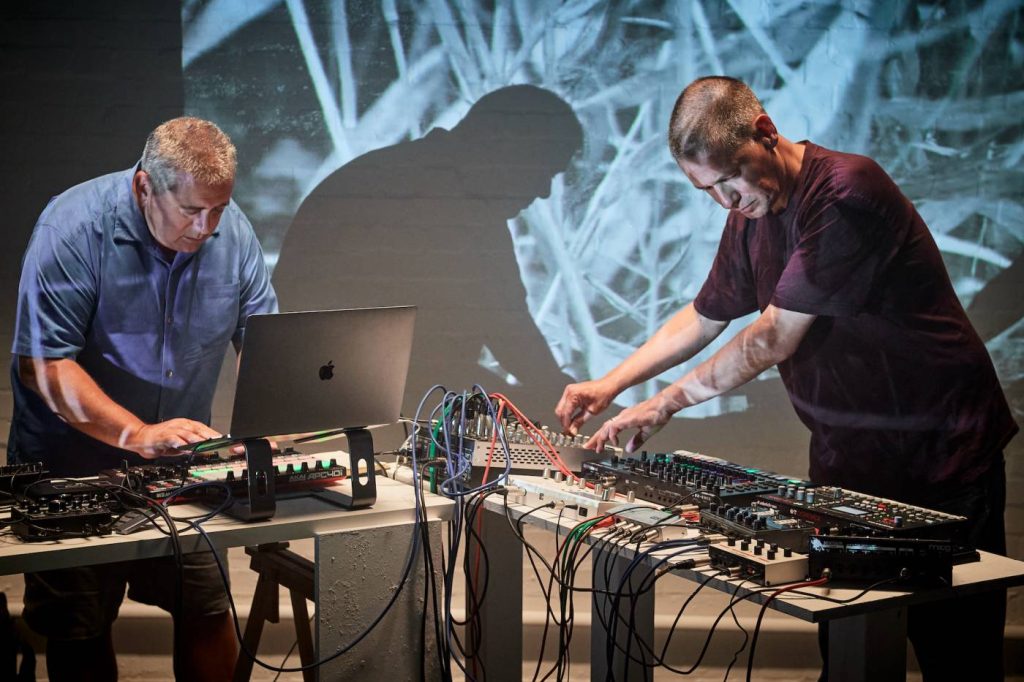
Their career has been marked by notable collaborations, including work with Robert Wyatt, Kevin Ayers and Anna Domino, and tours with icons like Orbital and Björk. After a period of silence, they returned with a creative burst in 2011, culminating in the 2013 album This Time Last Year. Their 2019 release, Signals Into Space, was a collaborative effort featuring saxophonist Iain Ballamy and percussionist Ric Elsworth, further showcasing their ability to blend electronic elements with organic instrumentation.
Last year, Ultramarine released the critically acclaimed Send and Return via the Blackford Hill imprint. This six-track record is a testament to their enduring creativity and pioneering spirit. From the jumpy beats and spacey synth textures of opening track “Mirosa” to the expansive sonic journey of closing track “Dawn” which flows from the delicate flute flutter and dreamy aesthetic to the pulsating dance-focused synth grooves across its eight minute odyssey, their latest album is a sensational example of their pioneering sound and endless creativity, wrapped up in slick sound design from start to finish.
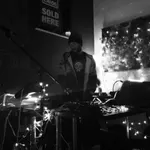
Fans now have a rare opportunity to witness Ultramarine live, as they have announced their only London show of the year at Water Rats on the 27th July. This performance promises to be a spectacular showcase of their live capabilities, blending their studio precision with the spontaneous energy of live music. Joining them are electronic maestros Alphabox and Riigs, ensuring a night of cutting-edge music and immersive experiences. To grab your tickets for this unmissable musical experience, you can find more information via this link.
We caught up with Ultramarine to find out more about their musical journey so far, their upcoming live show in London and what they’ve got lined up for the future. Check out our interview with Ultramarine below.

Ultramarine’s music has evolved from the early days of “Every Man and Woman is a Star” to your latest release, ‘Send and Return.’ How have your influences and musical techniques changed over the years, and what has remained constant in your sound?
Our influences have always been pretty broad; all sorts of dance music, electronic, ambient, jazz, Latin, pop, acoustic, and experimental music have fed into what we do. Nowadays, I think we draw on all of this but try not to be literal about it; we try to let the music happen to us rather than forcing anything or consciously referring to an influence. There’s a common approach to melody that’s been consistent throughout, and I think that’s partly been determined by our technical limitations as musicians.
Throughout your career, you’ve seamlessly blended various genres such as techno, ambient, and folk. How do you balance experimentation with maintaining a cohesive musical identity across different albums and projects?
As you say, the style or genre of our records has been quite broad; everything from vocal songs to ambient pieces. I think we’ve come to trust that whatever we do will come out sounding like Ultramarine, so whatever style we’re working in, there’s a consistency regardless of the setting.
Which artists do you draw most inspiration from and how else do you find inspiration for your music?
All sorts, really. It’s difficult to pick out specific artists. Personally, I find great inspiration in pop music—something I think is beyond us and I can only sit back and admire. I love ’80s pop music and post-punk in particular; Prefab Sprout, Scritti Politti, Style Council. I find it very optimistic and hopeful music. Beautiful songwriting and production with an underlying anger and political attitude. Aside from that, artists like Harold Budd, Vini Reilly, and Eno have always been a great influence on us.
Generally, I think we have quite an emotional response to the music—it’s about channeling a sense of love, warmth, or wonder. The inspiration is often just born out of the music-making itself—the machines, the sounds; what they make us think about either in an abstract way or as a more direct music cultural reference. For example, the sound of an 808 snare drum means something to us—it has a music culture reference—that’s an inspiration and is part of the language we’re working with.
How do you feel the music industry has changed over your career? What do you currently love about the UK music scene?
It’s changed massively. When we first started making music in the mid-80s, we were part of the independent scene of small labels, fanzines, the John Peel show, great local record shops and gigs, and the weekly music press; the NME in particular. It was quite easy to find like-minded people and to develop as a band. Later, in the early 90s, we were on Rough Trade for a while and then signed to Warners, so we got the full major label experience which was great on one level—enabling us to live off the music and go on tour—but inevitably ended in the usual frustration. Nowadays, it’s so much more difficult financially—I can’t imagine making a living from music—but I think the general music culture is fantastic. I feel there’s a broader appreciation of all types of music and a really healthy revaluation of older music. I like the way the boundaries of contemporary and older music have been blurred—the reissue scene is very interesting and organizations like NTS have contributed to the culture massively.
Ultramarine’s live shows are known for their unique atmosphere and energy. How do you approach translating your intricate studio recordings into engaging live performances?
We used to mainly play as a full band in the ’90s but found it increasingly difficult to do the music justice as the production of the records got more detailed and complex. We stopped playing live for a long time but started again about ten years ago. The technology has completely changed since the old days and we’ve now got a mainly hardware-based set-up that enables us to improvise with the basic components of each song. We wanted to get away from rigid renderings of the records and now have a much more performance-based approach which is much looser.
You’ve toured with acts like Orbital and Björk in the past. What have you learned from these experiences, and how have they influenced your approach to live performances today?
They were great experiences and we’d love to be able to do some sort of touring again one day. I’m not sure that period has too much of an influence on our live work now. It’s a different approach nowadays; more about trying to find a connection to the particular venue and audience. It was more of a traditional band-on-stage thing before which felt quite disconnected from the audience in some ways.
With a performance history spanning several decades, how do you keep your live sets fresh and exciting for both long-time fans and new audiences?
Mainly by working with the improvisational approach I mentioned. We tailor the set for each show depending on the nature of the event. They’re definitely exciting from our point of view as we never quite know where they’ll end up! We also bring in other musicians for some shows which is something we’ve always done.
What can fans expect from your upcoming show in London next month?
Our live set is constantly evolving and we’re hoping to include a few older tracks in this set, including a few from “Every Man and Woman is a Star” and “A User’s Guide.”
Do you have any advice for a new artist wanting to follow in your footsteps?
Embrace your limitations as a musician or producer. For me, the most interesting music has always been made by musicians that can only really sound like themselves or are essentially non-musicians.
Finally, what do you have lined up for the rest of 2024?
We’ve got a couple of reissue/archival records in the works which should see the light of day in 2024 or early 2025. The first is a reissue of our 1998 album “A User’s Guide” which is coming out as a double-vinyl edition on the Swiss label WRWTFWW. Then we have an album of previously unreleased material from around 1996/7, titled “Routine,” on the Scottish label Blackford Hill. More shows hopefully in the autumn and in the first half of 2025.
Listen to Send and Return below
Photography credit: Andi Sapey
More from Interviews

INTERVIEW: TATE SEDAR drops “Take It All Back”
Born in San Francisco, raised in London and now based in Los Angeles, TATE SEDAR has spent much of his …

INTERVIEW: Cinematic conceptual album from INYO
Coming out of Los Angeles, newcomer INYO is an artist whose musical vision is informed by a desire to explore …
INTERVIEW: Brand new single from Thomas Azier
Dutch singer, composer and producer Thomas Azier has spent the last twelve years making an impression in the European music …