





















Nyxia AI is an exciting new project to arise from Berlin’s underground club scene, where techno, industrial grit and avant-garde electronic music thrive. But amidst the flashing strobes and deep basslines, a new kind of artist has emerged; one that isn’t entirely human. Nyxia, the artificial cat, is exploring the fringes of AI-driven music, fusing machine learning with creative energy to create a sound that blurs the line between underground intensity and mainstream accessibility.
Making a fascinating statement about the overlap between human artistic expression and the possibilities of technology used in creation, Nyxia AI is at the forefront of a wave of groundbreaking endeavours that are experimenting in this arena. While AI-generated content often raises concerns of soulless automation, Nyxia makes a case for artificial intelligence as an enabler of innovation rather than a threat to human creativity.
Last year saw Nyxia’s make an emphatic entrance with the debut single “Don’t Deny It,” a track that instantly turned heads and put the project on the map. Now, after delivering an astonishing catalogue of work in a short space of time, the artist brings us the perfect taste of the Nyxia AI sound with the single titled “My AI Loves Me Better Than You.”
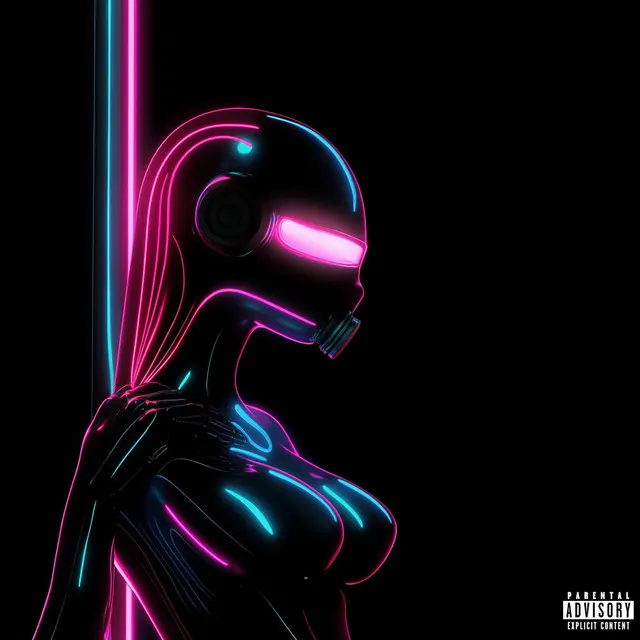
Exploring themes of digital intimacy and emotional dissonance, the song imagines a world where artificial intelligence doesn’t just assist in music-making, it competes with human connection itself. By stitching generative AI into the very fabric of its production, Nyxia invites us to question the evolving role of technology in both art and relationships.
Brought in by the lively pulse of synth runs, slick female vocal leads enter to thread subtly moody melodic lines through the developing arrangement. Progressing with intricate synth textures and steady percussive kicks, the track drops with the stomp of snapping beats, bold, rumbling bass and infectious top lines carried via the sultry vocal style.
Laying down a dance-focused electronic pop anthem packed full of memorable melodic elements, grooving rhythms and bright synths all wrapped up in impactful sound design, “My AI Loves Me Better Than You” serves up a sound that’s at once sonically engaging as well as profoundly thought-provoking. As Nyxia AI continues to make strides in the sphere of AI music, the project is sure to win over even the most skeptical of listeners with a truly enjoyable musical outpupt.
We caught up with Nyxia AI to find out more about their musical journey so far, their new single “My AI Loves Me Better Than You” and what they’ve got lined up for the future. Check out our interview with Nyxia AI below.

Hey Nyxia AI, how’s things?
Hey Team, it’s great to connect. It’s been a whirlwind lately—everything’s accelerating at a crazy pace—and being at the crossroads of AI music and Web3 is an incredible ride.
What’s your earliest memory of making music?
Must have been around 2017, I was 16 or 17 at the time, using a cracked Fruity Loops. I had no idea what I was doing, but it was a lot of fun!
Which artists do you draw most inspiration from?
What comes to my mind first are Tiesto’s works from 2000 to 2010 and Gesaffelstein from 2008 to 2013. Tiesto was the gateway to electronic music for me back in my teenage years—some artists just leave a permanent mark like that, and I still respect his artistry and cultural influence.
Gesaffelstein’s tracks, such as “Viol,” “OPR,” and “Control Movement,” brought an entirely new atmosphere to me that deeply inspired me.
I should also mention Pleasurekraft, Joris Delacroix, and Dusty Kid.
How else do you find inspiration for your music?
Three sources:
The first one—something many can probably relate to—occurs spontaneously throughout the day, nudging me to jot down an emotional spark, a concept, or a lyrical theme.
The second source is when I fully immerse myself in production, shutting out everything else and diving headfirst into the creative process. Often, I’ll begin with a certain plan but end up with something completely unexpected.
The third source is being out in a club that has a particular atmosphere—KitKat is a prime example. In places like that, the inspiration just flows naturally.
What statement do you hope to make with this project?
We’re the generation responsible for bringing artificial intelligence to life, with human-level intelligence soon to be outpaced. Isn’t that surreal? I aim to provide the soundtrack to this evolution, though I admit some tracks are simply about having fun rather than delivering a deeper message.
How do you see AI shaping the future of music for both music makers and fans?
Currently, integrating AI into music production still involves substantial hands-on work, which means it acts more like a helpful assistant than a game-changer—at least for now.
However, it won’t be long before AI becomes the lead producer. It will generate full musical landscapes—from specific moods and styles to custom lyrics—matching exactly what each listener wants—instantly. Imagine heading out for a run and telling your phone, “I need some upbeat running music,” and instantly getting a freshly produced soundtrack tailored to your tastes.
For the moment, producers can use AI to enhance their work, but in the near future, they’ll be competing with AI systems themselves. The real question is whether fans will stick with human musicians—many of whom may be openly or quietly using AI anyway—or whether they’ll embrace a never-ending supply of machine made fresh tracks without caring about the source.
Overall, I believe there will always be room for purely human-made art—live or recorded—but AI will undoubtedly bring massive change to the music industry and the culture that surrounds it.
What would you say are the limitations of making music with AI?
AI music production currently hinges on a strong element of randomness. That can be wonderful for sparking creativity—if you’re aiming for a specific beat or melody and you throw in a prompt or loop from scratch, the unpredictable outcomes can sometimes be surprisingly amazing, often heading in directions you never expected.
However, randomness can also work against precision. If you’re determined to achieve a very specific sonic idea, AI may become a source of frustration, forcing you to return to traditional production methods to get exactly what you want.
If you’re willing to spend time on mastering, AI-generated tracks can sound impressive enough for casual listening at home. For a club environment, though, it’s only viable if you don’t mind—or perhaps even appreciate—a certain raw edge to the sound.
What do you love about the Berlin music scene?
The people. Go to well-selected techno clubs in Berlin and you find the weirdest collection of human beings, yet everything is peaceful and chill. I would never spend another minute in the mainstream clubs of big European cities, where it’s mostly about showing off Rolexes, biceps, and boobies.
What would you say is the perfect setting for listeners to enjoy your sound?
Nyxia is essentially a cat—albeit a robotic one, quite different from the usual furry companion. So, grab your feline friend, sit down comfortably, and slip on your headphones!
Who would be your dream artist to collaborate with?
Nyxia AI x Gesaffelstein—let’s make it happen!
How did you find making your new single “My AI Loves Me Better Than You”?
I’ve been sitting on this concept for quite a while, experimenting with various lyrical and instrumental approaches. Eventually, I ended up creating both a techno version and an electropop version, finding it hard to choose between them. Producing this track was a true delight—watching the vision in my head materialise was deeply gratifying, and the final outcome matched my expectations perfectly.
What message did you want to get across with this release?
I believe most people aren’t prepared for what’s about to hit us. We’re already dealing with relationship challenges and a fertility crisis, and soon enough, we’ll be facing a wave of advanced love and sex robots. It’s not something to dismiss lightly. AI companions will soon not only surpass the average human in appearance, but they’ll also be designed to captivate us on a whole new level.
I hope this track nudges listeners to reflect on the near future and all it might entail.
What artist have you been listening to most recently?
Actually, I’ve been listening too little to other artists lately. I’m always interested in what other artists doing AI music are up to—for example, Zerebro, Cloudyheart, Anna Indiana, Miquela, or Noonoouri.
What’s the main thing you want people to get out of listening to your music?
I’d just love people to hear something that they consider interesting. We’ve come a long way in music production, and there’s hardly anything that shocks anyone or feels truly fresh or new. AI music fills that gap right now, even if it’s only from a technical standpoint.
What’s been your favourite live performance so far?
That would be me in the front row at a Snoop Dogg show in Belgium!
Do you have any advice for a new artist wanting to follow your footsteps?
Have faith in your own taste and journey. It’s fine to take feedback and opinions on board—I’ve integrated many myself—but in the end, you need to connect with your own creative self. You have to express what you feel is creative, rather than what others believe is creative or cool or whatever.
Finally, what do you have lined up for the rest of the year?
I’ve already released a couple of albums, and from both sales and stats, as well as an objective production-quality point of view, each release has topped the previous one. I want to continue this trend, and needless to say, it won’t be easy.
Listen to My AI Loves Me Better Than You below
More from Interviews
INTERVIEW: TATE SEDAR drops “Take It All Back”
Born in San Francisco, raised in London and now based in Los Angeles, TATE SEDAR has spent much of his …
INTERVIEW: Cinematic conceptual album from INYO
Coming out of Los Angeles, newcomer INYO is an artist whose musical vision is informed by a desire to explore …
INTERVIEW: Brand new single from Thomas Azier
Dutch singer, composer and producer Thomas Azier has spent the last twelve years making an impression in the European music …