



Russ Lorenson is a name that become synonymous with timeless charm, impeccable musicianship and a passion for the jazz tradition. Based in San Francisco, over the last two decades, he’s earned a reputation as one of the Bay Area’s finest jazz vocalists, winning over audiences with his warm tenor vocals and pure charisma. From commanding the stage in a grand concert halls to serenading a more intimate cabaret crowd, Russ channels the spirit of classic crooners while adding his own modern touch.
With deserved comparisons to legends like Tony Bennett, Mel Tormé and Matt Monro, he’s rightfully earned the title of “San Francisco’s Favourite Crooner.” Since making his club debut back in 2005, Russ Lorenson has continued to enjoy a remarkable career, earning multiple MAC Award nominations and drawing praise from esteemed publications like Downbeat, The Los Angeles Times and The San Diego Union-Tribune.
With his studio releases, he first captured his sound on his 2006 debut record, A Little Travelin’ Music, which he followed up with two holiday records. However, for Russ, jazz is not just about nostalgia, it’s about evolution and he challenges the idea that The Great American Songbook ceased to grow after 1959, proving that contemporary compositions can stand alongside the classics. This vision comes to life in his album Standard Time: Live In New York, initially recorded live in 2008 and eventually getting its release towards the end of 2023.
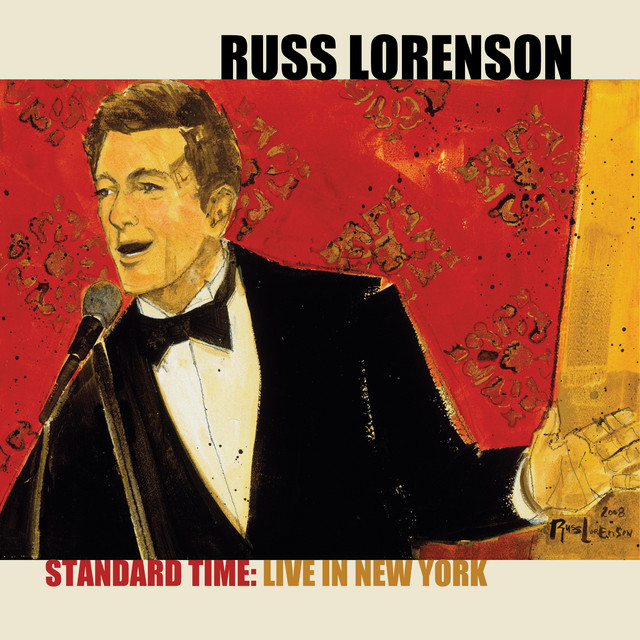
The record breathes new energy into modern jazz standards, featuring songs from the likes of Michael Feinstein, John Pizzarelli and Harry Connick Jr. Starting off the record with an introduction to the crowd, a rapturous applause and fluttering piano notes welcomes Russ who’s rich solo voice delivers the smooth intro lines to his rendition of Broadway composer Andrew Lippa’s “Raise the Roof.” As the arrangement builds with sustained piano chords and bouncy stabs, the brush of drums and walk of bass ushers in a playful jazz scene where flickering piano lines dance alongside Russ’ stunning vocal performance, instantly transporting listeners to a smokey jazz lounge.
Putting his own spin on Michael Feinstein’s “Swing is Back in Style,” the upbeat flourish of delicate piano, shuffling drums and intricate guitar work underpins Russ’ superb vocals as he spins the lighthearted lyricism with charm and flair in equal measure. Russ’ version of “I’ll Dream of You Again” by Harry Connick Jr. is another highlight, balancing respectful tribute to the original with his own musical identity. His smooth phrasing and expressive delivery infuse the song with warmth, while the arrangement subtly enhances the emotional impact of his vocals. It’s a performance that bridges eras, proving that Russ Lorenson is not only preserving jazz traditions but actively shaping their future.
“Danglin'” offers a stellar showcase of Russ’ moving vocal ability, framing his voice in a delicate, stripped back arrangement of dreamy clean guitar tones. With an exquisite take on Peter Cincotti’s “I Changed The Rules,” his musical magnetism shines on a buoyant jam that sees Russ serve up a dynamic vocal performance amongst the incredible display of musicianship from his band.
Closing the record with “It’s Raining Memories,” Russ lays down a smouldering jazz number to offer a heartfelt and soothing finale to his sensational live album, bringing the release to a delightful conclusion and leaving a lasting memory of his extraordinary vision and talent. We caught up with Russ Lorenson to find out more about his musical journey so far, his live album Standard Time: Live In New York and what he’s got lined up for the future. Check out our interview with Russ Lorenson below.

What’s your earliest memory of making music?
Like a lot of kids, I started my musical journey in school choirs. When I got into junior high, I was fortunate enough to join the music program there and the teacher had a background in both classical music and musical theatre. In addition to singing legitimate classical choral music, we also put on a musical each semester, so I was exposed to composers like Brahms alongside Frank Loesser and Lerner & Loewe. My memories of that time, of creating beautiful music with my friends, taught me the importance of collaboration. That feeling of connection through music stuck with me.
Which artists do you draw most inspiration from?
I’ve always been inspired by the great crooners—Sinatra (of course), Tony Bennett, Mel Tormé and my idol Bobby Darin. But also artists like Judy Garland and Ella Fitzgerald, who had such effortless phrasing and deep emotional authenticity. More recently, I’ve found inspiration in artists like Anthony Strong, Kurt Elling, and Susie Arioli who continue to push vocal jazz forward while respecting the heritage.
How else do you find inspiration for your music?
A lot of my inspiration comes from great songs themselves. I love diving into the stories behind them—how and why they were written, what was happening in the world at the time, and what they meant to the original artists. That research and connection to history often sparks my approach to interpreting a song.
What was your highlight of the year for 2024?
Certainly releasing Standard Time: Live In New York was definitely a big one! It was a time capsule of a really special moment in my career, and I was thrilled to finally share it with the world. Beyond that, I’ve been focusing on expanding my work as a vocal jazz playlist curator, which has been a great way to stay connected to the music world.
What do you love about the San Francisco music scene?
San Francisco has always had a vibrant, eclectic music scene. What I love most is the sense of community—musicians really support each other here. The jazz scene, in particular, has always been welcoming and full of incredible talent.
What would you say is the perfect setting for listeners to enjoy your sound?
I think my music is best enjoyed in an intimate setting—somewhere cozy, with a good cocktail in hand. Picture a dimly lit jazz club, or maybe a quiet evening at home with an album playing and a fire crackling in the background.
How has your own style and sound evolved since you started out?
Early on, my approach was very much influenced by my background in musical theatre—big, expressive, and sometimes a little too “on the nose.” Over time, I learned to trust the subtlety in jazz and to let the lyrics do more of the heavy lifting. My phrasing became more natural, and I developed a style that feels more like a conversation rather than a performance.
Who would be your dream artist to collaborate with?
If I could go back in time, working with arrangers like Nelson Riddle or Billy May would have been a dream. In terms of singers, it would have to be Bobby Darin or Judy Garland. But if we’re talking about today, I’d love to collaborate with Anthony Strong or Jane Monheit—two artists who truly understand the art of interpretation.
How did you find making your new album Standard Time: Live In New York?
That album was recorded over 2 nights in 2008 at The Metropolitan Room nightclub in New York City, and it was one of those magical times where everything just clicked. At the time, I had no idea we were capturing a moment I’d treasure so much years later. Digging the recordings out of the vault after 15 years and preparing them for release brought back a flood of memories—it was both nostalgic and deeply gratifying. And again, brought home to me the power of connection through music. From the sound technician who recorded it those nights (you can hear him introduce me on the first track) to the guys in the band, to the audiences that came to the show to my producer who helped bring the album to life – all of us are connected by the love of the music.
What message did you want to get across with this release?
Back in 2007 I was touring with a show I created called “Standard Time,” based on the premise that The Great American Songbook hadn’t stopped being written in 1959. My contention was (and still is) that great songs were still being written, just waiting for exposure by thoughtful artists and musicians. Additionally, with the live album, I wanted to share an authentic moment—something raw, unfiltered, and full of life. It’s not a “perfect” album in the sense of studio polish, but that’s exactly what makes it special. It captures the energy of a live performance, the interplay between musicians, and the spontaneity that makes jazz so exciting.
What artist have you been listening to most recently?
With my playlist curation, I’ve been diving into a lot of new (or new to me) vocal jazz artists, many of whom are just incredible! But my “everyday” listening is to a wonderful Internet radio station called “The Great American Songbook Radio Station.” I love their mix of vocal jazz, playing artists from the 1940s through today. A few times a week I’ll be surprised and have to really stop to listen because I’ve heard something new to me, even from the greats of the past. The man who runs the station has an incredible recording library.
What’s the main thing you want people to get out of listening to your music?
What I hope sets my music apart is its deep connection to storytelling and emotional authenticity. As a jazz vocalist, I strive to bring a unique interpretative depth to every song, balancing reverence for tradition with a personal, contemporary touch — like a late-night conversation with an old friend, filled with warmth, nostalgia, and unexpected turns.
More than anything, I hope my music evokes connection. I want listeners to feel seen, to feel something stir inside them — whether it’s longing, joy, or that bittersweet ache that comes with remembering something beautiful. If a song of mine becomes part of someone’s personal soundtrack, then I’ve done what I set out to do.
What’s been your favourite live performance so far?
There have been so many great moments. But I think my favourite was opening for the late Eartha Kitt. I was asked to do a 30-minute set for a gala in Austin. I was just in the midst of creating a show dedicated to the life and music of Tony Bennett (a show that I eventually toured for over 10 years), and we decided to try some of the material out at this event. Ms. Kitt was so lovely and encouraging and it was just the thrill of a lifetime. At the time, she was very ill from cancer, but this wasn’t public knowledge. Backstage, she seemed so frail and tired. But when she got on stage, you would never know that anything was wrong – she was a powerhouse. Great memories.
Who would be 3 artists to headline your dream festival? And where would it be?
Let’s go with Anthony Strong, Susie Arioli and Catherine Russell—because if we’re dreaming, we might as well go big! And the setting? Somewhere intimate but with incredible acoustics—maybe a restored Art Deco theatre with just the right amount of old-school charm.
Do you have any advice for a new artist wanting to follow in your footsteps?
Know your craft, study the greats, and then find your own voice. Authenticity is what makes an artist stand out. And most importantly, build a community—music is meant to be shared, and the relationships you create along the way will be just as valuable as the music itself.
Finally, what do you have lined up for the rest of the year?
I’m continuing to focus on curating vocal jazz playlists, supporting other vocalists, and working on some new creative projects—including a couple of book ideas that have been percolating for a while. But the biggest project is a 20th Anniversary re-issue of my first 2 albums, both released in 2006. We’re re-mixing and re-mastering, and even re-recording one of the songs with a bigger arrangement than was on the original release.
Listen to Standard Time: Live In New York below
More from Albums
New full-length record from Divergent
While some musical ambitions take a little longer to find their moment, the journey for Iowa-based trio Divergent has been …
New album from Ashot Danielyan
Based in Moscow, pianist, composer and improviser Ashot Danielyan has spent more than a decade developing a musical output that …
Bryan Howell returns with new studio album
Originally hailing from central New York and now based in Nashville, Bryan Howell has spent more than a decade developing …