








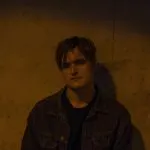










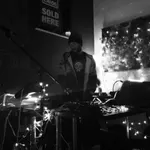

Valencia-based musician, author and poet David G. Borrero, known artistically as Yo, has built a creative world full of profound songwriting. Unchained by genre or medium, he moves between music, literature and poetry, each form serving as a different lens through which to explore life and his experiences. Since making his musical debut in 2007 with the solo record Vala and later collaborating with Miguel Giner on the 2009 metal album De lirios y delirios with their band Jade, Yo has continued to develop with a searching spirit.
His work exists at the crossroads between emotion and experimentation, crafting music that’s designed to be felt, lived and remembered. This year marks a cataclysmic moment in Yo’s artistic journey with the release of Carmina Alegría, a profoundly personal album born from grief, love and legacy. Following the passing of his grandmother, Carmen Sánchez Barrera, Yo found himself creating in what he describes as an “obsessive, luminous state.”
While hospitalised during that time, his creative focus became unshakable and he decided to make her a record, a musical tribute to her life and the dreams she never got to realise. In her youth, Carmen had harboured aspirations of becoming a singer; her voice, once described as remarkable, had caught the attention of industry professionals who wanted to turn her into a star.
They even gave her a stage name: Carmina Alegría. But life, as it often does, had other plans and she never pursued that path, leaving behind the ghost of a dream that might have been. With this album, Yo brings that dream back to life through transformation and Carmina Alegría becomes both an act of remembrance and an act of creation, a way to give voice to a story left unfinished.
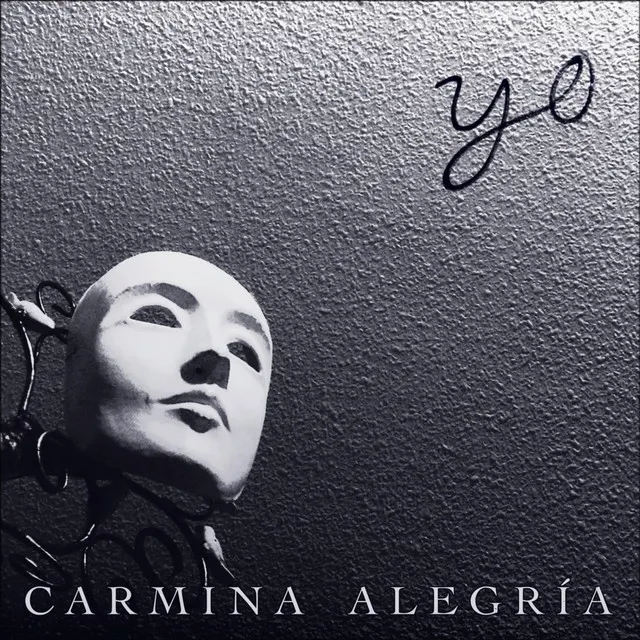
Starting off the cinematic journey through the stages of grief and acceptance, “Desaparecer” arrives with delicate guitar notes and chiming tones to form an immersive soundscape that develops with airy vocal textures before shifting with the crunch of electric guitars and splashing drums. In the title track “Carmina Alegría,” Yo’s grandmother’s own story comes to life as she recounts her childhood during the Spanish Civil War, her voice rippling through layers of instrumentation, casting a mesmeric post rock scene that brings her memory into sharp focus.
“Volver al aire” stands as the emotional centrepiece of the album, forging a dialogue between the living and the departed set within an experimental pop framework. The track swells with spacey synths, twinkling instrumental tones, bubbling percussion and operatic vocals that intertwine in a haunting, wordless duet.
With “Los muertos siempre son verdad,” the title track is presented as a fully instrumental piece, delivering a euphoric rock moment that adds an intricate link within the album’s voyage. On “Decirlo a veces sin palabras,” the hazy flicker of vocal samples fade into a delicate composition of tender flute lines, elegant strings and soft guitar tones that gradually builds into an epic finale of sweeping vocals and surging sonic energy.
Closing the album with the bonus track “Levantando las manos,” Yo delivers an emotive and highly intimate outing, stripping away the reverb that wraps the rest of the album and capturing his aching vocals in a close-mic approach to craft a powerfully moving final moment on the album. With Carmina Alegría, Yo turns personal loss into artistic resurrection, offering an album about finding meaning in memory and through sound, he fulfils a promise by transforming grief into grace and silence into song.
We caught up with Yo to find out more about the story behind his new album Carmina Alegría. Check out our interview with Yo below.

What inspired the concept of Carmina Alegría, and why did you choose your grandmother’s grief as its central theme?
I didn’t choose anything. I’m not especially mystical, but the truth is the album found me. The night my grandmother died I couldn’t sleep, and the insomnia started showing me how the pieces fit together. Suddenly it became obvious: all those songs, experiments, and ideas I had recorded over the years without knowing why were actually her album.
How did you approach translating the emotional stages of grief into ambient, neoclassical, and post-rock soundscapes?
You know when you’re at a restaurant and the crazy guy at the next table starts mixing the desserts, pouring them into the coffee and eating everything together? That crazy guy is me — and with music it’s the same. Purity bores me; it makes me claustrophobic. I don’t see why genres should be treated as indivisible packs: “you either play rock, or electronic music, or classical…”.
I’m not interested in emulating; I’m interested in expressing. That’s my compass.
Each genre orients listening in a different direction — it opens some doors and closes others. I just need the right clothes for each expressive need.
The voice on the album functions as a texture rather than a lyrical element. What guided this decision?
I would answer similarly: I don’t use the voice the way a singer uses it, seeking an identifiable timbre. I use it like a mechanic choosing the right tool each time. In Volver al aire I needed the imperfection of the living human voice confronting the perfect purity of death. In Coágulo de un instante I wanted choral elevation, while Levantando las manos needed violence and abyss.
Sometimes people tell me, “But in some songs you’re not the one singing!” Of course: sometimes the best way to reach where I want isn’t through my own voice — just as being a guitarist doesn’t mean stuffing guitars where the song doesn’t ask for them.
How do bowed guitars, minimal harmonies, and wide spatial mixes contribute to the sense of interior time on the album?
Your question made me smile because recently a friend listened to an album I produced and said: “I heard chimes and ebow guitars and instantly knew it was you.” And it’s true — they’re part of my sonic dream team.
As for harmonies, I had to restrain myself: I’m rococo by nature, but Carmina Alegría required the austerity of a mantra, and of mourning. Only two tracks allowed harmonic play: Volver al aire, where the modulation is a kind of encrypted message — no matter how far you modulate, every key inevitably encounters Death — and Levantando las manos, my little act of vandalism: dragging a summer hit to its dark antipodes.
But you asked about space and time. For me the key element is reverb. To the point that, although my name is David G. Borrero, I know some people call me “David G. Borreverb” — I swear it.
If you listen closely, almost the entire album takes place inside that interior space-time. Except Levantando las manos: no reverb, no idealisation, nothing. I even recorded it right up against the microphone to force an extreme close-up — every imperfection in your face. The raw counterpoint to all the sublimation that lifts Carmina Alegría.
Each track represents a chapter in a narrative. How did you structure this journey from loss to fragile reconstruction?
I usually obsess over tracklists, but with Carmina Alegría the order revealed itself. For instance, Siempre (la mano en el fuego) was recorded as the coda to Volver al aire, almost like its emotional echo, maintaining some of its arrangements but carrying them into its own terrain.
But the clearest case is Carmina Alegría and Los muertos siempre son verdad. In Carmina Alegría — the second track — my grandmother tells what it was like to be a child during the Spanish Civil War. Los muertos siempre son verdad, the penultimate track, is the same song… but without her voice. Loss in its most direct form.
“Yo” is described as both a name and a philosophical assertion. How does this identity shape your creative process?
I have the impression that today there are more and more artists everyone knows but nobody has listened to. Signing as “Yo” — the most generic pronoun possible — is my way of stepping out of the centre. If anything here matters, it’s not me: it’s the music, and it’s my grandmother. I even created her own artist profile on Spotify as part of the homage.
You work across music and literature. How does your experience as a poet influence the compositional style of Carmina Alegría?
I’m thinking aloud here, but I believe music taught me to listen to poetry, and poetry taught me to listen to music. Poetry especially dares to go beyond metric moulds, and that forces you to listen differently. Then you return to music transformed. Ultimately they’re different languages for the same inner need to communicate.
How do you balance cinematic expression with personal intimacy in your compositions?
I think Coágulo de un instante answers that best. If you pay attention, you’ll hear small noises and scattered effects. They’re audio recordings from important moments in my life — I collected them over years — but altered them so they wouldn’t be recognisable. That’s the metaphor for my intimacy in music: it’s all there, but the glass is tinted.
But in this album I couldn’t play that game. Carmina Alegría demanded overwhelming transparency. The hardest artistic decision I’ve ever made is in Siempre (la mano en el fuego) — the ground zero of the album’s narrative. I included the exact voice note my mother sent to the family group chat to tell us my grandmother had died. Not a recreation: the actual audio I heard that day.
I had never exposed myself so directly. To this day, it’s a song I cannot listen to. It still shakes me.
The album moves through shock, disappearance, memory, and return. Which stage was the most challenging to convey musically?
It was a difficult birth. I often wondered whether it made sense to wade through pain just to make songs. This happened especially with the title track, where my grandmother recounts being a child in the war. I spent weeks selecting her voice recordings. It left me emotionally wrecked. These are songs you literally produce through tears.
What do you hope listeners experience as they move through Carmina Alegría?
You know, someone once asked what I’d do if I were the last survivor of the apocalypse… and I surprised myself thinking: “I’d keep making music.” So honestly, I don’t think about listeners while composing. Since childhood, music has been a drainage system for me. In retrospect, it was predictable that I’d cling to music as a life raft facing a loss like my grandmother’s.
What I never expected was the reaction to an album this uncommercial. People tell me they keep listening to it nonstop; others say they can’t finish it because they break before the end. A friend who heard early versions wrote one night: “David, send me your songs — I need them, my grandfather is gone.”
I hadn’t foreseen that: Carmina Alegría would crystallise my grief, yes — but it would accompany other people’s grief too. That feels magical.
Listen to Carmina Alegría below
More from Albums

New full-length record from Divergent
While some musical ambitions take a little longer to find their moment, the journey for Iowa-based trio Divergent has been …
New album from Ashot Danielyan
Based in Moscow, pianist, composer and improviser Ashot Danielyan has spent more than a decade developing a musical output that …
Bryan Howell returns with new studio album
Originally hailing from central New York and now based in Nashville, Bryan Howell has spent more than a decade developing …