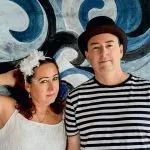



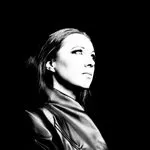


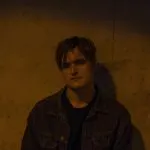

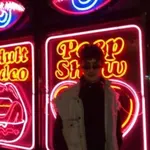

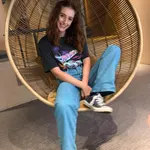




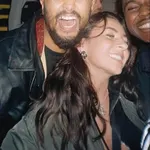
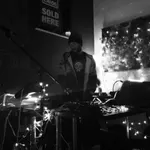


American artist SHARON. is a visionary creative figure working at the crossroads of sound, science and survival. The producer, recording artist and founder of Music Cures Ai has been venturing on a unique path where art doubles as research and emotion becomes data. Her artistic output takes shape in the overlapping spaces between sonic experimentation and neurological exploration, turning trauma into a language of rhythm, texture and movement.
Her platform, Music Cures Ai, is a multimedia research and entertainment project designed to study the healing power of sound, movement and artificial intelligence. Through it, SHARON. has built an ecosystem of music, film and AI-assisted compositions that bring ethics, empathy and machine consciousness into one ever-shifting conversation. Under her production company Magnitude 10 Entertainment, she’s released immersive, AI-driven pieces that explore how technology and emotion can coexist, even when they’re in conflict.
Before her current incarnation as SHARON., she published essays under her former name Sharon Loeffler, including Variety’s “Why Art Shouldn’t Be Separated From Artist.” That background of journalism, visual art and electronic production is what informs her pioneering work today; each project sits at the crossroads of creative autonomy, personal artistic expression and confronting how creativity develops in the age of intelligent sound.
Now she returns with one of her most ambitious and controversial works thus far, the AI-generated EP Trapped In A Tower By An Incel and Group of Organized Crime. The project is part exposé and part experiment in machine-assisted storytelling, chronicling SHARON.’s own experience within the AI funding ecosystem, beginning with her involvement in AI Grant, an experience she credits with saving her life and progressing through a series of events that involved the appropriation of her intellectual property by Silicon Valley figures. Her ideas, she claims, were implemented in financial and algorithmic systems that influenced market behaviour and Wall Street activity.

While SHARON. is known globally for her high-impact tech house output, this EP moves into deeper waters, based in deep house and story-driven composition. Using mood and texture as narrative devices, the record traces systemic exploitation, personal betrayal and recovery. The title track, “Trapped In A Tower By An Incel and Group of Organized Crime,” sits at the very centre of the project, serving up an absorbing sonic voyage that builds from atmospheric vocals, hazy synth textures and rattling percussive shots, flowing with the pulse of bass notes and infectious hooks to surge into a gripping dance pop soundscape that’s moody, invigorating and fiercely original all at once.
“Hackers Hospital,” inspired by SHARON.’s development of a recovery and rehabilitation model for hackers within her broader AI framework, presents a more mellow soundscape of hushed vocals and smooth rhythmic groove brimming with breezy melodies and uplifting aesthetic. With “Deep Fake,” she delivers a critique of contemporary political systems through a slick jam that flows with the crisp snap of beats, airy instrumental tones and alluring vocal leads, forming a dreamy sound that’s contrasted by its profound lyricism.
On “Let’s Go, USA!,” she addresses exploitation and institutional failure, wrapped up in a transportive pop-focused outing that’s catchy and emotive in equal measure. “Mr White Hat,” named for the hacker central to her story, delivers a mesmeric house pop experience that flows with intricate arrangement and elegant vocals, forming a hypnotic scene captured in an expansive, six-minute sonic voyage.
“Neuro Emasculation” lands as a meditation on technological masculinity and what she calls the “incel apocalypse,” serving up another slice of SHARON.’s poignant songwriting filtered through a driving soundscape that’s brooding and engrossing from start to finish. Closing the EP with the Silicon Valley Billionaires Extended Mix of the title track, SHARON. concludes her groundbreaking new release in spectacular fashion. Trapped In A Tower By An Incel and Group of Organized Crime functions on multiple levels; as an electronic record, a digital disclosure and an extension of SHARON.’s ongoing work interrogating how art, technology and accountability intersect.
We caught up with SHARON. to find out more about her musical journey so far, her new EP and what she’s got lined up for the future. Check out our interview with SHARON. below.
What’s your earliest memory of making music?
My first memory of making music was very deliberate. I was under twelve, sitting with a popular Christian song by Michael W. Smith called ‘My Place in This World.’ At the time, I didn’t fully understand the meaning of the lyrics, but something in the question stayed with me. I tried writing my own words to the music, even though I didn’t yet have the language for what I was reaching toward.
It’s ironic looking back, because that question — trying to find my place in the world — has followed me my entire life. Even now, it sits underneath a lot of my work. I’ve always been drawn to giving meaning to sound, sometimes even to the mundane. Lyrics and intention matter to me as much as rhythm or energy — how a track makes you move, but also what it leaves behind once the dopamine fades. That tension between depth and danceability has shaped everything I’ve made since.
How did working across writing, visual art and sound develop into the SHARON. we see today?
I started purely in music, and I developed far enough early on to get noticed. Some opportunities with major players didn’t materialize the way they were presented, which forced me to recalibrate quickly. I ended up releasing work independently and through smaller labels, which turned out to be formative. Tracks like Touch It and Pussy Tight came out of that period — one through a label, the other self-published — and that contrast taught me a lot about control, ownership, and visibility. Around that time, I began experimenting with AI filmmaking. I have a story that lends itself to documentary, but I wasn’t interested in reenactment or spectacle. AI felt like a way to translate lived experience without reliving it — a tool for abstraction rather than performance. In parallel, I was researching how sound affects the nervous system, particularly the HPA axis, which eventually led me to apply for AI Grant funding in late 2023 to develop what I called ‘digital prescriptions’ using machine learning.
That’s when Music Cures AI and Magnitude 10 Entertainment started to converge — not as separate ventures, but as parts of a larger system. SHARON. became the through-line: the artist, the experimenter, the system-builder. The story isn’t finished yet. I’m still looking for the right collaborators to complete what I’ve started. In that sense, SHARON. is still becoming — still negotiating where she belongs.
What inspired the creation of your multimedia platform Music Cures AI?
Music Cures AI didn’t come first — my life’s work did. Years before MCAI had a name, I had already designed a sustainable economic ecosystem called SONS. It was something I treated as existential work — something I was prepared to walk away from if I couldn’t find the right people to build it with.
Around that time, I was recovering from a prolonged abusive situation that left me temporarily unable to walk, speak clearly, or think with clarity. Music became my rehabilitation tool. Not in a mystical sense, but in a very practical one. Certain songs helped restore motivation, clarity, and emotional regulation. What mattered wasn’t ‘frequency’ in a spiritual sense — it was dopamine, oxytocin, and nervous system response.
As I regained clarity, I began studying neuroscience and neurology independently. When I noticed the parallels between biological neural networks and the emerging architecture of machine learning systems, something clicked. I realized there was an opportunity to bridge sound, data, and recovery in a responsible way — not to replace medicine or therapy, but to complement them
I began experimenting with intentional listening practices — pairing music with recorded affirmations designed to interrupt harmful subconscious patterns. It was a way of reclaiming agency over my own internal narrative. That experience shaped my application to AI Grant in late 2023, where I proposed research into ‘digital prescriptions’: data-informed sound tools designed to support resilience and regulation.
Even after not being funded, the work continued through my music. Many of the tracks I’ve published were created during that recovery period. Over time, it became clear that Music Cures AI wasn’t just a platform or a media project — it was a conceptual framework. A way of thinking about vibration, data, and human experience as interconnected systems.
We experience reality through vibration — sound, light, rhythm, pattern. Music Cures AI asks a simple question: if vibration shapes perception and behavior, how can we use it ethically, intelligently, and creatively to support human wellbeing and innovation? The answers aren’t finished yet — and that’s the point.
How did your personal experience with neurological healing shape your understanding of sound and its emotional power?
My experience forced me to understand sound not as entertainment, but as a regulatory input to the nervous system. During recovery, there were periods when my body was alive but my clarity, coordination, and expressive ability were compromised. What surprised me was how consistently music could help re-establish motivation, emotional stability, and eventually cognitive function. What mattered wasn’t genre or novelty — it was how sound affected neurochemistry and attention. Certain music reliably helped restore forward momentum: getting out of bed, walking, speaking, thinking in sequence again. That led me to look more closely at dopamine, oxytocin, and stress regulation, and how sound interacts with those systems.
I also became very aware of how fragile those systems are under prolonged stress. When they collapse, people don’t lose intelligence — they lose access to it. That distinction changed how I think about creativity, mental health, and productivity. Sound can either support regulation or contribute to dysregulation, depending on how it’s used.
This experience reshaped my relationship to music entirely. I stopped thinking of it as something purely expressive and started seeing it as a tool — one that can influence mood, perception, memory, and resilience. That perspective carries into everything I make now. Whether a track is meant for a club, headphones, or reflection, I’m always conscious of how it moves someone emotionally and neurologically, not just aesthetically.
What would you say is the perfect setting for listeners to enjoy your sound?
I don’t think there’s a single correct setting, but there is a correct state. My music works best when someone is present rather than distracted — whether that’s on a dancefloor, driving at night, or alone with headphones.
Some tracks are meant to move the body, others are meant to slow perception down. What matters most is that the listener isn’t consuming it passively. Even in club settings, the tracks I care about most are the ones that create a moment of awareness — where people feel something shift rather than just chase a drop.
Personally, I love music at transitional moments: late nights, early mornings, long drives, periods of change. That’s when sound has the most influence. It can stabilize, energize, or open space for reflection. I tend to make music for those in-between states rather than for a single environment.
How has your own style and sound evolved since you started out?
As an RPM DJ at WKPS, Penn State’s student station, my foundation has always been club music. It didn’t come from theory or academia. It came from what I felt gave me a sense of bliss. Later in life, it came from needing music to work on a physical and emotional level. Early on, it was about energy, momentum, and learning how sound moves people in real time.
Over time, my sound became more intentional. I stopped chasing trends and started paying attention to what certain rhythms, tones, and structures actually do — to the body, to attention, to emotion. Some of that came from experience on dancefloors, and some of it came from necessity in my own life, using music to regulate, rebuild, and stay functional during periods where nothing else was stable.
The club is still central to my work, but the intention has deepened. I’m less interested in excess and more interested in precision — how little it takes to shift a room, how repetition can become grounding instead of numbing, how a track can hold people rather than overwhelm them. So the evolution hasn’t been away from club music — it’s been toward understanding why it works, and how to use it responsibly, creatively, and with purpose.
Who would be your dream artist to collaborate with?
My dream collaboration would be Madonna. I discovered her work later than most — I grew up in a religious household where secular music wasn’t really allowed. Bedtime Stories in 1994 was my entry point, and from there I worked backward and forward through her catalog. What struck me wasn’t the image or the spectacle — it was the songwriting, the structure, and the emotional intelligence in the music.
People often reduce Madonna to being a great businesswoman or someone who constantly reinvents herself, but I don’t experience her that way. I hear an artist who evolves — who responds to life in real time. I’ve often said there’s a Madonna song for everything, and for me that’s been literally true. Her music has been there during moments of physical recovery, uncertainty, and resilience. Iconic was a track I listened to repeatedly while relearning how to navigate stairs when my body wasn’t cooperating.
She’s in her 60s now, and without the platform she built, I don’t think many middle-aged women in music would even know a market exists for us. She didn’t just open doors — she built the stage. She’s held the largest concert audiences in the world, she brought commercial music into the club without diluting either, and she’s done it with longevity that’s almost unheard of.
Every woman working in this industry today stands on her shoulders, whether they realize it or not. She didn’t just change music — she changed the rules around who gets to stay, evolve, and matter.
How did you find making your new EP?
I didn’t find making this EP so much as I arrived at it through exhaustion. This wasn’t something I set out to do, and it certainly wasn’t something I wanted to make as a record. It came together in fragments — moments of frustration, stalled processes, withheld conversations, and a growing sense that nothing was moving unless I forced movement myself. I’d already made most of the tracks independently of any plan to release them. The title track came last, almost as a pressure valve.
At a certain point, it became clear that nothing was going to surface unless I surfaced it. I’ve said before that I was willing to leverage the tech against the tech, and this was that moment. If Trapped In A Tower By An Incel And Group Of Organized Crime got the attention of the people it was meant for — Dan and Nat — then maybe it could get the attention of others too. And if the algorithms actually work the way they’re claimed to, then truth should be able to travel without permission. I released it out of frustration, but also as a test. Not just of the system, but of whether meaning can still cut through noise when it isn’t packaged for comfort. It’s not a polished narrative or a carefully branded statement — it’s documentation. A disclosure artifact. Something that exists because all other channels failed. I don’t consider it a traditional release. It’s more like evidence set to music.
What emotions or realisations drove you to make this record now?
It wasn’t one emotion — it was the realization that waiting was no longer neutral. For a long time, I believed that if I stayed patient, ethical, and focused on building real systems, things would eventually resolve themselves through the proper channels. What I realized instead is that silence often benefits the people who already have power, not the people doing the work. This record came from the recognition that suppression doesn’t always look like censorship — sometimes it looks like endless delay, deflection, or being told to ‘wait your turn’ while others move freely. I didn’t make the EP to provoke or sensationalize; I made it because documentation became necessary.
There’s frustration in it, yes — but more than that, there’s clarity. A moment where you understand that if you don’t speak in the language the system responds to, nothing changes. Music has historically been one of the few forces capable of cutting through tightly controlled narratives, and I realized that if I was going to say anything at all, it had to live there. So the driving realization was simple: if I didn’t release this now, it would be another truth postponed indefinitely. And I wasn’t willing to participate in that anymore.
What message did you want to get across with this release?
The core message is that disclosure isn’t about exposure — it’s about integration. When systems fail to acknowledge harm, imbalance, or misuse of power, the cost doesn’t disappear; it migrates. It shows up in bodies, in culture, in addiction, in burnout, in distorted incentives. This record is less about naming villains and more about revealing the consequences of fragmentation — technological, economic, emotional, and ethical.
I’m interested in what happens when we stop treating intelligence as purely computational, creativity as purely expressive, and economics as purely extractive. “Vibrational Intelligence” an aspect of MCAI, asks how information moves through bodies and systems. “Alchemical Intelligence” also part of MCAI, looks at transformation — how pressure, instability, and conflict can become catalysts rather than collapse points. “Hackers Hospital” a recovery program for technology addiction s including hacking, exists because addiction isn’t a moral failure, it’s a systems failure. And a sustainable economics system is the infrastructure that allows any of this to endure without exploitation.
The EP is a disclosure artifact in the sense that it documents what happens when those domains are kept separate for too long. Music was simply the most honest delivery system available to me — one that bypasses debate and goes straight to pattern recognition. Ultimately, the message is this: we don’t need more power, speed, or scale. We need coherence. And that’s the work I’m committed to — not just artistically, but structurally.
What artist have you been listening to most recently?
Honestly, I move in phases rather than fixating on one artist, but Madonna is always in rotation — not out of nostalgia, but because her catalogue still functions. There’s a precision to her songwriting and production that holds up in clubs, in headphones, and in real life. That kind of longevity isn’t accidental.
Alongside that, I listen to a lot of DJs and producers rather than headline artists — people who understand pacing, restraint, and tension rather than spectacle. I pay attention to tracks that work on a nervous system level, not just what’s trending. Sometimes that’s techno, sometimes it’s minimal, sometimes it’s something completely left-field.
Lately, I’ve also been revisiting my own catalogue — not sentimentally, but analytically. After everything I’ve been through, hearing it back with distance has reminded me that good music doesn’t expire. It either has structure and intention, or it doesn’t.
What’s the main thing you want people to get out of listening to your music?
I want people to feel themselves again. Not distracted, not optimized, not fed a narrative — just present in their own body and mind. My music isn’t designed to escape reality; it’s designed to re-enter it with more agency. Whether that’s on a dancefloor, alone with headphones, or somewhere in between, I care about how sound interacts with the nervous system and the emotional state of the listener. If someone walks away feeling more grounded, more awake, or even slightly unsettled in a way that leads to clarity, that’s a success. I’m not trying to tell people what to think — I’m trying to create space where they can think and feel for themselves. At its best, music isn’t content. It’s a tool. And when it’s used intentionally, it can restore autonomy rather than take it away.
Who would be three artists to headline your dream festival — and where would it be?
I’ve always been more interested in creating the environment than attending one, so my answer comes from that place. Madonna would absolutely headline. No one understands spectacle, endurance, and narrative like she does. She doesn’t just perform — she commands energy in a way very few artists ever have. Sharon Jones would be there as well. If it were possible to reproduce her presence with care and respect, it would be a dream. I was lucky enough to meet her several times, and even toward the end of her life, all she wanted to do was sing and perform. What she and Madonna share isn’t perfection — it’s force. That kind of energy can’t be faked or replaced.
For the third, I wouldn’t choose a single individual. I believe the most powerful events are collective expressions. The future of performance, to me, isn’t just about icons on a stage — it’s about audiences becoming part of the creative system itself. With the right tools, data, and intention, collective art can emerge that no one person could create alone. That’s still more of a vision than a finished concept, but it’s where I see things going.
As for where? Wherever it’s nighttime!
Do you have any advice for a new artist wanting to follow in your footsteps?
The industry is in a state of real flux right now, so the most important thing I can say is: create for yourself first. You’re the only person who has to live your life and carry your work forward, so your expression has to be honest and sustaining for you, not just optimized for an audience or an algorithm. Trends change, platforms disappear, and gatekeepers come and go — but what you build internally is what lasts.
It’s also not always about being ready for an audience. Sometimes it’s about being prepared for the moment when the audience is finally ready for you. That takes patience, resilience, and a willingness to keep going even when there’s no immediate validation. If you focus on developing your voice, your integrity, and your craft, the rest has a way of catching up — even if it doesn’t happen in the way you originally imagined.
Finally, what do you have lined up next?
Musically, I’ll continue releasing work — both new material and select pieces from my catalogue that deserve a longer life. Performing and building live environments is something I want to return to more fully, especially as the industry recalibrates toward experiences rather than just streams. Beyond music, my focus is on continuing to develop Music Cures AI as a broader framework rather than a single product. It’s not a music generator or a platform in the conventional sense — it’s an exploration of how sound, data, and human systems interact, and how they can be used responsibly for healing, resilience, and collective understanding.
All of that ultimately feeds into a larger ambition I’ve been developing called Macrostate Transition Lab. The idea is to study how societies, technologies, and individuals move through periods of rapid change — not through mythology or prediction, but through data, ethics, and lived experience. It’s about creating tools that help us understand where we areand where we’re going, without losing our humanity in the process. It’s still unfolding, but everything I’m doing now — the music, the research, the systems thinking — is part of building toward that.
Listen to Trapped In A Tower By An Incel and Group of Organized Crime below
More from EPs
Simon D links with Fliss on new EP
With more than three decades spent exploring the world of electronic music, Australian producer, DJ and live performer Simon D …
first known use releases debut EP
Vermont-based first known use is the musical project of Izze Kaukonen and Ethan Fitzpatrick, a duo whose songwriting process begins …
Peter Hägerstrand shares new EP
Helsinki-based Peter Hägerstrand has spent much of his life exploring the many ways music can communicate, moving between songwriting, composition, …