







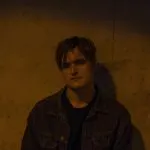









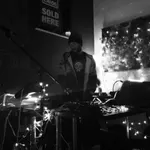

Coming out of Buenos Aires’ underground music scene, Desdel Barro has spent years shaping and reshaping the contours of South America’s blooming electronic landscape. A DJ, producer and sound artist deeply connected to the Latin Club movement, his work forms in the collision between genres, between atmospheres and between the physical intensity of the dancefloor and the emotional pull of memory. Formerly a member of Hiedrah Club de Baile, the influential Buenos Aires collective and netlabel responsible for years of club nights, festivals and cultural gatherings, Desdel Barro earned a reputation for sets that move across sonic extremes.
Versatility sits at the centre of his artistic language; Afrohouse melts into jungle, baile funk crashes into breakbeat, reggaeton collides with rave textures and bass-heavy club mutations twist unexpectedly into moments of sensuality or disarray. His DJ sets are all about movement itself, allowing atmosphere, rhythm and energy to guide the experience, offering a sense that the body is being pulled through shifting emotional and sonic environments in real time.
That creative vision extends beyond the club space too and over the years, Desdel Barro has contributed mixtapes to labels and platforms including Jerome Music, Revista Balam, Radio La República, Swu FM and Dublab, further confirming his role within experimental and club-focused electronic communities. As a producer, his work has travelled internationally through collaborations and contributions with collectives and labels such as NAAFI, Extasis Records, Club Late Music, Salviatek, Tormenta and Rawa Club.
At the same time, his output has expanded far beyond club functionality, with Desdel composing and producing original music and sound design for film, theatre and performance work, including the Chilean dance-theatre production Polución: Diálogos con Pedro Lemebel, the Argentinian feature film One in a Thousand directed by Clarisa Navas and the dance performance Agitadores by Chilean collective Plataforma Mono.
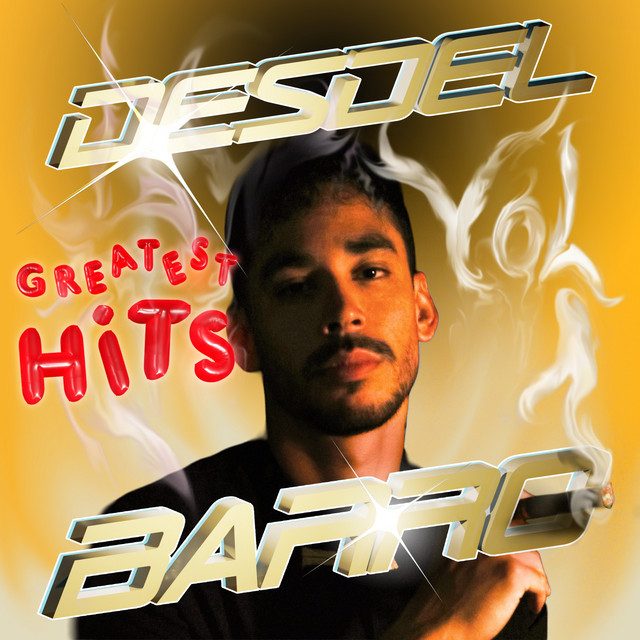
Now, Desdel Barro returns with Greatest Hits, Vol. 1, released through the OF MUD RECORDS imprint, a record that’s framed as an ode to the sounds and rhythms that shaped entire eras of dance and electronic music culture. The album draws direct inspiration from the bootleg compilations once sold in street markets and those chaotic collections, stitched together from different genres, moods and eras, become the emotional blueprint for the record.
Across twelve tracks, Greatest Hits, Vol. 1 revisits foundational club genres, with breakbeat, disco, jungle, ghetto house and rave textures pulsing throughout the album, all filtered through Desdel Barro’s Latin Club lens. From “Intro Fantasy,” the slowly builds with an array of vocal elements and rising instrumental textures, before jumping into lively beat-driven energy cut with catchy vocal hooks. Tracks like “Too Cool for You” bring stuttering percussive shots and staccato instrumental textures to serve up a moody dance music experience.
“Sexy Damaged” pairs snapping drums with a colourful synth arrangement to form an engaging jam brimming with grooving energy and mesmeric vibes. With “Wait,” the hazy scene of layered synths is met by rattling beats as chopped vocal shots pepper the track as zapping synth flicker, laying down an epic soundscape packed full of twists and turns. “Don’t Pares” blends woozy synth textures with the steady shuffle of punching drums to deliver a slick outing that’s infectious and invigorating from start to finish.
On “Retapu,” the transportive fusion of expressive vocals and bubbling instrumentation launches into a charging beat-driven scene to present an uptempo club sound. Closing the record with “Car Ride with Bro,” the rustle of breakbeat rhythms rolls with deep low end energy to deliver a finale that’s at once hypnotic and exhilarating, offering a spectacular conclusion to his incredible new album.
We caught up with Desdel Barro to find out more about his musical journey so far, his new album Greatest Hits, Vol. 1 and what he’s got lined up for the future. Check out our interview with Desdel Barro below.

Hey Desdel Barro, how’s things?
Hello! Very good thanks.
What’s your earliest memory of making music?
My earliest memory of making music is teaching myself on the computer. I tried different programs until I found Ableton Live. I realized that what I wanted to do would be really difficult the traditional way, like in a band, and I wasn’t very good at traditional instruments anyway.
Which artists do you draw most inspiration from?
Without a doubt, I’d say The Prodigy, Aphex Twin, and Daft Punk.
How else do you find inspiration for your music?
I find inspiration by setting a goal, mood, or situation in the pre-composition stage. For example, I recently finished an album with the theme “Rave and Gym” high-energy electronic dance music for working out, dancing, or both. I took inspiration from early 90s and 2000s rave sounds, mixing breakbeat with ghetto house, tech, and some modern elements.
That’s pretty specific, but even a general vibe works for me too. If I tell myself, “I want to make something sad” or “a sexy rave track,” that usually gets me going.
What do you love about the Buenos Aires music scene?
What I love most is the resilience, passion, and creativity of the people in the nightlife scene, especially considering the economic difficulties. We’re really inventive and talented. I can only imagine how interesting it would be if we didn’t have to deal with all those infrastructure struggles.
How important has club culture been in shaping your artistic vision?
It’s been huge for me. I’m often at a party dancing when I hear or feel something that sparks an idea. I always keep my phone full of notes because if I don’t write them down, I’ll forget.
How has your own style and sound evolved since you started out?
I’m very eclectic, I like mixing things that aren’t supposed to go together and pushing things in an edgier direction. Lately, I’ve been trying to be more consistent and create a cohesive sound, especially when I’m working on albums or EPs with a specific theme. It’s about building a kind of sound ecosystem.
For example, I worked on another project that was an EP blending disco with rave vibes. That was a really interesting way to approach it.
Who would be your dream artist to collaborate with?
Lyan Howlett, Bad bunny, Skrillex, Mike Dean, The weekend. Future.
How did you find making your new album ‘Greatest Hits, Vol. 1’?
Making Greatest Hits, Vol. 1 was about paying tribute to the songs and production methods I love in dance music. I wanted to go back to the roots, using heavy sampling techniques with samples from disco, breakbeat, rave, and jungle, but mixed with more modern, urban sounds like reggaeton.
It was also the first time I produced everything on the MPC and designed all the synth sounds on hardware, without using presets – all analog, like in the 90s and early 2000s. Before this, I mostly used Ableton.
The new stem-separation technology was also crucial for putting the album together.
What message did you want to get across with this release?
I wanted to bring back a sense of nostalgia in a creative way – to show how sounds from the past can coexist with contemporary sounds and take on a new form.
For example, the second track on the album is a tribute to Pino D’Angiò, a key figure from the early Italo disco era. I sampled parts of his songs and mixed them with elements from “Ladies Night,” all within a rave and disco atmosphere.
How do you balance homage and originality when working with sounds so rooted in dance music history?
I think electronic music is in a weird place right now. A lot of people are making great stuff, but it feels mass-produced and formulaic. It seems like people want to hear genres more than specific songs or artists.
My contribution is to make tracks with personality, grain, and texture – without relying on big drops, but focusing on feeling and vibe. If you hear one of my tracks once and then again later in a different place, I want you to remember where you heard it and know it’s mine.
How do you think younger listeners will connect with references to older club genres and bootleg culture?
Music is really ephemeral right now, so bringing soundscapes from the past can have a more lasting effect on new tracks – and it’s already happening. You’ll often see random songs from the 80s, 90s, or early 2000s go viral on social media. I think that dialogue between past and present is really enriching.
What’s the main thing you want people to get out of listening to your music?
The main thing I want people to get from my music ties back to the origin of my project’s name, which translates to “From Mud” in English. I want to give it some dirtiness, warmth, and imperfection. That’s why I use a lot of voice samples – to give electronic music that human touch it sometimes lacks, since it can sound too cold or impersonal.
What’s been your favourite live performance so far?
I would say Lenny Kravitz, Chemical Brothers, Damas gratis and Rauw Alejandro.
Finally, what do you have lined up next?
Right now I’m developing my audiovisual live set. I want to play more live sets than DJ sets – there are too many DJs out there right now, haha.
Listen to Greatest Hits, Vol. 1 below
More from Albums
New full-length record from Divergent
While some musical ambitions take a little longer to find their moment, the journey for Iowa-based trio Divergent has been …
New album from Ashot Danielyan
Based in Moscow, pianist, composer and improviser Ashot Danielyan has spent more than a decade developing a musical output that …
Bryan Howell returns with new studio album
Originally hailing from central New York and now based in Nashville, Bryan Howell has spent more than a decade developing …