





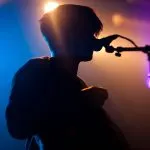





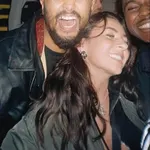
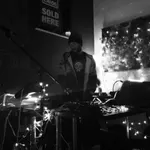

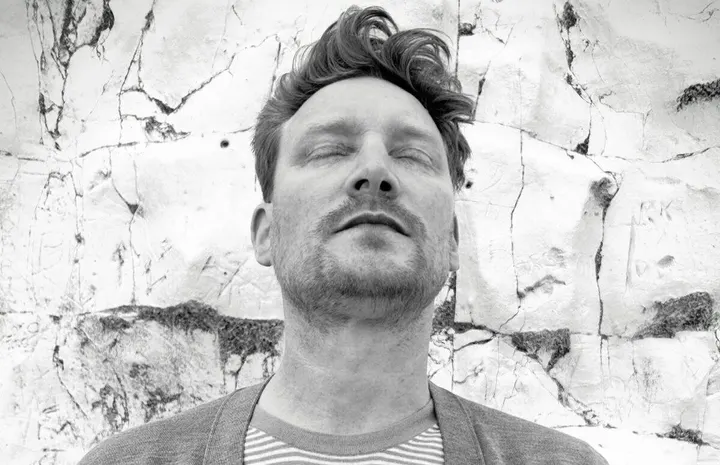
JK Jerome is a UK-based indie singer-songwriter creating music that feels private at first glance, then expansive once it settles in. Built around voice and finger-picked electric guitar, his sound moves through a Chase Bliss Mood pedal into something that’s part acoustic warmth, part electronic atmosphere, resulting in music that’s intimate and formed via quietly cinematic songwriting that reveals detail slowly.
Jerome’s songs appear designed to unfold over time, rewarding repeated listening with textures, emotional layers and small revelations that might be missed in a quick pass. Previously interviewed and performing live on BBC Radio 2 with Dermot O’Leary, Jerome has already stepped onto notable platforms while continuing to develop his own artistic vision. He’s also recorded a live session with Mahogany Sessions and performed at Boardmasters Festival, BST Hyde Park and Isle of Wight Festival, as well as supporting Goldfrapp.
Before this new chapter, a previous band project clocked over one million Spotify spins, giving Jerome a clear sense of what connection at scale can look like. Yet his current direction appears more concerned with emotional impact and poignant connection with those who hear his music. His writing draws from single parenthood, a Salopian childhood and the endless compulsion to create, framing how ordinary lives hold extraordinary emotional context and how memory shapes identity long after the moment has passed.
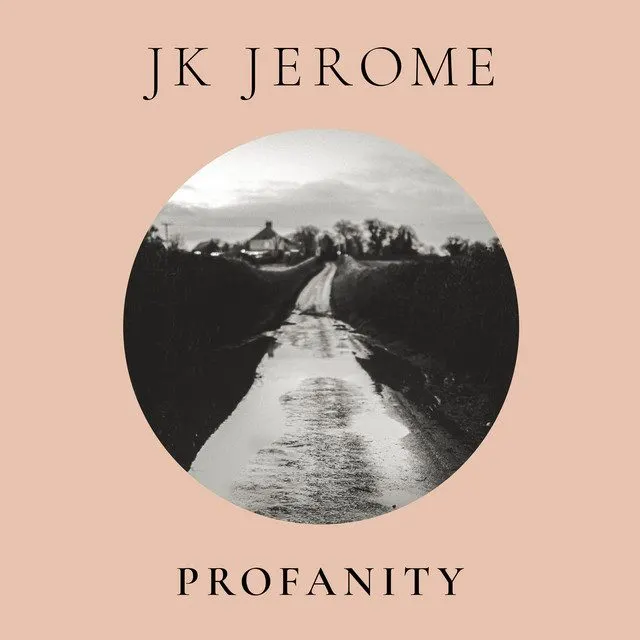
Now he officially opens this new chapter with debut single titled “Profanity,” a compelling first statement that distils personal history through social commentary and emotional reflection. Thematically, the song arrives as a conversation with a younger self, based in growing up poor in 1990s Britain, premise that gives the track emotional gravity. Speaking backwards through time often means addressing shame, confusion, unanswered questions and the stories we inherit before we are old enough to challenge them.
Brought in by the flicker of clean electric guitar notes, his alluring voice glides in as warm bass notes fill out the arrangement from below. The intricate click of gentle percussion elements adds to the soft rhythmic flow before dropping out to leave space for gliding melodies to hang in the air. Developing with the delicate pulse of drums and deep low end tones, a delicate contrast forms between the song’s forward motion and the dreamy instrumentation and mesmeric vocals.
With elegant layers of voices carrying tender melodies and meaningful lyricism, it’s a stunning lo-fi folktronica outing that’s musically charming and conceptually profound. With “Profanity,” JK Jerome makes an emphatic artistic entrance with a magical musical moment that’s sure to win over countless fans across the UK and beyond.
We caught up with JK Jerome to find out more about his musical journey so far, his debut single “Profanity” and what he’s got lined up for the future. Check out our interview with JK Jerome below.

Hey JK Jerome, how’s things?
I’m very good thanks, excited for release day and looking forward to answering these questions.
What’s your earliest memory of making music?
Me and two of my oldest friends used to get driven 15 miles to go over to this guy’s house to learn how to record samples and make music together. It was in the 90s, I think Pulp Fiction had just come out, we would spend hours recording foley in the garden and then one of us insisted on having the Samuel L. Jackson sample over the top for some reason. I just remember that line coming in ‘I just don’t dig on swine that’s all’ over and over again. We thought it was super cool.
Which artists do you draw most inspiration from?
I think vocals are shaped by influences early on and Tracy Chapman and Thom Yorke were high on the agenda when I was listening to the radio. The first time I really considered trying to blend acoustic sounds with electronic influences was when I heard an old John Peel session where Apparat was playing live. It’s a wonderful session and starts with the track ‘Fon’. They had live strings mixed with electronica and I remember thinking, ‘this is it’ — that was the cross-pollination I’d been looking for.
How else do you find inspiration for your music?
Mostly from specific moments rather than broad themes. A line overheard, a memory that surfaces at the wrong time, the feeling of a particular place. Profanity came from thinking about what I would say to my younger self — and realising that the things I wanted to say were inseparable from where I grew up and what that world looked like. The song started as a conversation and became something larger than I expected.
What do you love about the UK music scene?
It’s a mirror reflecting our rich and varied tapestry. I love our proud history of festival culture and the idea you can go and see all these great bands all in the same weekend. The representation of identity in all its facets in British music does it for me. It represents us as a society in a way that is outside of all the usual stereotypes. I also love the UK dance scene. I grew up going to raves and we have a proud history of rebellion and counterculture I have always identified strongly with.
What would you say is the perfect setting for listeners to enjoy your sound?
In a reflective moment where they have the time to listen rather than hear. I always covet the time I am walking as a great time to listen to music. Personally, I listen to lyrics, so I have always tried to write music that other people like me will enjoy and that has that repeat-listening capacity.
Who would be your dream artist to collaborate with?
It changes constantly depending on what I’m listening to and in what context. There is an artist called Haley Heynderickx — I would love to work with her, I think she’s exceptional. I would also give my right arm to work with Four Tet. But then who wouldn’t. Some of his remixes are fantastic and I think my music would work well in that context. I’ve grown up listening to him and he consistently impresses me.
How did you find making your debut single Profanity?
I wrote Profanity in lockdown. I started producing myself — with mixed results — and learnt to use a DAW, getting the idea that I wanted to take my singer-songwriter roots and disrupt that sound a bit. I obsessed over pedals, I needed a distraction, and ended up buying one that transformed my acoustic sound into something entirely different. When I met my producer Pete, it started with an idea that all my tracks would have this signature granular delay sound. It’s very unique, and we built from there. We recorded it in a day and never looked back. Although being between genres provides challenges, I think some of my favourite music walks this threshold between styles.
What message did you want to get across with this release?
Profanity is a song about dreams and aspirations. About being young and idealistic and then living more and realising the gulf between expectation and reality. That even if you are talented, you still need opportunity. Growing up poor in the 90s when single mothers were stigmatised wasn’t easy. My family had its share of tragedy, but the song is also about hope and optimism at its core. The belief that persistence is the key to anything. It’s quietly hopeful — that even if you walk a longer road, you can still get where you’re going.
What artist have you been listening to most recently?
I really love Jono McCleery. His new release “To Feel Seen” is subtle and tender. He has acoustic tendencies but also electronic textures to his work. He’s someone I would love to have a conversation about music with.
What’s the main thing you want people to get out of listening to your music?
Hope. I try to write about my own experiences — from love to loss and family and society. Although personal, I think these themes are universal and I want people to relate and also feel hope in harder times. I think music is good for healing, it’s cathartic and joyful.
What’s been your favourite live performance so far?
Supporting Goldfrapp at Somerset House has to be up there. That was a special gig. When you perform on those big stages one thing you don’t truly appreciate as an up-and-coming artist is how freeing that amount of space is. It’s almost effortless playing to large crowds on a large stage — it’s like you’re floating.
Who would be 3 artists to headline your dream festival? And where would it be?
I’d love to see Arcade Fire live, I’ve heard they are fantastic. I’d also love to see LCD Soundsystem. Currently one of my favourite bands is Nation of Language — I think that would be a pretty fab line-up. Somewhere outdoors and slightly impractical, a hillside in Shropshire probably — the kind of place where the landscape is part of the experience.
Do you have any advice for a new artist wanting to follow in your footsteps?
Stick with it. It’s a hard game and you probably won’t make much money, but if it’s your calling then stay the path and be patient. There’s nothing worse than regretting not having tried. Success can be measured in many ways so always keep sight of what your goals are.
Finally, what do you have lined up next?
Profanity is the first single of a four-part EP release. The next single is called Any Moment Now — a different emotional world, more atmospheric and more internal. After the split of my old band I’ve finally got my fire back and I’m enjoying releasing my solo work on my own terms. The four songs together tell a story I’ve been working toward for a long time. I’m not stopping yet.
Listen to Profanity below
More from Interviews
INTERVIEW: TATE SEDAR drops “Take It All Back”
Born in San Francisco, raised in London and now based in Los Angeles, TATE SEDAR has spent much of his …
INTERVIEW: Cinematic conceptual album from INYO
Coming out of Los Angeles, newcomer INYO is an artist whose musical vision is informed by a desire to explore …
INTERVIEW: Brand new single from Thomas Azier
Dutch singer, composer and producer Thomas Azier has spent the last twelve years making an impression in the European music …