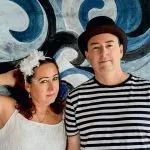







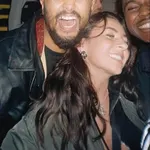
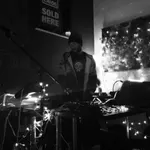

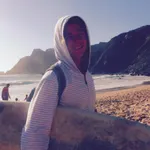
Roxy Rawson‘s fascinating backstory started in a Mormon community in Hitchin, with her earliest musical experiences coming through church hymns and ritual, but even within that structured environment she was already searching for something beyond. That desire to explore has informed every chapter of her career, taking her across countries, musical traditions and personal transformations while continually reshaping her artistic identity. Her journey gathered momentum in Paris, where classical study met creative discovery and while training in violin and piano at Conservatory Paris VI, she immersed herself in new musical communities, discovering jazz, joining an African choir and becoming part of the city’s anti-folk collective AsYet.
Alongside collaborators including Fiona Bevan and William Nein, she expanded her musical vocabulary beyond the formal education she had begun, embracing a freer, more exploratory approach to songwriting and performance. Returning to London, her focus widened further still; alongside teaching music in inner-city schools, she studied international development and travelled through Rwanda, the Democratic Republic of the Congo and Sudan. Those experiences would leave a lasting impression, quietly influencing the emotional context and perspective that would later arise throughout her songwriting.
Her recording career officially began with the 2015 EP Changing Things, released under a Sony development deal. The project introduced audiences to a unique voice that earned support from broadcasters including John Kennedy, Rob da Bank and Tom Robinson. It also opened the door to performances at celebrated venues such as Ronnie Scott’s, Union Chapel, the Roundhouse and the Royal Albert Hall.
Her career was interrupted by circumstances entirely beyond her control however and after becoming severely ill with Lyme Disease and Chronic Fatigue Syndrome, she spent years away from performing before making her return following her recovery in 2018. Her long-awaited debut album, Quenching the Kill, arrived to critical acclaim, marking not only a musical comeback but the continuation of an artistic journey shaped by determination and renewal. Today, Roxy is based in Berlin, where her creative work as a composer, curator, healer and founder of the Feral Folk Festival brings together experimental artists working within modern folk traditions.
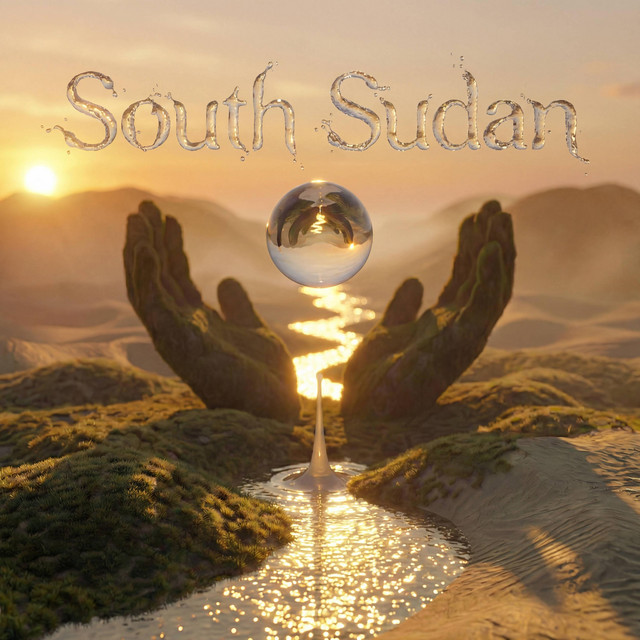
Her latest single titled “South Sudan” delivers a particularly powerful expression, produced by acclaimed composer Jherek Bischoff. The track signals a shift in Roxy’s musical direction while remaining tethered to the orchestral folk sound that’s become synonymous with her work. Expanding her sonic output with subtle electronic textures alongside live strings, the song connects personal reflection with themes of humanity, community and our relationship with the land.
The origins of the song stretch back to her time working in Sudan during 2010 and 2011, a period leading up to South Sudan’s independence. Witnessing political inequality alongside communities built upon dignity, care and shared responsibility left an enduring impression that has remained with her ever since. Set up by the twinkle of chiming tones and soft patter of notes, the swell of string textures usher in Roxy’s alluring voice which glides above the elegant arrangement to form an immersive alternative pop soundscape brimming with mesmeric melodies and heartfelt lyrics.
With lilting rhythmic and and smooth ebb and flow, the song rises with soaring vocals and cinematic aesthetic to cast an enchanting musical spell that’s impossible not to be moved by. The single also offers an early showcase of Roxy’s forthcoming sophomore album, Bright Star, due next year. Created in collaboration with Jherek, the record will continue exploring themes of emotional strength and renewal through warm orchestral arrangements.
We caught up with Roxy Rawson to find out more about her musical journey so far, her new single “South Sudan” and what she’s got lined up for the future. Check out our interview with Roxy Rawson below.

Hey Roxy, how’s things?
Hi there, very good thanks!
What’s your earliest memory of making music?
I remember being very young, maybe 3 or 4 years old and in our living room my parents had a vintage 80s organ which sounded like it was breathing. I remember exploring the sounds on that organ and was fascinated by a flat 7, how it sounded both sweet and bitter at the same time…I begged my dad for piano lessons and started when I was around 6 years old.
Which artists do you draw most inspiration from?
So many.. I grew up listening to a lot of Tori Amos and my parents loved the greats like Fleetwood Mac, Steely Dan, Bruce Springstein, but I probably feel most influenced in my current record by Agnes Obel, Anna von Hausswolff, Caroline Polachek (her falsetto vocals have inspired me a lot), The Irrepressibles and Jherek Bischoff.
How else do you find inspiration for your music?
When I write, it is to express something that has been building up and become necessary to express. It’s like a kind of internal pressure cooker that wants to find a way out. So I don’t know if I feel inspired by specific things. It’s as if all the experiences in my life, all my feelings and thoughts and everything I’ve been exposed to over the course of months or years, find a particular form to express themselves through the song that I’m writing and I’m writing it out of a sense of it being necessary at that point, like the pressure to express the synthesis of those things has built up and is calling for a voice.
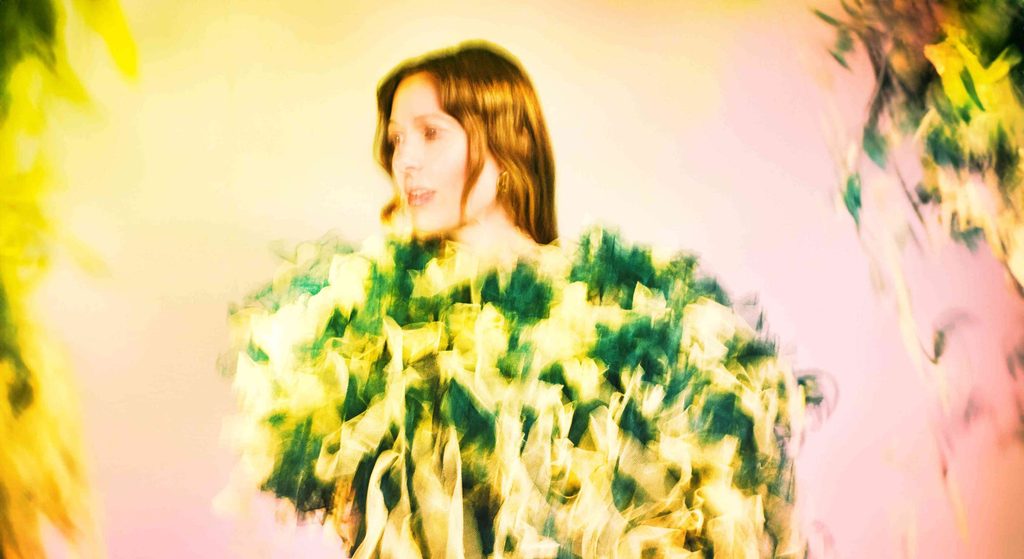
What do you love about the Berlin music scene?
I chose to live in Berlin because of its incredible creative energy. It’s an inspiring place to be, surrounded by so many talented musicians and artists. I was so impressed by the richness of the local music scene that I co-founded the Feral Folk Festival, with the aim of helping exceptional independent artists reach a wider audience.
What would you say is the perfect setting for listeners to enjoy your sound?
Jherek Bischoff orchestrated and produced this album. He found a way to translate the core meaning of my songs in his writing and he made a masterful mix that balances my vocals with the orchestration. I recommend listening on good speakers to appreciate the mix. He did an amazing job.
How has your own style and sound evolved since you started out?
I was exposed to many different types of music throughout my life, so I think my sound has naturally evolved as those experiences accumulated. I grew up listening to church hymns, as I was raised Mormon, then later studied in Paris where I was exposed to a lot of Jazz and sang with an African choir for a time. In my twenties, I became part of London’s anti-folk scene.
When I first started writing, my songs were quite simple, rooted in the harmonies I’d grown up with. Over time, though, my writing became more experimental, drawing on richer rhythms and harmonies inspired by the Romantic era of classical music, which I’ve always loved. Around that time, I also travelled to several African countries through my humanitarian work. Discovering music from places like Rwanda and Sudan, and hearing their different approaches to rhythm, opened up a whole new way of thinking about music for me.
After getting married, I moved to San Francisco, where I became immersed in the city’s psychedelic folk and rock scene. I don’t know if that influenced my songwriting directly, but the arrangements I heard there were often much more expansive, and they encouraged me to think beyond voice and violin which I had been using to accompany myself until then. Around the same time, I heard Jherek Bischoff on the radio. I was completely captivated by his orchestrations, and they inspired me to start arranging my own songs for a wider range of instruments. Those first arrangements became the kernel of this album and, quite serendipitously, Jherek himself eventually came on board to help refine and elevate them into the orchestral landscapes that are now on this record.
In recent years, after almost a decade of health challenges that left me unable to sing, I had to rebuild my voice from the ground up with the help of my Berlin-based Complete Vocal Technique (CVT) teacher, Gina Hudson. I credit her enormously with helping me develop a vocal sound that could sit within the orchestration while also carrying the emotional weight of the songs through the timbre and phrasing of my voice.
Looking back, I think my sound has evolved less through consciously trying to change it and more through the places I’ve lived, the people I’ve met, and the music I’ve been fortunate enough to encounter along the way. Each experience has quietly found its way into the songs.
How did you find making your new single “South Sudan”?
It was very exciting, because it was one of the first songs I tried to arrange/ orchestrate. I remember I had the open score in front of me and just followed my intuition about what would feel good to me. I’d never thought broader than just the piano, so suddenly imagining an entire orchestra was a very different experience. Really wonderful. I’d like to learn more about orchestration and refine my writing in the future. Jherek Bischoff is a very advanced orchestrator and luckily I had his help to elevate this orchestration to where it is on this track.
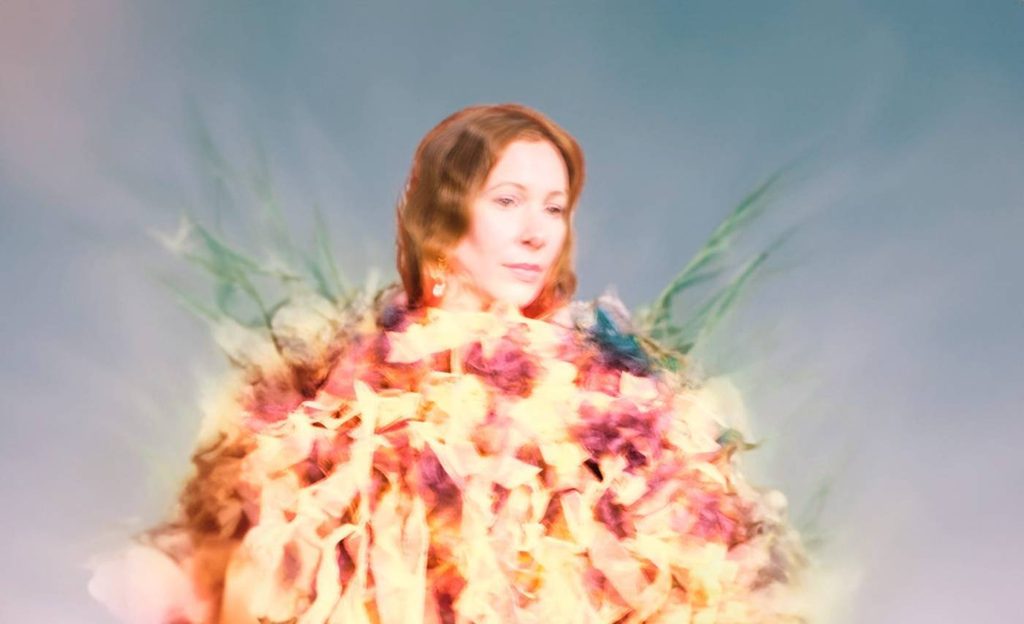
What message did you want to get across with this release?
This song was a synthesis of the feelings and experiences I had after working for an NGO with projects in Sudan. I had the opportunity through that work to meet such amazing people who cared so much for each other and their communities. It was also harrowing to witness how little the Government cared for its citizens and used its income to enrich itself rather than invest in the communities that matter so much. This is rife all over the earth: governments that extract from their people rather than act with responsibility and care. I wanted to give voice to this state of affairs through this song. I deeply feel the world would be a better place, if the communities that already care for each other and the earth so well were truly supported.
Can you take us back to your time in Sudan around 2010–2011 and describe the experiences that stayed with you?
During this time, there was a referendum on whether South Sudan would split from Sudan and there was also an election taking place. The NGO I worked with supported civil society organizations and local communities.
I loved so many things about being there…some of my favourite memories were hiking to where the Blue and White Nile meet on an island in Khartoum. And attending a Sufi gathering at Sunset. It was honestly one of the most magical experiences of my life. I got to see Nuba wrestlers, visit a Camel market (and eat camel!) and once got stuck in a huge crowd on Mohammed’s birthday…I loved how the entire office observed the call to prayer, stopping what they were doing and turning to face God in the middle of the afternoon.
Every day was about 40 degrees Celsius, so the evenings were the best time to hang out. Every evening, we would go sit with Ethiopian tea ladies wearing beautiful diaphanous headscarves who would stew tea with amazing spices for hours and hours.
Another great moment was hearing the most beautiful music I had ever heard on a bus. I knew I would feel bereft if I left Sudan without knowing what it was. So in my very broken Arabic, I asked people on the bus if they knew the artist. Luckily someone did and I was able to write down the name somehow in Arabic. I then went to the market the next day and found a Sudanese tape seller. I showed him the name and he took out all the cassettes he owned of that artist and let me listen to them all. So kind. And I found the song!! I couldn’t believe it. I went home with that prized Cassette tape.
Why did it feel important to revisit those memories and experiences now, years later?
I actually wrote the song closer to the time that this all happened, but I didn’t record or orchestrate it until all these years later due to the health issues I went through in the decade that followed.
Were there specific conversations or moments that directly influenced the lyrics? There is a line where I reference the Nuba wrestling I witnessed…in general the whole song is about the energy of the people I met, personified in the land itself…
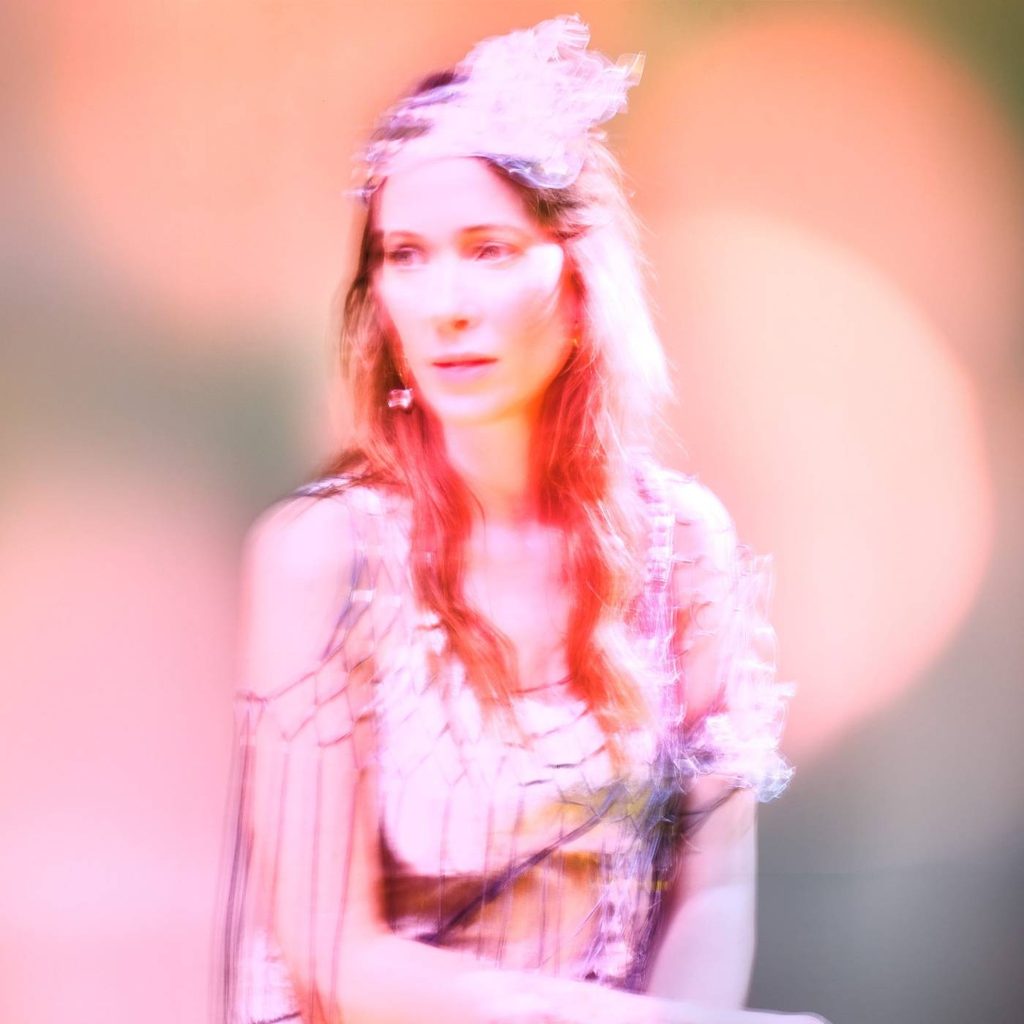
What did producer Jherek Bischoff bring to the project that helped shape the final version of South Sudan?
As mentioned earlier, Jherek Bischoff is a gifted orchestrator, so he was able to elevate, augment and refine the arrangements I had started and take them to greater heights. I truly love all of his mixes for this album as well. He knows so well how to balance such a broad arrangement with the vocals.
What’s the main thing you want people to get out of listening to your music?
That it’s ok that we are vulnerable and human with all the emotions that we have…and also that we are magical spiritual beings having a strange human experience…I’d like to share this quote from Rilke:
“Let everything happen to you: beauty and terror. Just keep going. No feeling is final.
Don’t let yourself lose me. Nearby is the country they call life.You will know it by its seriousness. Give me your hand.”
What’s been your favourite live performance so far?
Sophia Isella, she moved like a possessed wild animal. I was transfixed!
Who would be 3 artists to headline your dream festival?
And where would it be? Mmm let’s see. Caroline Polachek. London Grammar. Aurora.
Do you have any advice for a new artist wanting to follow your footsteps?
Follow your heart and commit to excellence. Have compassion for your own creations, but never be satisfied. There is always more to learn and there are always more detailed ways to create beauty.
Finally, what do you have lined up next?
I am performing at some festivals this summer. I’m also working on new material and releasing further singles this year. The Feral Folk Festival which I co-founded is also happening in Autumn which I’m looking forward to :). Then my album will be released in 2027 at some point 🙂
Listen to South Sudan below
More from Interviews
INTERVIEW: TATE SEDAR drops “Take It All Back”
Born in San Francisco, raised in London and now based in Los Angeles, TATE SEDAR has spent much of his …
INTERVIEW: Cinematic conceptual album from INYO
Coming out of Los Angeles, newcomer INYO is an artist whose musical vision is informed by a desire to explore …
INTERVIEW: Brand new single from Thomas Azier
Dutch singer, composer and producer Thomas Azier has spent the last twelve years making an impression in the European music …