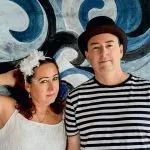












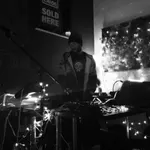

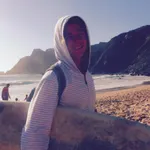
For more than two decades, André Prista has occupied a unique position within Portugal’s musical landscape. A musician, producer, composer and songwriter, he’s best known as the guitarist and main songwriter of the rock band My Alley, but his career extends far beyond a single project. Having worked alongside internationally respected artists and producers including Bob Katz, André Matos, Ralf Scheepers, Jens Ludwig, Henning Basse, Olaf Thorsen and Nozomu Wakai, André has earned a reputation based on musicianship, creativity and a steadfast mission of creating original music.
His work behind the scenes has been equally significant; as a producer and recording specialist, he’s collaborated with some of Portugal’s most recognised artists, including Cabeleira of Xutos & Pontapés, Fernando Ribeiro of Moonspell and Miguel Ângelo of Delfins. Alongside his artistic pursuits, he’s also spent more than 21 years leading and teaching at one of Portugal’s largest institutions dedicated to artistic education.
Now, that wealth of experience finds a new home in Last Light Theory, or LLT, a cinematic rock project that places emotion, atmosphere and storytelling at its centre. While André’s musical background spans rock, production and collaboration on an international scale, LLT feels like the convergence of those experiences into something distinctly personal, a project designed to immerse listeners, drawing them into enveloping sonic landscapes where story and feeling take precedence.
Alternative rock influences sit alongside cinematic textures and epic atmospheres, creating music that feels designed as much for emotional impact as for musical engagement, resulting in music that moves beyond genre boundaries, operating in a space where songs play out like scenes from a larger story. That approach is perhaps best illustrated by the project’s debut single titled “Run For My Life,” a track that revolves around themes of determination, survival and inner conflict.
Set up by the soft plucks of muted guitar notes and gentle vocal delivery, elegant layers swirl as the energy surges into a punchy rock scene. Bursting with crunchy guitar chords, bright synth flutters and commanding vocal performance carrying gripping melodies, the song soars with enthralling energy before simmering back down to the intricate tone of the verse. Rolling with striking drums and belted vocal leads, the choruses serve up thrilling rock energy while lively piano work sets up a brief instrumental detour before the epic finale.
It’s a spectacular slice of Last Light Theory’s fiercely original style of cinematic rock music which sees the project make an emphatic entrance as a must watch new act on the rise. With Last Light Theory, André Prista has created an exciting new project that draws upon every facet of his career while opening the door to a new creative chapter. Combining emotional impact, immersive atmospheres and story-driven songwriting, LLT stands as a compelling expression of an artist continuing to develop.
We caught up with Last Light Theory to find out more about his musical journey so far, the project’s debut single “Run For My Life” and what he’s got lined up for the future. Check out our interview with Last Light Theory below.

Hey LLT, how’s things?
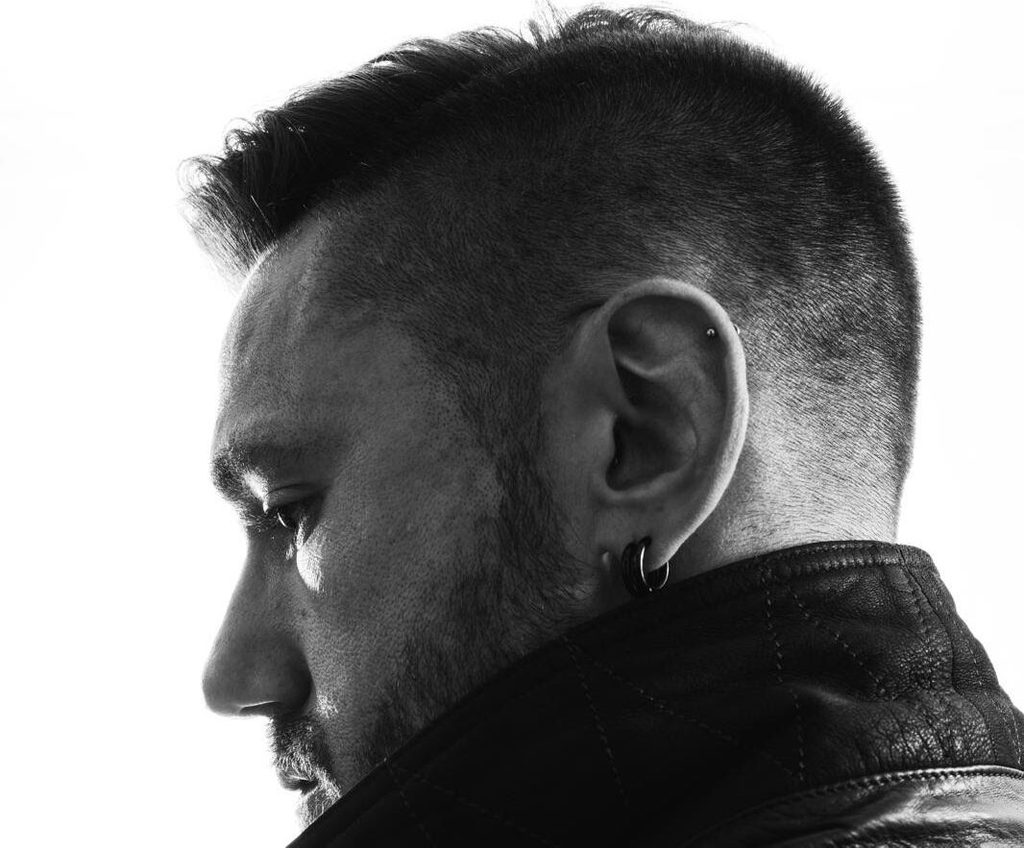
Hi! My name is André Prista, and I’m the lead vocalist and guitarist of Last Light Theory (LLT). First of all, thank you very much for this opportunity. It’s a real pleasure to be here and share our story with you.
Things are going really well. We’re genuinely excited about everything that’s happening around LLT right now, and we’re incredibly grateful to everyone who’s taking the time to listen to our music and support what we’re building. It’s still the beginning of the journey, which makes every message, every stream, and every connection with listeners feel even more special.
What’s your earliest memory of making music?
I think the desire was always there. Not just to create music, but also to record it and share it with other people.
Some of my earliest memories are of recording my first demos on a four-track cassette recorder. A few years later, I recorded an EP on what felt like incredibly advanced technology at the time: an eight-track MiniDisc recorder. I must have been around sixteen years old.
Looking back, those moments taught me that music wasn’t just a hobby for me. I was fascinated by the entire process: writing, recording, experimenting with sounds, and turning ideas into something tangible that other people could experience. In many ways, that’s exactly the same excitement I still feel today.
Which artists do you draw most inspiration from?
I always find this a difficult question to answer because the magic each artist brings to their craft is unique.
That said, if you really want to understand the eclectic landscape inside my head, I’d point to the fearless creativity of Muse, the intimate vulnerability of November Ultra, the epic spirit and collaborative nature of Avantasia, the effortless elegance of John Pizzarelli, and the timeless authenticity of Portugal’s legendary Xutos & Pontapés.
Interestingly, none of these artists sound exactly like Last Light Theory. But that’s precisely the point. Inspiration isn’t imitation. All of those influences pass through my own experiences and eventually become something that feels true to who we are as a band.
I’ve always tried to approach both music and life the same way: stay curious, stay genuine, and never be afraid to feel deeply.
How else do you find inspiration for your music?
I find inspiration in the world around me… in what I feel and what I observe. In people.
There is no greater source of inspiration than human beings and the impact we have on one another. Our contradictions, our fears, our hopes, the way we love, the way we hurt, and the choices we make every single day. All of it leaves a mark.
Many of the songs I write begin there: with a reaction to something human. Sometimes it’s deeply personal, other times it’s something I witness happening in society. In the end, music is simply my way of trying to understand those emotions and give them meaning.
What do you love about your local music scene?
What I love most about our local music scene is its energy and sense of connection. Music has an incredible way of bringing people together, and you can truly feel that when you’re part of it.
I also love the diversity you find from north to south. Even within a relatively small country like Portugal, there are different influences, traditions, personalities, and ways of experiencing music. That richness creates a scene that feels passionate, vibrant, and very much alive.
At the same time, I’ve been fortunate enough to be involved in projects that reached audiences beyond Portugal, and that experience reinforced something I strongly believe: music doesn’t recognise borders. As proud as I am of where we come from, my hope is that Last Light Theory can connect with people all over the world.
Different languages and cultures may separate us on paper, but emotions don’t need translation.
What would you say is the perfect setting for listeners to enjoy your sound?
I don’t think there’s a perfect place to listen to our music. I think there’s a perfect moment.
Maybe it’s during a late-night drive when your thoughts are louder than the radio. Maybe it’s through headphones after a difficult day. Maybe it’s while you’re celebrating something beautiful with the people you love. Or maybe it’s when you’re feeling completely lost and trying to make sense of things.
Last Light Theory was never meant to be background noise. These songs were written to be felt. So if you can give them a few honest minutes of your time and allow yourself to connect with whatever you’re feeling in that moment, that’s the perfect setting.
Because the truth is, we’re all carrying something. If our music can sit beside you through the highs, the lows, and everything in between, then it’s exactly where it’s meant to be.
How has your own style and sound evolved since you started out?
I think my sound has evolved through curiosity more than anything else.
Over the years, I’ve been involved in projects that explored rock, pop, electronic music, neo-classical compositions, heavy metal, and many other styles before arriving at where I am today. Each of those experiences taught me something valuable about songwriting, emotion, and the different ways music can connect with people.
Being both a producer and a musician has also shaped the way I listen to and create music. It has helped me understand not only different genres, but also the people behind them and why those genres exist in the first place. Every style of music is, in its own way, a response to a need, a culture, a feeling, or a moment in time.
I don’t see those experiences as detours. I see them as chapters of the same story.
Today, Last Light Theory feels like the place where all of those influences meet not as a compromise, but as the most genuine reflection of who I am as an artist.
Who would be your dream artist to collaborate with?
That’s an easy question and an impossible one at the same time.
Jacoby Shaddix would probably be at the top of the list. I’ve always admired the way he’s transformed personal struggles into songs that resonate with so many people. There’s a vulnerability and raw energy in his performances that reminds you that being human isn’t about pretending to be strong all the time. Papa Roach have never been afraid to wear their hearts on their sleeves, and I have a lot of respect for that.
Myles Kennedy would be another dream collaboration. Beyond being one of my favourite vocalists, there’s a humility and sincerity in the way he approaches music that I deeply admire. His voice has this rare ability to be both intimate and powerful.
I’d also love to work with Mark Tremonti. He’s the perfect example of discipline, consistency, and evolution. Whether through Alter Bridge, Creed, or his solo work and specially Sinatra Project, he’s proven that you can write memorable songs while staying true to who you are as an artist.
And then there’s Matt Bellamy. I don’t think any dream list would be complete without him. I’ve always admired his fearless creativity and willingness to push rock music into unexpected places without losing its emotional impact.
More than fame or status, I’d want to collaborate with artists who still create out of passion and curiosity, people who walk into a room with ideas rather than ego.
Because the best collaborations don’t just produce great songs. They remind us that music can heal, challenge, inspire, and connect us.
What artist have you been listening to most recently?
Honestly, my recent listening habits probably look a bit chaotic from the outside.
Lately, I’ve been listening to artists like November Ultra, Carminho, Alter Bridge, Muse, Story of the Year, Luke Combs, John Pizzarelli, Papa Roach, and All Time Low. I know those names don’t naturally belong in the same playlist, but that’s exactly how I experience music.
As a musician and producer, I’ve stopped trying to fit my tastes into a single category. Some days I need the vulnerability of November Ultra, other days it’s the power of Alter Bridge, the ambition of Muse, the nostalgia and energy of Story of the Year, the storytelling of Luke Combs, the elegance of John Pizzarelli, the intensity of Papa Roach, or the infectious melodies of All Time Low and Carminho… Fado is Fado!
I think great music transcends genres. At the end of the day, I’m simply drawn to artists who make me feel something real.
And if my playlists have taught me anything, it’s that emotion has no genre.
What’s the main thing you want people to get out of listening to your music?
If I had to sum it up in a few words, I’d say this: I hope our music encourages people to be a little kinder, a little more aware, and a little more human.
I don’t pretend to have answers to life’s biggest questions, but I do believe music has the power to make us stop for a moment and truly feel. To remind us that other people carry invisible battles, that our actions have consequences, and that empathy is never a weakness.
If our songs inspire someone to do a little better, think twice before judging, or become more conscious of the people around them, then they’ve already achieved something meaningful.
And, of course, I hope people allow themselves to let go, sing at the top of their lungs, and share those moments of pure release and connection. If thousands of voices end up shouting, “Runnnnn…!” with me, then maybe, for a few minutes, we’ll all remember what it feels like to be part of something bigger than ourselves.
Because sometimes music comforts us, sometimes it challenges us… and sometimes it simply reminds us that we’re alive.
What’s been your favourite live performance so far?
I’ve been fortunate enough to experience some unforgettable moments on stage throughout more than twenty years of making music. Each one meant something different and became part of who I am as an artist.
But if I’m being honest, I don’t think my favourite live performance has happened yet.
There’s something incredibly exciting about building Last Light Theory from the ground up and sharing these songs with the world for the very first time. I can’t wait for the moment when I hear people singing them back to us when complete strangers become one voice for a few minutes.
Maybe that’s my favourite performance: the one that’s still waiting to happen.
I truly believe the best chapters of our story are still ahead of us.
Who would be the three artists to headline your dream festival? And where would it be?
That’s a difficult one, but I’d probably choose Muse, Papa Roach, and Xutos & Pontapés.
Muse, because they’ve shown that rock music can constantly evolve without losing its identity. They combine ambition, experimentation, and emotion in a way that’s always inspired me.
Papa Roach, because they’ve never been afraid to confront difficult subjects and turn vulnerability into something powerful and unifying. There’s an honesty and humanity in what they do that resonates deeply with me.
And Xutos & Pontapés, because they represent authenticity, longevity, and the rare ability to write songs that become part of people’s lives across generations. Growing up in Portugal, it’s impossible not to recognise their impact.
As for the location, I’d choose Belém, in Lisbon.
There’s something poetic about it. For centuries, people left from there in search of the unknown, driven by curiosity and hope. In a way, music is a journey too. The idea of bringing together artists from different worlds in a place that symbolises discovery and connection feels like the perfect setting for a dream festival.
Do you have any advice for a new artist wanting to follow your footsteps?
The first thing I’d say is: don’t wait for permission.
Don’t wait until you have the perfect equipment, the perfect team, the perfect song, or the confidence that everything will work out. Start creating with whatever you have, where you are, and keep showing up.
Also, don’t chase trends so hard that you lose yourself in the process. Learn from other artists, stay curious, evolve, but never forget what made you want to make music in the first place. Authenticity lasts longer than algorithms.
And perhaps most importantly, understand that rejection, disappointment, and self-doubt are part of the journey. I’ve been making music for more than twenty years, and I still experience all of those things. The difference is that I no longer see them as signs to stop. They’re simply part of the road.
Success means different things to different people. For some, it’s selling out arenas. For others, it’s hearing that one of their songs helped someone through a difficult time.
Whatever your definition of success is, protect your love for music. The day you stop making it for the wrong reasons, you’ve already lost the most important part of it.
Keep learning. Stay humble. Work hard. Be kind.
And never stop creating.
Finally, what do you have lined up next?
I’m currently working on four new songs, each with its own personality and emotional landscape.
They’re all very different from one another, but they share the same DNA as Run For My Life: a cinematic and emotional approach to modern rock, where atmosphere, dynamics, and energy are just as important as the melodies themselves.
I never want to repeat the same song twice. I want each release to reveal a different side of what Last Light Theory can be, while still feeling unmistakably like us.
I’m genuinely excited about what’s coming next. If Run For My Life was the introduction, these songs will reveal even more of who we are and what this project is capable of.
This is only the beginning, and I hope people will join us for the journey.
Listen to Run For My Life below
More from Interviews
INTERVIEW: TATE SEDAR drops “Take It All Back”
Born in San Francisco, raised in London and now based in Los Angeles, TATE SEDAR has spent much of his …
INTERVIEW: Cinematic conceptual album from INYO
Coming out of Los Angeles, newcomer INYO is an artist whose musical vision is informed by a desire to explore …
INTERVIEW: Brand new single from Thomas Azier
Dutch singer, composer and producer Thomas Azier has spent the last twelve years making an impression in the European music …