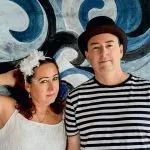




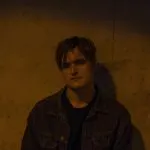


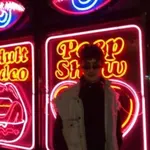





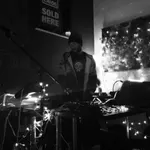
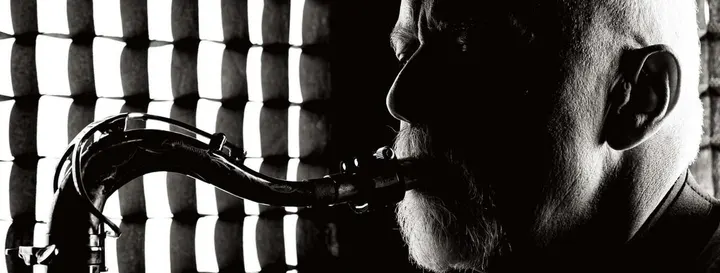
Based in Stavanger, Piftemaen is an artist who treats the saxophone not simply as an instrument but as a means of communication and in his hands, it functions as a voice, a way of expressing emotions that words alone cannot always capture. The project reflects a lifetime spent exploring music, informed by decades of listening, performing and creating without formal training. Improvisation sits at the heart of his sonic vision, resulting in music guided by a creative compass of curiosity and feeling.
The name itself offers an insight into the artist behind the music; a Stavanger word meaning “the man with the whistle,” Piftemaen carries associations with someone outspoken and that context extends into his playing, where the sax becomes a vehicle for expression, observation and reflection. Over the years, his journey has taken an unconventional route and after spending half a century performing in obscure bands and contributing to studio sessions, he stepped away from music for a period. Early in life he chose construction work over a professional music career, becoming a carpenter while raising a family. It was a practical decision that provided stability while allowing music to remain something driven by pure passion. In a small music scene where making a living often requires compromise, remaining an amateur offered a different kind of freedom.
That freedom appears central to Piftemaen’s outlook and without the pressure of commercial expectations, music remained a source of enjoyment and exploration. Over time, it also became something more profound when he discovered that playing music had the ability not only to help him face difficult periods in his own life but also to connect with those listening. Negative energy could be transformed into something positive and in his view, music became a sort of medicine, capable of restoring balance and creating moments of understanding.
Although his roots lie firmly in rock and R&B, his artistic interests gradually expanded where the short, energetic solos that once defined much of that world began to feel limiting, leading him toward broader musical landscapes where emotion could play out at a slower pace with Northern jazz and more spacious forms of expression offering opportunities to explore a wider range of human feeling.
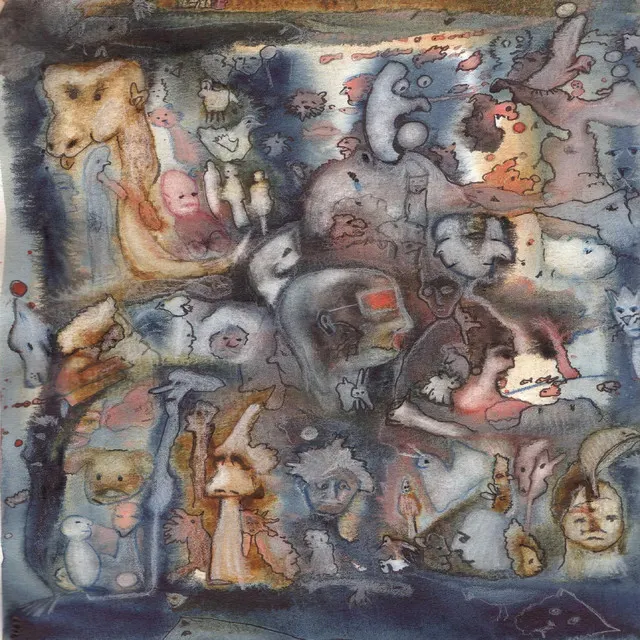
Piftemaen speaks of becoming both wiser and more adventurous over time and without the pressure of trying to “make it,” the desire to create meaningful work becomes more important than chasing recognition, allowing him to approach music with new confidence and openness. That mindset shines brightly in his latest release titled “2060 or So – Short Version,” a track which revisits a song originally created several years ago under his former artist identity, Jake’s Jacket. Looking toward an uncertain future, the song eschews easy optimism while also resisting complete despair.
Thematically, it acknowledges concerns about where humanity may be heading while leaving space for the possibility that meaningful conversations and collective action could lead to a better outcome. Initially, the song grew quickly, with four verses arriving in a short burst of inspiration, eventually expanding into a piece lasting around nine minutes. Recognising that such a lengthy format might be difficult for some listeners to engage with, Piftemaen created a shorter version while preserving its central ideas.
The song channels concern and conviction through a rock-driven framework with Michael Horton providing the guitar work, while Piftemaen handles saxophone, vocals and the remaining instrumentation. Set up by Piftemaen’s bright sax leads, a moody groove forms where rustling drums, pulsing bass lines and smooth sax tones flow with hypnotic rhythm. Dropping the instrumentation back, Piftemaen’s deep, spoken word style vocal delivery enters to spin picture painting lyricism before the arrangement swells with smokey vibes capped by slick sax performance to deliver an engrossing art rock jam that’s memorable and highly original from start to finish.
We caught up with Piftemaen to find out more about his musical journey so far, his new single “2060 or So – Short Version” and what he’s got lined up for the future. Check out our interview with Piftemaen below.
Hey Piftemaen, how’s things?
Things are great. I work on an album to be released this year, and a band to take on tour next year. To find the right people is however not so easy in a small musical scane as the one here in my hometown Stavanger. There are many good ones, but not necessarily the right ones. We gotta be on the same planet musically, skills are not as important as that.
What’s your earliest memory of making music?
It must have been in my teens. I went to a guitar course, and then I wanted to start a band but did not know people to play with. I think I made a couple of songs.
Which artists do you draw most inspiration from?
To be honest: Caroline Lavelle. She sings and plays the cello and piano etc. She is the most musical person I’ve known, and we have released a couple of songs together. Actually I never have met her physically yet, we just found each other via the web.
How else do you find inspiration for your music?
Since I was a kid, I’ve listened to all kinds of music and always become exited. Inspiration may come from all directions. I actually don’t listen much to sax players. Piano and guitar players are just as interesting, but the human voice is most important to me for inspiration. Music to me first of all is a channel for emotions, and nothing is more blunt and naked than the human voice. Also nature itself can be very inspiring. I seek to the mountains and the woods now and then to feel the good vibes from life everywhere around me.
What do you love about your local music scene?
People are straight and fair to each other.
What would you say is the perfect setting for listeners to enjoy your sound?
Leave the smartphone, lean back and let the music into you. The music I make nowadays is not very good for neither dancing nor background noise while you’re working. But I plan on maybe moving into more groovy stuff later on. But I don’t wanna do what everybody else does, and everybody seem to be pleased with only a groove with some autotuned voice on top. I have deep respect for rappers, they are stunt poets and much more artistic than most pop, but emotionally they don’t hit me.
How has your own style and sound evolved since you started out?
I started playing sax as I had a heartbreak at 18 (who hasn’t?), blowing the horn and being able to make small melodies on the fly gave me comfort. I poured all the bad feelings into the instrument, and out came something good. It is true that music sets you free, it is not a cliché. I discovered I could add something while jamming to my favourite records. This is quite revealing, you can’t blame others if something sounds out of tune, and if you are unprecise on the tempo, you hear it at once. Then I started rehearsing scales and got better, and as you play more, your sound improves. I had a tendency to overblow my alto and bought a tenor instead. That was a blast! Since I played in a rock’n’roll band I was not always heard when the guitarplayer turned the volumev knob on 11. To have more power, I ordered the openest Otto Link mouthpiece from a New York shop and got better at high notes without overblowing the horn. The sax is made for 2.5 octave, but I could play 4 after finding an intersting book on the local library. Now I am older and I appreciate soundscapes that invite a wide set of emotions. My style has become softer as I’m aging.
Who would be your dream artist to collaborate with?
I’d like to produce more music with Caroline Lavelle and Clare Kenny. But an ocean lies between us, and Caroline and Clare have been so busy for decades, they probably want an ordinary life now. We are all aging.
How did you find making your new single “2060 or so”?
It was easy. I had this cord progression that I had used long time ago in a song I made, and then I reused it. I had so much to say about the way people live, so words came flowing out. The original version has 4 verses and solos, so it lasts for more than twice as long as the short version. But the 2 first verses say enough for the message to come through.
What message did you want to get across with this release?
I guess I have always been a rebel, already in my teens I was engaged in environmental issues and sometimes became a pain in the butt for people who did not want to listen. The fact that people/goverments/humanity are able to just plan for a couple of years ahead because they are afraid to lose votes, is a trap for us. We need to think centuries ahead, but we have no way of deciding goals that far into the future. So we’re trapped.
What artist have you been listening to most recently?
Jan Garbarek, I guess. I never get tired of him. Also Massive Attack is among artists I often listen to. And then Caroline Lavelle. Most of her albums are incredible, but hardly available.
What’s the main thing you want people to get out of listening to your music?
I want them to appreciate that I am there to visit them. So many times when I have felt down and out, good music has pulled me back to life again. It also has broadened my mind. Music is the best, and also healthiest dope, you are carried away and then fed with energy. If I could be to anyone the way music has been to me, I have reached my goal.
What’s been your favourite live performance so far?
The gigs I remember the best are the ones that are not very long back in time. Lately I have been in my studio most of the time. I quit in a band just to have more time for myself, and I don’t have the right musicians for my new music yet. But then I sat in for a club concert with some old bandmates, and had an incredible response. Also I join live jam sessions now and then and have a ball.
Who would be 3 artists to headline your dream festival? And where would it be?
Susanne Sundfør, Loreena McKennitt, Joan Osborne. It should be here in Stavanger on a nice and sunny day, which are too few in West-Norway.
Do you have any advice for a new artist wanting to follow your footsteps?
Practice playing along your favourite records or CD’s. Reveal yourself onstage, don’t be shy. Also, rehearsals on many kinds of scales in any key is important to feel save while improvising. You can’t be an author if you can’t spell. But just as important to know is that being able to spell does not necessarily make you an author. A great format is just an empty package if the content is missing. And the content is you, a whole human being with anger, grief and all the other emotions.
Finally, what do you have lined up next?
I work on my album. And I am in the process of finding the right musicians to join my band for next year. And: I have carpenter work to do on my wife’s cabin 🙂
Listen to 2060 or So – Short Version below
More from Interviews
INTERVIEW: TATE SEDAR drops “Take It All Back”
Born in San Francisco, raised in London and now based in Los Angeles, TATE SEDAR has spent much of his …
INTERVIEW: Cinematic conceptual album from INYO
Coming out of Los Angeles, newcomer INYO is an artist whose musical vision is informed by a desire to explore …
INTERVIEW: Brand new single from Thomas Azier
Dutch singer, composer and producer Thomas Azier has spent the last twelve years making an impression in the European music …