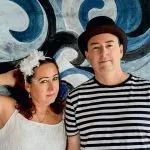






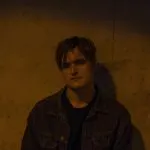
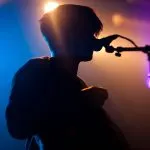

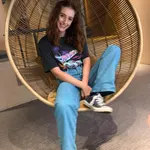




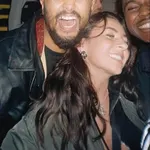

Since forming in 2022, London-based duo Ghost of Panama have been building an artistic world unlike any other, shaped by a fascination with atmosphere, unique storytelling and the emotion hidden inside everyday moments. Now consisting of Keith Welham and Cristabel Liu, the pair have developed a creative output that flows across eras, drawing on the spirit of 80s punk and post punk which they filter through their modern sonic lens.
Their development has been gradual and after releasing their first two singles in 2022 and performing across Central and West London, Ghost of Panama continued expanding their catalogue with four additional singles across 2023 and 2024. By the end of 2024, the lineup had become a focused two-piece, allowing Keith and Cris to concentrate more heavily on studio work while continuing to deliver occasional live performances. That creative shift produced a string of EPs with The Wrecking of the Cargo King, Astral Days and Spectral Letters and Before Records Began.
Across those releases, Ghost of Panama mapped out a flair for approaching familiar emotions from unexpected angles. Their music draws thought and feeling from unusual perspectives, finding the extraordinary inside seemingly ordinary subjects, a quality that’s helped the duo’s growing presence by balancing intricate arrangements with emotive songwriting that continues to strike a chord with listeners across the UK and beyond.
Now they bring us their most ambitious release thus far with their debut full-length record titled The Last Food on Earth. The ten-track album plays out as a complete emotional journey, following the anatomy of a relationship through its many psychological stages. Entrapment gradually gives way to guilt, acceptance, indecision and ultimately, resolution, creating an overarching story that connects each piece while retaining the individuality of the songs themselves.
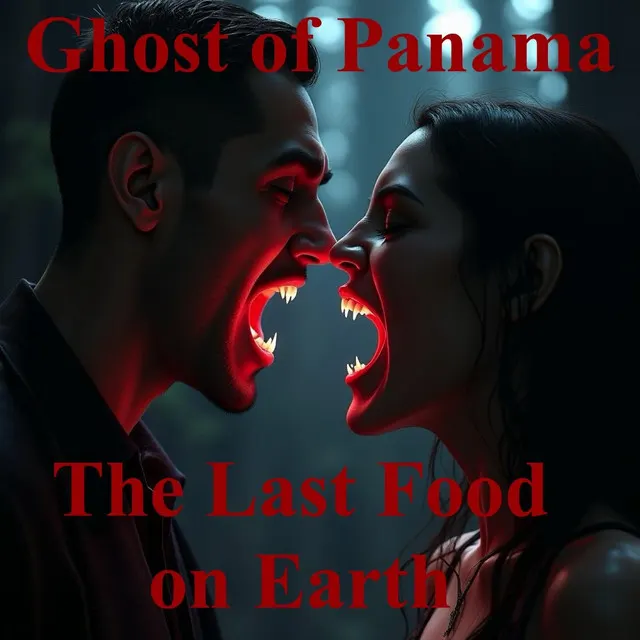
Recorded primarily inside a small project studio in West London, the album uses inventive production choices that add to its emotional landscape; found sounds collected around the city become part of the musical vocabulary, tethering abstract ideas to tangible environments. Opened by “The Lift,” the album starts with lively guitar chords and bright leads as the steady punch of drums drives the arrangement forward. Capped by Cris’ expressive vocal leads, the craft a catchy folk rock jam that progresses with rhythmic shifts and overlapping vocal layers.
The elegant flutter of piano notes on “Stockholm Syndrome Reversed” is met by rustling percussion and pulsing bass notes before slipping into an intricate indie outing brimming with memorable melodic leads, playful lead guitar work and storytelling lyricism. “Half-Life,” where breathing and the sound of a Geiger counter replace traditional drum parts, showcases Ghost of Panama’s ability to reshape familiar musical structures in service of atmosphere and storytelling.
Tracks including previously released singles “Damage” and “Ghost of Your Perfume” provide moments of sticky melodic appeal, while broader, more expansive compositions such as “Siberia” stretch into sweeping cinematic sphere. That contrast between intimacy and transportive aesthetic allows the album to continually shift its emotional perspective to take listeners on an engrossing sonic voyage from start to finish.
“Afterlife” builds from the twang of mellow guitar plucks and flickering bass notes as the soft patter of percussion and airy organ textures usher in a marching rock soundscape as Cris’ commanding vocals soar above. The closing track, “North Star,” serves as the conclusion of everything that precedes it, designed to build gradually towards an emotional climax that offers optimism. After nine songs immersed in bleakness, it provides a sense of release without undermining the difficult journey that comes before to deliver an uplifting finale to the band’s sensational debut record.
We caught up with Cris from Ghost of Panama to find out more about their musical journey so far, their debut album The Last Food on Earth and what they’ve got lined up for the future. Check out our interview with Ghost of Panama below.
What’s your earliest memory of making music?
When I was little, I was pushed towards playing violin. At the age of four, I was taken to weekly violin lessons. I never really empathised with the instrument, though, and dropped it. Maybe now, I wish I’d kept going with it. With singing, that developed later and it took me a while to find myself in that aspect.
Which artists do you draw most inspiration from?
I am not sure if it’s really inspiration but I enjoy a whole lot of things. I think if you listen to enough diverse things then it rounds out your musical vocabulary in the sense that it gives you the tools to say what you want to say. I can’t say that there’s any one artist that made me think that I’d be a musician. I just sort of drifted into it.
How else do you find inspiration for your music?
My role is more to help develop what starts as some outline songs by Keith. He’s usually got an idea for a melody and he’ll sing it through while playing on guitar. I’ll then try and take it and polish the melody a bit to give it a bit more precision and definition. I’ll also try and hold some tension against the chords to make it interesting. Then we’ll work out where harmonies need to be and whether we need to increase or reduce the tension anywhere. I try and listen to where the harmonies could be more complex and we have to be careful what to include or leave out as if just becomes like soup or homogenised radio filth.
What do you love about the London music scene?
From a listener’s perspective I like the diversity. There’s all sorts of stuff to suit every taste. In West London, for example, there is a very lively jazz scene. From Acton to Twickenham, there’s often something on most evenings. You can’t complain about variety. However, from a performer’s perspective it is often a nightmare. The logistics of moving stuff around the city, getting fines when trying to unload and then trying to dump your car somewhere. I’ve sung in pubs and clubs all over the city and it’s the thing that depresses me. It seems like the authorities say that they want live music but they won’t lift a finger to help.
It’s just another block to performing live.
How did the Ghost of Panama project start?
It was quite funny, actually. I have a half-sister who was at the same school as Keith’s daughter and we met at a school event. We got talking and I somehow ended up singing some backing vocals for an earlier version of the band. There were a few tensions in that line-up and some people were not always reliable. In the end, it more or less withered away to the two of us until Keith said “I’ve had it with this setup and I’ve had it with singing but I still have things to say. Why don’t you sing lead?”. That was the start of the present incarnation.
What would you say is the perfect setting for listeners to enjoy your sound?
Personally, I would say feet up with a bottle of good red wine. Actually, even a bottle of bad red wine would do but that depends on budget. It all depends on context, though. We might come across as sort of restrained and controlled on record. However, we try and give it our all in a live setting. The sound and vision of Ghost of Panama in a sweaty basement club is a very different proposition to the recorded version. That’s a problem, though, as with just the two of us now we need to change things round a lot and lose flexibility to adjust things live if we want to sound like we do on record. That means we can’t really play live at the moment as we don’t want to be two people who just play the hits to backing tracks. It becomes a bit like karaoke.

How has your own style and sound evolved since you started out?
I think the Ghost of Panama sound has become much smoother and that is to a large extent down to a growth in confidence. We take more chances now and have learned from mistakes. In many ways “The Wrecking of the Cargo King” EP was safe. It was taking songs that had existed live and were proven. Sure, we added our (nowadays) trademark sound effects etc. but it was all quite easy. With “Astral Days and Spectral Letters”, it was more a drawing of a line under something and making a statement of intent that things were changing. Keith came in with this incredible song (“Astronauts”) which just resonates with so many people, including me. There’s also a drawing of a line under the past – re-recordings of “Spectral” and “Awayday” but then also “Shipwrecked” which was the first time that we messed around with time signatures. There’s no way that we’d have done that before. Then, we did “Before Records Began”. We learned a lot from that, I think. It was more direct and we learned who we are and who we aren’t. I found that EP very hard work. There were two songs that I thought didn’t suit my voice (“In the Beginning” and Prehistory”) and maybe Keith should have sung those. We learned that we could write pop records on unusual subjects (“Under My Garden”) and make odd stuff sound good (“Nautilus”).
Given all that, “The Last Food on Earth” doesn’t feel like it’s come from nowhere. The sound is definitely an evolution. You can hear echoes of “Nautilus” in “Half-Life”, for example plus the time sig changes which we worked out how to do on “Shipwrecked”. I think we know now how to make the song work for us, not us work for the song. It’s a liberating feeling born from greater confidence. However, we stick a lot more closely to what we know we do well. It’s always a fight to not be self-indulgent but we work on the basis that if we like it then it’s good enough.
You can’t please everyone and please yourself as well.
Who would be your dream artist to collaborate with?
That’s a hard one. I suppose at first pass it would be the Beatles but that’s not going to happen. They merged great songwriting with studio innovation and most of popular music owes them a debt. I suppose that’s the sort of thing we would aspire to. However, we plough a different furrow. I lean more towards stuff that speaks across boundaries rather than projects one vision outward. Someone like Manu Chou would be a dream.
How did you find making your new album ‘The Last Food on Earth’?
It was hard work and to explain that, I have to go to the beginning. The genesis of it was a little odd. Our previous EP (“Before Records Began”) didn’t quite work and we had to decide what to do next. We went out together for a drink and to talk things over. That’s unusual as we don’t generally socialise that much. We both have our own families and social circles. On this occasion, we both managed to get really hammered and were really able to open up about a lot of things. What we did or didn’t like about the previous EP and talking about ourselves personally. We found that we had both been victims of relationships that had, in one way or another, been abusive or subject to decay. This pointed us in a direction.
I had honestly forgotten about the conversation until Keith called me a couple of days later asking if he could come round and play me a couple of things. The first song he played me was “The Lift” and it was as terrifying a song as I had ever heard. He kept repeating “Is this all there is” in the code and explained it as imagining your whole life being trapped in a lift with someone. The next one he played me was “Ghost of Your Perfume” which was such a contrast. I thought, this will work and I really want this thing to happen. So, we added more songs. Some were half-formed, some completely new. The process was rather on working on what we had where and when we had it. The album developed organically song-by-song not like songs needed, write songs, record them. We got to eight songs and thought that it was too bleak and it was also a bit short. We decided that we needed to draw a line under the first eight songs. That was “Afterlife” which was this bombastic full-stop moment. We then added “North Star” which was a readjustment or an escape from the bleakness of the first eight songs.
We needed it. We were getting heavily weighed down especially Keith, who had exhumed so many elements of his past for the songs. Just watching this process was wearing for me. It was hard for me also, I needed to try and find the right way to lift things in the right places. It shows, maybe, the lesson that things that are done easily are never valued by their creators. We know that, even if we never recorded another thing again, we had a blank sheet of paper and did something that nobody else could have done and we are rightly proud of that.
What message did you want to get across with this release?
Although 4/5 of the album is bleak, it carries a message of hope. No matter how bad the relationship is that you are in, there is still something you can do about it? There’s no need to accept a “half-life” as in the first three songs.
What artist have you been listening to most recently?
Keith pointed me to a French-Canadian singer, Llasa de Sela. She was incredible but sadly died all too young quite a few years back. It’s great to hear such a wonderful voice and I wish I could sound as full as that. We are so incredibly lucky to live in today’s times with all the problems. If I had lived 100 years earlier, I would most likely never have heard her, or any great artist from a few years previous as they would not have been preserved. We now have a wonderful access to influences. In some ways, it makes labels of genres irrelevant as they were convenient for hear-and-now reportage but who cares now if everything can stick to the wall at the same time.
What’s the main thing you want people to get out of listening to your music?
If people can enjoy, have a good time, challenge what’s around them then I’d call it a success. I think our music is reflective and, if people reflect, the it would seem to have done its job.
Do you have any advice for a new artist wanting to follow your footsteps?
Yes. Don’t. 😀 I am sure there are easier paths to follow even within the music industry than the way we’ve done it. We’ve both done the rounds with record companies and got fed up with them. I’ve sung all night in bar bands to people who didn’t care if I was there or not but were keen to offer me a “lift home” afterwards. More seriously, it is to be true to yourself. Maybe the best bit of advice is that it’s your face in the mirror in the morning.
Finally, what do you have lined up next?
Well, things move at pace. Although we were pretty burned out after “The Last Food on Earth”, we wanted to keep things moving. Initially, we had the idea of putting out an EP with some of our old encore songs. We had a little rule – Ghost of Panama encore songs are always covers, not like the originals, intentionally unexpected and, ideally, not repeated. So, we recently released a cover of Bob Dylan’s “Subterranean Homesick Blues”. However, we decided against the EP and chose to move on entirely for the next release which is a cover of John Cale’s “Paris 1919” which we’ve never done live. Beyond that, we are planning two more original singles over the next few months – “Hey, Cristiana!” And “Jim Morrison’s Decay”. The problem we have is that we have too many songs. It’s a nice problem to have. We’re certainly not diving into another album right now but Keith has said he has an idea for one – but just not yet.
Listen to The Last Food on Earth below
More from Interviews
INTERVIEW: TATE SEDAR drops “Take It All Back”
Born in San Francisco, raised in London and now based in Los Angeles, TATE SEDAR has spent much of his …
INTERVIEW: Cinematic conceptual album from INYO
Coming out of Los Angeles, newcomer INYO is an artist whose musical vision is informed by a desire to explore …
INTERVIEW: Brand new single from Thomas Azier
Dutch singer, composer and producer Thomas Azier has spent the last twelve years making an impression in the European music …