





















Hungarian outfit Dirty Slippers have spent years proving that a band’s influence can go beyond the stage and the studio to make a truly meaningful social impact. Splitting their time between Budapest and London, the indie pop rock quartet has built an international profile through infectious songwriting, acclaimed recordings and an expanding relationship with audiences across Europe. Alongside chart success and high-profile studio sessions however, the group has developed another identity entirely, based in community, conversation and the belief that music can create genuine human connection.
Formed by Lazar Lobo-Szaloky, Bebi Ferenczi, Dominik Felleg and Daniel Vikukel, Dirty Slippers have become one of Hungary’s most recognisable contemporary rock bands. Their blend of melodic, radio-friendly indie pop rock has carried them to three chart-topping albums, establishing a reputation for writing songs that are at once accessible and emotionally engaging. While their music has introduced them to listeners far beyond their home country, it’s the consistency of their artistic growth that continues to pave their artistic path.
That ambition has led the band into some of the music industry’s most respected creative spaces; recording at Abbey Road Studios marked an exciting moment, while collaborations with producers Tim Palmer and George Shilling further strengthened their developing sound. Their relationship with the UK music scene has continued to flourish and since 2024, the band has worked alongside Reaction Management, opening another chapter through a series of successful UK tours. The move reflects a group determined to build international connections while remaining tethered to the values that have shaped their career from the beginning.
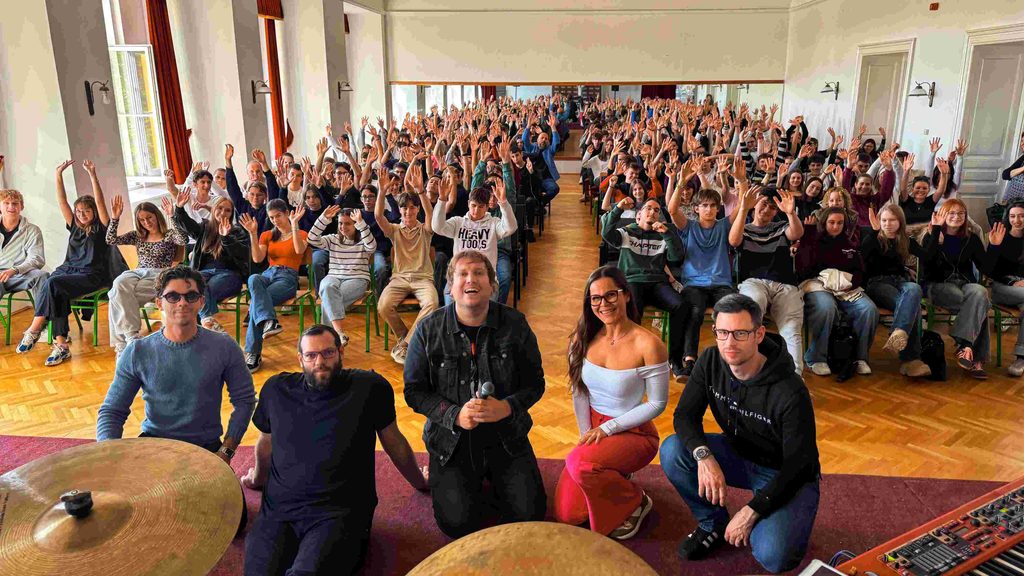
But for all the milestones associated with recording studios, producers and touring schedules, perhaps the most remarkable aspect of Dirty Slippers’ story happens away from traditional music venues altogether. For the past fifteen years, the band has dedicated itself to Suliturné, an award-winning initiative that brings live rock performances directly into schools across Hungary. The programme uses music as a starting point for conversations about subjects that many young people struggle to discuss openly. Mental health, addiction prevention, alcohol, drugs and the pressures that accompany adolescence all become part of an honest dialogue forged through performance.
The concerts create an environment where students can engage with the music first, before opening up about their own experiences afterwards. According to the band’s philosophy, songs can often reach places that conventional conversations cannot, creating opportunities for young people to feel heard without judgement. The impact has been extraordinary and Suliturné has now visited more than 800 schools, while another 250 institutions continue to wait for future visits. Recognition has naturally followed, including the Hungarian Record Award and the Just Clear Award for Education Programme of the Year 2025, but those honours only tell part of the story.
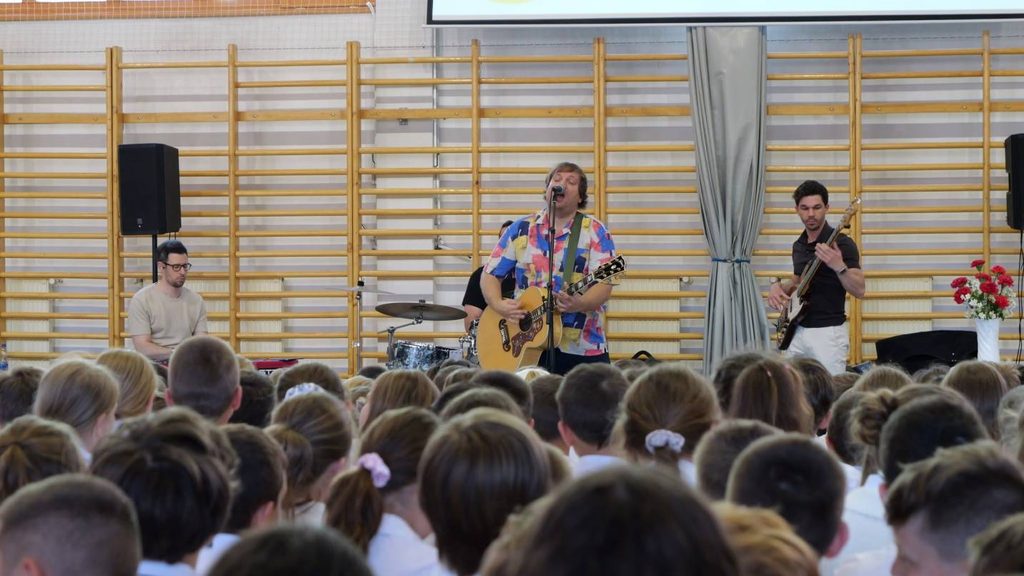
The band themselves measure success differently, with the most meaningful moments arriving after the amplifiers are switched off, when students remain behind to continue talking. Those conversations, often revolving around profoundly personal struggles, highlight the project’s original purpose. Hearing a young person simply say, “Thank you. I needed to hear this today,” carries more weight than industry accolades ever could and that perspective gives Dirty Slippers an identity that’s seldom seen in the music sphere. They’re artists who understand that songs are capable of entertaining audiences, but also of creating space for emotion, empathy and understanding.
It also explains why the band’s success feels so multidimensional, with their growing catalogue, international touring, chart achievements and prestigious recording sessions all showcasing impressive artistic momentum. As Dirty Slippers continue expanding their audience across Europe, Suliturné stands as an endeavour that shows that music’s greatest achievements are not always measured in streams, sales or awards. Sometimes they’re found in classrooms, quiet conversations and the confidence to speak when it matters most.
We caught up with Dirty Slippers to find out more about their musical journey so far, their School Tour Programme and what they’ve got lined up for the future. Check out our interview with Dirty Slippers below.

Dirty Slippers has now been together for many years. Looking back, what originally brought the band together?
Dirty Slippers started with a simple dream shared by a few friends: to write honest songs and play as many live shows as possible. We weren’t thinking about awards, charts or record deals. We simply loved British guitar music and believed that if we stayed authentic, people would eventually connect with our songs. Looking back now, I realise it wasn’t just the music that brought us together—it was a shared belief that music can genuinely change people’s lives, help the new generations.
How has your identity as a band changed since those early days?
In the beginning, we wanted to become a successful punk-rock band. Today, I still want that—but success means something much bigger.
We’ve realised that a song doesn’t end when the applause fades. Sometimes it continues in a classroom, in a conversation between friends, or in the mind of a teenager who’s struggling.
Today, Dirty Slippers is not only a band. It’s a platform that connects music with education, mental health and drug prevention. Now we started our “Friend of Suliturné” campaign, and Frank Turner was the first famous musician who sent a supporting video message. That means a lot to our band and the hundreds of thousands of youth people too.
Has your definition of success changed over the course of your career?
Absolutely. When I was twenty, success meant playing bigger festivals or hearing our songs on the radio. Today, success is receiving an email from a teacher saying that one of our school visits changed the atmosphere of an entire class. Or meeting a young person years later who tells us, “Your programme helped me make a better decision and say no to the drugs.” Those moments mean more than any chart position.
At what point did you realise your music could have an impact beyond the stage?
Very early during our school visits. After one concert, a student stayed behind and quietly told me that it was the first time an adult had spoken to them honestly about drug addiction, pressure and mental health—without judging them.
That conversation changed me. It made me realise that music opens doors that traditional communication often cannot. We know how to talk with these young fellas, and they trust us from the first step. A rock band knows exactly which dangers are in the nightlife.
How did the idea for the Suliturné school programme first come about?
Back in 2011, we realised something was missing. We recorded a song called “Élned kell” /You need to live/ against HPV, cancer and drugs. But nothing happened. Most people thought, that’s a love song. After that I realised, we need to go to the schools and start our program in person.
Schools invited many experts to talk about drugs and alcohol, but young people often felt those talks came from people who didn’t understand their world. We wanted to approach the same issues differently. Instead of beginning with statistics, we begin with music. A festival style rock n roll concert in a school’s sports hall or assembly hall? That’s really unusual.
Instead of creating distance, we create trust and community. Only then do we start talking about life’s difficult questions, focused on drug prevention and mental health.
Why did you feel music could succeed where traditional lectures sometimes struggle?
Because music speaks before words do. A teenager may reject advice, but they rarely reject emotion. When you play a song, you don’t arrive as an authority—you arrive as another human being, a friend from the neighbourhood. That completely changes the conversation. Music creates emotional openness, and that’s where real education begins.
Was there a particular experience with young people that convinced you this programme was necessary?
Not one. Hundreds. Every school has its own story.We’ve met teenagers struggling with addiction in their families, anxiety, bullying, loneliness or simply feeling invisible. Many of them have nobody they truly trust. No one is there to help them escape the perils of nightlife and avoid falling into drug use. If our visit gives even one young person the courage to ask for help, then every kilometre we’ve travelled has been worth it.
You’ve now visited more than 800 schools. Did you ever imagine the project would grow to this scale?
Honestly—never. When we started, I thought maybe we’d visit twenty or thirty schools. Today we’ve reached more than 800 educational institutions, and over 250 schools are currently waiting for us. That tells me something important. Young people don’t need more lectures. They need honest conversations.
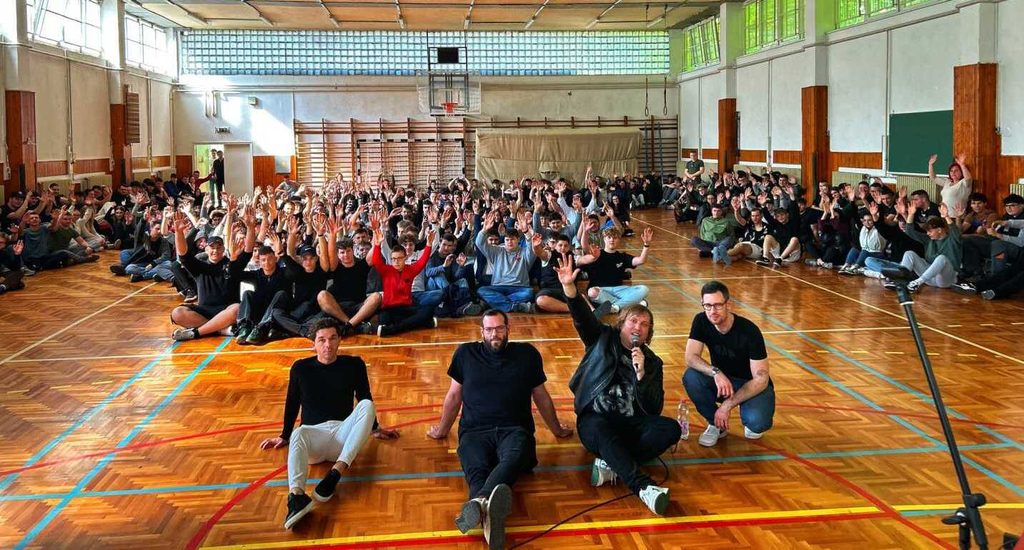
Has the way teenagers talk about mental health and problems with the drugs changed since you first launched Suliturné?
Definitely. Fifteen years ago, many students were afraid to speak openly. Today they’re much more willing to discuss the house parties, where they “met” with the drugs for the first time. That’s encouraging. But it also reminds us how important prevention has become. Young people are talking less — that is why they need adults who genuinely listen.
The programme recently received the Hungarian Record Award and the Just Clear Award for Education Programme of the Year 2025. What did that recognition mean to you?
The awards were a wonderful honour, but they don’t belong to us alone. They belong to every teacher who invited us, every school that trusted us, every parent who supported the programme, and every student who had the courage to speak honestly. Recognition is encouraging. Responsibility is even greater.
More than 250 schools are still waiting for Suliturné. How do you hope to continue expanding the programme?
Our biggest dream is simple. After hundreds of successful programs in Hungary, Romania and Slovakia we would like to travel back to the UK and now, start our unique drug prevention programme in the british schools. We heard a lot of terrible stories from the Island, so I think we could be helpful there too. Of course we continue our program in Hungary too.
Music is a universal language, so it can help convey our message and mission everywhere. Fortunately, our lyrics also touch on topics that move young people. I trust that in our next interview, I’ll be able to report on us performing in London or Glasgow with Suliurné.
Looking ahead, what legacy do you hope Dirty Slippers leaves, not only through its music, but through the lives you’ve helped change with Suliturné?
I hope people remember us for more than our songs. If, twenty years from now, someone says: “Dirty Slippers wasn’t just a band. They cared.” …that would mean everything to me.
Music can entertain people for three minutes. But kindness, honesty and hope can stay with someone for a lifetime. And if we’ve helped even a small part of that happen, then I believe we’ve already been successful.
Watch the music video for The Best below
Photography Credit: Mike Banks / Abbey Road Studios
More from Interviews
INTERVIEW: TATE SEDAR drops “Take It All Back”
Born in San Francisco, raised in London and now based in Los Angeles, TATE SEDAR has spent much of his …
INTERVIEW: Cinematic conceptual album from INYO
Coming out of Los Angeles, newcomer INYO is an artist whose musical vision is informed by a desire to explore …
INTERVIEW: Brand new single from Thomas Azier
Dutch singer, composer and producer Thomas Azier has spent the last twelve years making an impression in the European music …