




















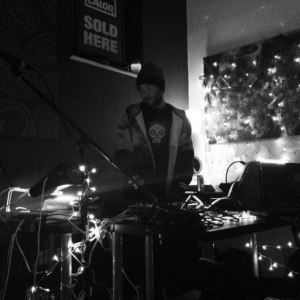




Remon Nakanishi brings a thoroughly unique offering to Japan’s artistic landscape, creating from a place where music, visual art and cultural research constantly inform one another. He avoids viewing traditional folk music as something to be carefully preserved behind glass in favour of seeing it as a living practice capable of developing through collaboration, movement and new perspectives. His work forms at the crossroads of history and imagination, creating music that honours centuries-old traditions while inviting them into the present with sensitivity.
As a teenager, Remon travelled extensively across Japan, immersing himself in Bon Odori festivals held throughout the summer. These communal celebrations, traditionally organised to honour ancestors and strengthen local communities, became far more than performances to observe, with each gathering carrying its own atmosphere, shaped by place, memory and the people who came together to participate. Those experiences profoundly influenced his understanding of creativity, teaching him that tradition survives not through repetition alone, but through shared experience and continual renewal.
Alongside his growing fascination with Bon Odori, he developed contemporary dance pieces and paintings inspired by the landscapes, rituals and emotions surrounding these festivals. His artistic identity expanded further through field research into Japan’s traditional performing arts, allowing him to witness firsthand how folk traditions naturally transform over time through informal exchange rather than rigid preservation. Moving between underground creative communities, folkloric research circles and modern art spaces, he gradually assembled an artistic language that brings together scholarship and expression.
It was through his involvement with Monogatari Uchūno Kai that his voice as a vocalist fully emerged, eventually leading to his first recorded work in 2022 and from that point onwards, the boundaries between researcher and performer began to dissolve, giving rise to an output where academic curiosity and musical creativity could coalesce as one practice. That adventure continued with Sparrow’s Arrows Fly so High by Suzumeno Tears, a project that reimagined vernacular Japanese traditions through a contemporary lens while reflecting on cultural identity in a changing, post-pandemic society. Now, Remon expands that vision even further with his sophomore album titled Till the Ravens Rise at Dawn.

Following five consecutive single releases, the album presents an ambitious expansion of Japanese traditional pop based in minyo, drawing together a wider selection of regional folk songs and increasingly adventurous arrangements. Where its predecessor, Hinano Iezuto, centred primarily on traditions from Japan’s Tohoku region, this new outing explores its geographical and musical horizons while continuing to celebrate Japan’s diverse folk heritage. The opening track “Tanto Bushi” sees Remon link up with Bloodest Saxophone and Emerson Kitamura to deliver a bright slice of grooving music that flows with punchy drums, funky guitar chords and Remon’s instantly recognisable vocal style which flutters above with lively melodic flair.
“Niikawa Kodaijin,” created alongside Suzumeno Tears was originally passed down as a Bon dance song in Toyama Prefecture’s Namerikawa City and the piece is transformed through the rhythmic vitality of Brazilian musical influences. Acoustic guitar introduces the arrangement before Remon’s vocals glide into an energetic landscape of buoyant percussion and lively instrumentation. Backing vocals from Suzumeno Tears add further movement, while internationally recognised Brazilian drummer Daniel Baeder and percussionist Gennnoshin Yasuda contribute grooves that connect Japanese tradition with global rhythmic languages.
“Kawasaki” offers another compelling reinterpretation, revisiting a Bon Odori song originating in Gifu Prefecture; once again joined by Daniel Baeder, whose baião-inspired drumming introduces a distinctly Brazilian pulse, the recording plays out through delicate guitar arpeggios and carefully arranged double bass lines by Masanori Hattori. Suzumeno Tears provide engaging backing vocals that gently surround Nakanishi’s emotionally charged lead performance, creating an atmosphere that feels intimate, transportive and spellbinding. Other highlights include tracks like “Kuroishi Yosare” which introduces rolling North African Gnawa-inspired percussion alongside sparse double bass and dry, expansive guitar textures.
“Sawauchi Jinku” shifts into a more reflective mood while remaining equally inventive. First associated with drinking gatherings and Bon Odori festivals in Iwate Prefecture, the song is reshaped through relaxed production inspired by the laid back stylings of Roy Ayers while keyboardist Emerson Kitamura enriches the arrangement with subtle textures and Suzumeno Tears’ harmonies amplify the emotional gravity of lyrics based in historical famine and sacrifice. “Yamada Han’ya” flows with the soft patter of drums as a call and response vocal arrangement between Suzumeno Tears and Remon dances atop the grooving instrumentation of moody bass lines and flashes of airy guitar elements.
Closing the album with “Hokkai Bon-Uta” leans into a playful jazz-tinged scene where bright brass dashes pepper the arrangement as shuffling drums carry the mellow rhythmic sway and Remon’s captivating voice dances alongside the lively vocal work of Suzumeno Tears. Throughout Till the Ravens Rise at Dawn, Remon Nakanishi shows that tradition is not something static or fragile, but something capable of continual transformation and by embracing collaboration, global musical influences and thoughtful reinterpretation, he expands the possibilities of Japanese minyo while still paying respect to its origins.
Listen to Till the Ravens Rise at Dawn below
More from Albums

New full-length record from Divergent
While some musical ambitions take a little longer to find their moment, the journey for Iowa-based trio Divergent has been …
New album from Ashot Danielyan
Based in Moscow, pianist, composer and improviser Ashot Danielyan has spent more than a decade developing a musical output that …

Bryan Howell returns with new studio album
Originally hailing from central New York and now based in Nashville, Bryan Howell has spent more than a decade developing …