
















Mister Chorister is the latest artistic banner for an artistic vision that stretches back decades. Born in Australia and now based in London, the project marks the return of a songwriter who first began making music as a child before stepping away from it for almost three decades. Now, that long silence has become part of the story and by not representing lost time, the years away have given Mister Chorister’s work a perspective influenced by change, experience, determination and the rediscovery of something that was ultimately always there.
Driving the project is a need to create and a desire to explore the questions that surface along the way. Mister Chorister describes this process as a conversation with an inner voice, not in a religious sense, but as something highly personal, where identity, purpose and the world around us all become part of the conversation, with the songs opening that internal dialogue to the listener via an invitation here to stop, reflect and consider what might still be possible.
Mister Chorister draws from the emotional scale of The Killers, Coldplay, Bruce Springsteen and Paul Simon while the atmosphere of 80s new wave and the widescreen pull of classic anthemic rock also echo in his sound. It’s an intriguing combination that gives the project a flair for melody while holding on to the emotional themes behind the songs.
That vision first arrived publicly with February’s debut single, “Brave,” and open-hearted and melodic track that mapped out a musical language centred on reflection and rediscovery. Following the sophomore single “Spark,” Mister Chorister now ventures further into more troubled sphere with “You’re Not Listening,” the project’s brand new third single.
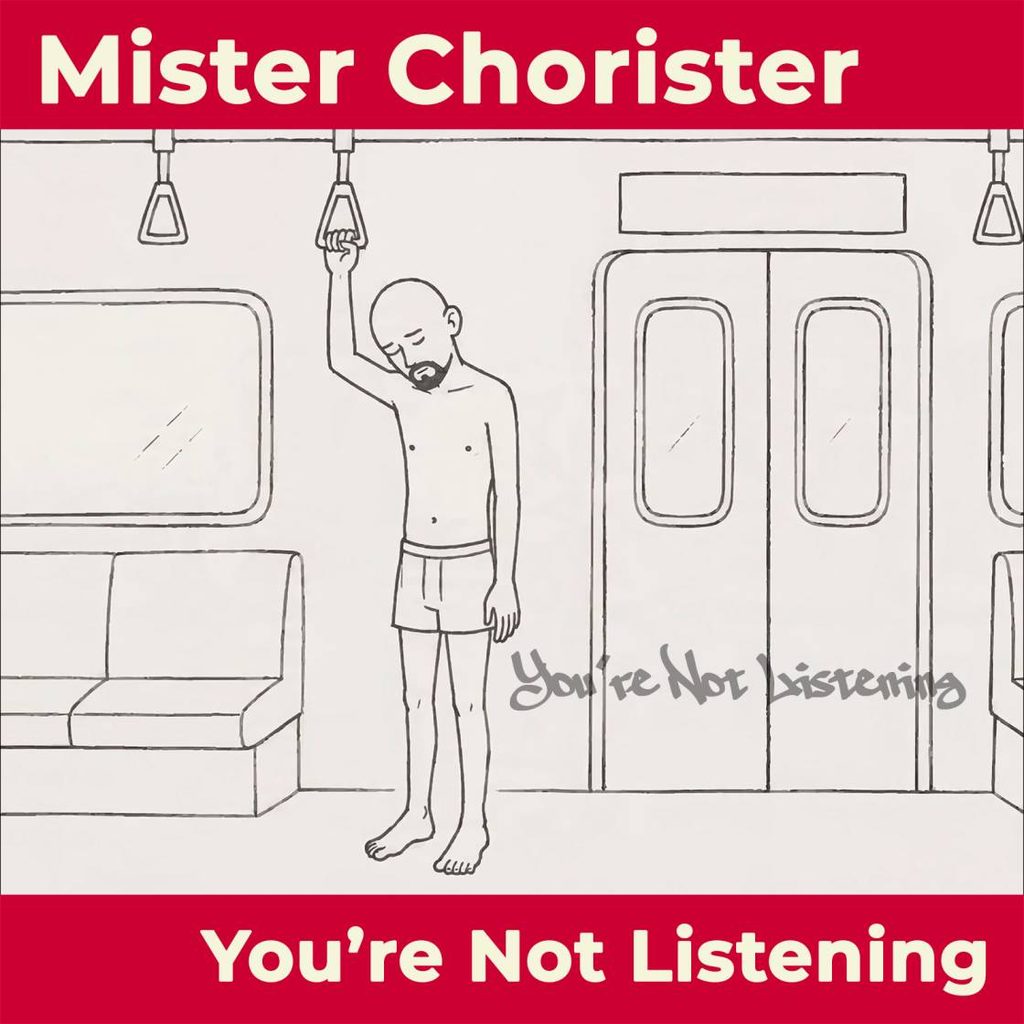
Tense and emotionally charged, the alternative rock track takes the feeling of being unheard and turns it into something much more psychologically unsettled. The song’s driving rock rhythm provides the backbone, while atmospheric production, grunge-influenced guitars and cinematic piano steadily increase the pressure. As the vocals become increasingly intense, the track seems to tighten around its central question, asking whether the voice being ignored might actually be our own.
That idea gives “You’re Not Listening” its real emotional impact and while the song began with a straightforward frustration involving a colleague, the writing process transformed that experience into an exploration of the eternal conflict with the voices inside our heads. Produced, mixed and mastered by Billy Crabbe, with drums by Chris Castellitto, the single moves through pressure, release and confrontation before collapsing into silence in an ending that feels significant, framing the idea that after all the noise, there’s finally space to hear what remains.
Drifting into focus with the twang of guitar notes, the track progresses with a contrast between pulsing bass notes, crunchy guitar tones and airy synth lines. Gliding with rhythmic vocal delivery carrying poignant lyricism, the song flows with pattering drums before jumping into a jaunty alternative rock chorus packed full of catchy hooks and energising arrangement cut with colourful instrumentation.
Shrouded in a subtly moody atmosphere, “You’re Not Listening” rolls with intricate guitar notes and flickers of piano capped by expressive vocal performance, resulting in an anthemic rock jam that’s memorable and thematically profound from start to finish. Surging with slick lead guitar flourishes and enveloping instrumental layers, the finale swells with woozy organ textures and infectious vocal lines to lave a lasting impression of the song. It’s another epic showcase of Mister Chorister’s engaging songwriting and performance flair while taking the project into darker areas.
We caught up with Mister Chorister to find out more about his musical journey so far, his new single “You’re Not Listening” and what he’s got lined up for the future. Check out our interview with Mister Chorister below.

Hey Mister Chorister, how’s things?
Things are great, thanks! It’s an incredibly busy but exciting time at the moment as we gear up for the release of the new single and the accompanying animated music video premiere. Lots of nervous energy, but mostly just pure excitement about getting this next Mister Chorister chapter out into the world.
What’s your earliest memory of making music?
It goes right back to my childhood in Australia. Someone came into school and did an aural test, and from that they selected a few of us to learn classical guitar.
I remember my first lesson because I was holding the right-handed guitar in the left-handed position. I’m left-handed, so it seemed perfectly logical to me. The teacher just looked at me and said, “What are you doing!?” I turned the guitar around with the sound hole facing me, convinced I’d at least figured out the right way to hold it. She came over, yanked it out of my hands and gave it back to me the “right” way.
It felt awkward and I struggled for a while, but we were sight-reading and, with childhood exuberance, I practised for hours at home. I must have really enjoyed it.
After about a year I jumped at the chance to move away from classical guitar and learn modern folk. I was about ten, and I remember even then preferring to make up my own songs rather than play covers. Every time we learnt a new concept, I’d base a song around it. My first song was based around a D minor chord. It was this melancholic little song called “Butterfly”. In the process I’d inadvertently discovered Dm6 and DmM7 chords as well.
That’s probably still my process in a way: start with some grounding concept and then explore what else you can do with it, finding a melody to go with the emotional energy.
Which artists do you draw most inspiration from?
I tend to lean towards artists who really understand emotional scale and atmospheric depth. I enjoy songwriters who can draw me into their world.
The anthemic, open-hearted delivery of Bruce Springsteen, The Killers and Coldplay were all references for my first two singles, “Brave” and “Spark”.
My dad listened to a lot of country music like Don McLean, Dolly Parton, Kenny Rogers, Joan Baez and John Denver. But the one that really blew me away was Paul Simon. The guitar, storytelling and melodic precision all had a huge impact on me. We’d have all of these on our mix tapes, C60s and C90s, in the car. Long drives are ritualistic in Australia.
Growing up in the 80s I developed a real admiration for the driving synth-and-guitar layers of Duran Duran and Depeche Mode, before being completely blown away by rock and metal guitars of Van Halen, Def Leppard, Poison, Joe Satriani and Metallica.
Then Nirvana, Pearl Jam and Soundgarden dominated my musical inspiration in the 90s. Eventually I found The Killers and Coldplay, who are probably my favourite bands today.
And then there’s this huge eclectic mix of everything else underneath: The Beatles, The Bee Gees, ABBA, Michael Jackson, Elton John, David Bowie, U2, Madonna, Britney Spears… And I love a good diva too: Whitney, Kylie, Enya, Cher, Mariah, Sia, Celine. So the inspiration comes from a pretty wide palette.
I’ve always said, it doesn’t matter what genre it is as long as it sounds good.
How else do you find inspiration for your music?
Sometimes I just get this pent-up feeling and need to go and make sounds on the guitar. Then I’ll hear something I like and develop it. I often wonder if it’s the universe telling me to go and create, or maybe it’s just a way of relieving stress. Then I’ll record whatever I’ve found into a voice note before going back to whatever I was doing before the “distraction”.
I’d love for that “distraction” to become my everyday reality, where the real distraction is anything away from the music… but we’re working on that!
What do you love about the London music scene?
I’ve really enjoyed going out and meeting other musicians through open mics and the gigs.
There’s something really special about the history here too. I played the Amersham Arms earlier this year and then found out that Suede had played there to a similar small audience.
There’s something quite exciting about standing on a stage where bands you admire have stood before you.
And the sheer number of festivals and artists is amazing. I went to Hanwell Hootie as well this year and saw acts I already knew alongside people operating at the same level who were completely new to me.
There’s just so much talent out there. It feels like a scene you can keep exploring.
What would you say is the perfect setting for listeners to enjoy your sound?
Apparently, according to some of the playlists I’ve ended up on, it’s the gym, late-night road trips or a trip down memory lane for listeners looking for nostalgic rock vibes!
The good news is I’m not sure that I get to dictate the setting anymore. I like the idea that music can work in very different places. Somewhere you can get lost in it, whether that’s headphones at night or driving somewhere with the music up.
For me the setting is less important than the way the music makes someone feel. So I think I’d like it to be anywhere where someone needs to feel uplifted.
How has your own style and sound evolved since you started out?
You know, there’s something about being young and mostly writing love songs. I came across this with a 19-year-old guy at an open mic last week. That was me once upon a time.
I suppose when you’re young you know those feelings really intensely, but you don’t necessarily have the depth of experience for story or perspective. That usually comes later.
For me, I’ve noticed how much the experience of travelling the world and meeting different people has brought to my writing. It feels a bit like a superpower that I’ve only just discovered. It’s still not fully refined yet, but I can feel the power that’s there. That ability is something I could only have dreamed about when I was in my late teens. But it still takes a lot of work to channel it well.
Musically, when I was younger there was definitely much more of a folk or folk-pop element. I even wrote a couple of country songs with my dad. I always found his ability to narrate a good story, whether orally or by the pen, captivating.
The first two Mister Chorister singles definitely had a Pop Rock vibe. With “You’re Not Listening”, I worked with a new producer and the sound has shifted towards Alt-Rock, though I still like to anchor that energy with pop accessibility.
I feel comfortable with the project being considered across both Alt-Pop-Rock and Alt-Rock, but I’ve started writing some Bowie-esque and Radiohead-esque material recently. So maybe Alt-Rock / Art-Rock is where the project starts heading over the next twelve months.
Who would be your dream artist to collaborate with?
In 2024, I wrote a song called “Circles” which some people have said reminds them a little of Sting. I think they mean “Shape of My Heart”.
“Circles” is about humanity going round and round, making small improvements, but never really progressing quickly enough or treating each other well enough. So I’ve had this slightly delusional dream that one day Sting might come and sing on that track when it’s recorded.
The other would be David Bowie. Although we probably shouldn’t race to collaborate on that one unless he comes back from the stars!
How did you find making your new single “You’re Not Listening”?
It was a really educational and exciting experience for me. I love learning new things.
Bringing Billy Crabbe in as producer was different because he was incredibly organised, whereas I was definitely not. I went into it with a “throw-the-kitchen-sink-at-it” approach, wanting to learn absolutely everything I could from the experience.
Billy is Berklee-trained, had recorded his own EP and had worked as a session musician in the States, so I knew I had a lot to learn from him. And I did.
The biggest thing I learnt was discipline. We experimented a lot, but I needed to learn the difference between experimentation and controlled experimentation, otherwise we’d never finish the bloody thing.
I kept adding ideas: piano, vocal variations, the intro solo, the ending after the cymbal shimmer. Eventually frustration probably did enter the fray! Though Billy always seemed very calm about things. I remember pushing to see if we could submit the master by the end of May, and it didn’t actually go in until early July, several weeks later, largely because I kept wanting more changes!
I’ve come to realise just how hard it actually is to show the world the vision of what’s in your head. Still, it was a fantastic experience, I learnt a huge amount, and importantly, I love what we’ve made together.
What message did you want to get across with this release?
Find the space to take notice of your thoughts. Is that inner voice actually trying to tell you something? We tend to put these walls up around ourselves, almost like a prison, and I think the song is saying: don’t let yourself get caged in.
Maybe that inner voice is trying to help you.
What artist have you been listening to most recently?
I’ve made loads of new music friends since I started gigging, so I’ve been listening to a lot of exciting emerging artists rather than sticking to one genre. Artists like Alex Czapla, Dave Clark, Joe G, Yen Wolves, Ruxa, Amelie Guardini, and Tiny, as well as artists I’ve discovered at festivals this year.
And anyone on the Mister Chorister playlist gets a run through too!
But my favourite song at the moment has to be Scott Helman’s “Mr. Record Label”. Not sure if it’s a take on the old Mr. Record Man but it’s got such a great narrative and groove. Every now and then I hear a song and just think, “I want to write one like that!”
What’s the main thing you want people to get out of listening to your music?
I want people to remember that they have agency. They can turn their life around at any time. I want that to be the sort of message present in songs I write.
But most of all, I want people to find the space to hear their inner voice, but then also have the courage to act on it.
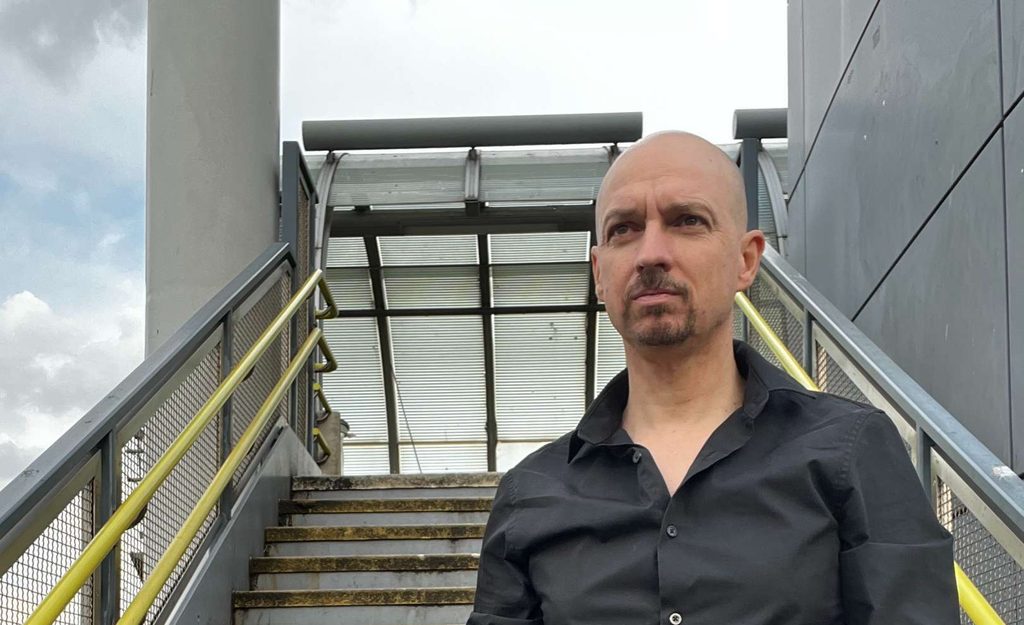
What’s been your favourite live performance so far?
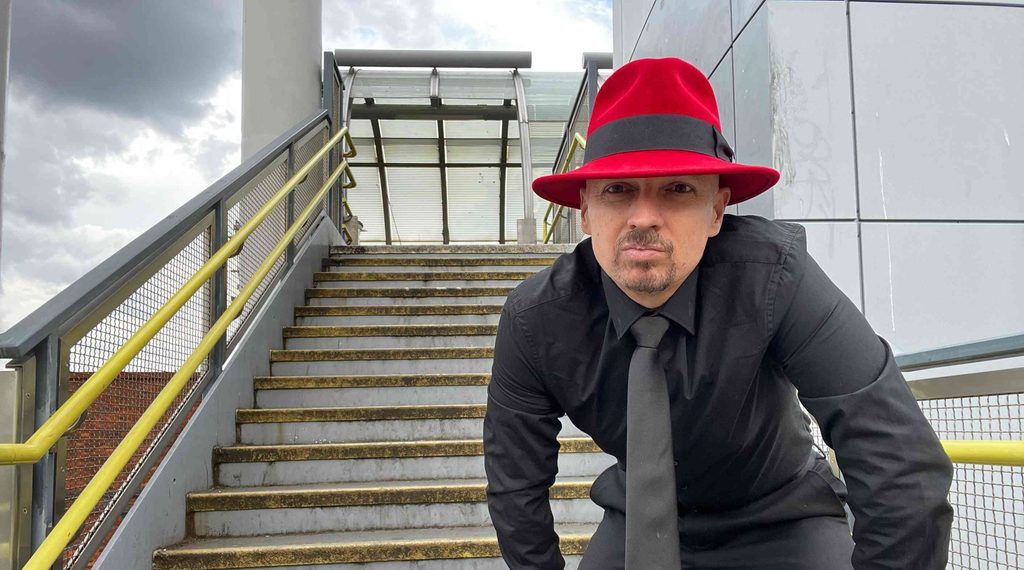
There have been a couple this year. I had a designer create Mister Chorister’s red coat and debuted it at two gigs in April. The first was at the Amersham Arms and I had such a great response. I’d made these Mister Chorister coasters and one young woman asked me to sign one. Some of the gents were also saying they loved the gig and to keep going. So those little moments really mean something.
The second was a private gig at the Strongroom in Shoreditch for a friend’s 60th birthday. That was actually more nerve-racking because you’re playing in front of people you know!
But it was a great crowd to play my original songs to and a lot of encouragement.
All good validation that there’s something here worth developing.
Who would be 3 artists to headline your dream festival? And where would it be?
I’ve always wanted to play a massive stadium, so somewhere like Wembley or a huge outdoor festival would be incredible. Glastonbury would probably be the obvious choice.
The real dream would be sharing your songs with 50,000-plus people singing back at you, or singing for you when you forget the words! It would be amazing to know that your songs had touched that many people.
Choosing three artists is almost impossible. My long list would include Elton John, The Killers, Coldplay, Pearl Jam, Metallica, Duran Duran, Sia, Britney Spears, Robbie Williams, and Adele.
But if I absolutely had to choose three… Elton John, Britney, Coldplay and Adele! … I’m counting in 4/4 timing. 🙂
Do you have any advice for a new artist wanting to follow your footsteps?
The advice I heard just before I came back to music was: find someone who knows more than you and learn from them. If you’ve got songs but don’t know what to do with them, find people who do.
I was lucky. I found a Berklee-trained guitarist and took lessons with him. Then I found a local singing school with coaches who were artists or who also taught at the BRIT School.
I didn’t actually know about all those associations before I signed up, but I did check that they’d all released music and so were working artists, and also that there were opportunities for more than just lessons, e.g. group singing and songwriting.
Since then I’ve joined a few musician-focused communities too.
So I’m constantly reassessing where I am and asking myself: who can I find next who knows a little more than I do?
Finally, what do you have lined up next?
Genuinely, the most exciting thing is the development of the narrative around the Mister Chorister project. It’s the combination of visuals and songs informing each other.
I hadn’t realised what a huge impact that was going to have when I first found Davide. He instantly identified the crux of Mister Chorister in that debut single, “Brave”.
I’m really excited to keep working with him.
We’re developing the narrative song by song, reviewing the body of work in both directions as we go. Originally, the artist concept and music informed the visuals but now the visuals are starting to inform how we think about the music.
That whole process is becoming just as exciting to me as producing the songs themselves.
Listen to You’re Not Listening below
More from Interviews
INTERVIEW: TATE SEDAR drops “Take It All Back”
Born in San Francisco, raised in London and now based in Los Angeles, TATE SEDAR has spent much of his …
INTERVIEW: Cinematic conceptual album from INYO
Coming out of Los Angeles, newcomer INYO is an artist whose musical vision is informed by a desire to explore …
INTERVIEW: Brand new single from Thomas Azier
Dutch singer, composer and producer Thomas Azier has spent the last twelve years making an impression in the European music …