



















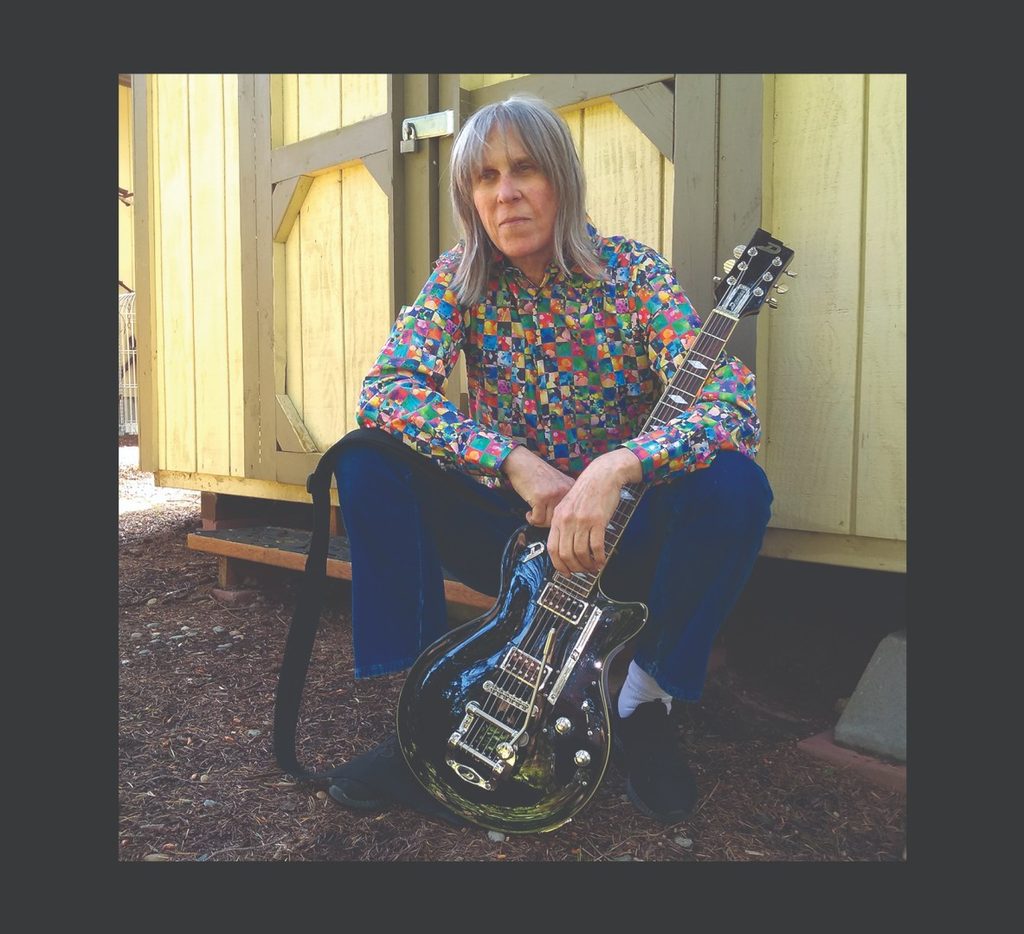
Rusty Reid has always followed his own creative compass and across a musical journey stretching between Houston, Los Angeles and Seattle, the songwriter has developed an independent creative identity built around thoughtful songwriting, melodic appeal and genuine musical talent. Based in Americana but drawing from rock n’ roll energy, his work balances philosophical reflection with an accessibility that allows an idea to land just as naturally as a melody.
Since releasing his debut album NWXSW back in 2001, Rusty has continued to explore different sides of his musical personality. Albums, singles and remixes have all become part of a catalogue informed by the belief that songwriting should communicate as much as it expresses and his music gives ideas and emotion equal emphasis, creating a recognisable voice even as his musical direction continues to shift.
His adventurous creative spirit was particularly clear on last year’s double album, The Unreasonables, which saw him revisiting the classic rock sounds that first inspired him more than four decades ago, while stripping away unnecessary distractions and returning to the simple excitement of making music. The songwriting remained recognisably Rusty but there was also something more fundamental at play, distilling the pleasure of rediscovering why he picked up a guitar in the first place.
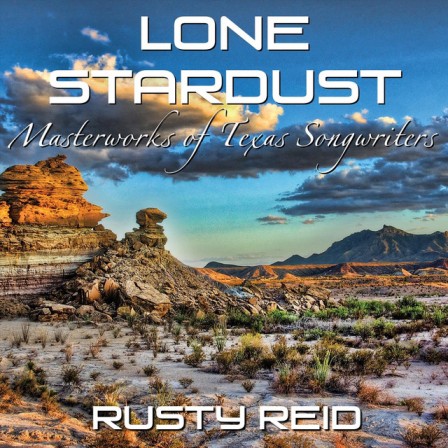
His latest project takes that context somewhere entirely different and by not filling his fifth album, Lone Stardust (Masterworks of Texas Songwriters), with original compositions, Rusty has turned his attention towards the extraordinary songwriting heritage of Texas. The record brings together familiar names including Buddy Holly, Roy Orbison, Johnny Nash, Jimmy Webb, J.D. Souther, Townes Van Zandt, Shake Russell and Kacey Musgraves, alongside songs connected with the swagger of ZZ Top.
Among them is Johnny Nash’s “I Can See Clearly Now,” the Houston songwriter’s beloved 1972 hit and Rusty approaches the song with obvious affection but also with a clear understanding of what makes the original work. For him, it’s almost the perfect pop song, an original melody, memorable lyrics, a distinctive arrangement, playful instrumentation and an upbeat message with more depth beneath its surface.
That admiration has shaped the cover itself, with Rusty listening to numerous versions before deciding that attempts to make the song edgy, rock-oriented, folk-driven, slower or more elaborate often removed something essential from it: its “honest, authentic joy.” He wanted to preserve the spirit and fun of Johnny Nash’s arrangement while finding a way to make the track his own and to help achieve that balance, Rusty asked Nashville musician Jed Demlow to create something close to the original arrangement. The resulting interpretation gives Rusty a framework that respects the source without turning the cover into a simple recreation.
The differences arise through Rusty’s own performance; his vocal treatment keeps things mellow and engaging, carrying the instantly familiar melodies and lyrics with a charming delivery as the intricate groove of the drums and blend of guitars and brass instrumentation combines to form a delightful listening experience. It’s a superb showcase of Rusty Reid’s performance flair as well as his ability to pay respectful tribute to classic music while reframing it in his own compelling way.
Lone Stardust may represent an unexpected turn, but it feels connected to everything that came before and from his independent songwriting journey to The Unreasonables’ return to the joy of classic rock, Rusty Reid has consistently followed his artistic path wherever it may lead. We caught up with Rusty Reid to find out more about his musical journey so far, his cover of “I Can See Clearly Now” and what he’s got lined up for the future. Check out our interview with Rusty Reid below.

Which artists and songwriters have had the biggest influence on the way you approach songwriting?
Hi Plastic Mag. Good to be with you again. Well, Paul McCartney, John Lennon and George Harrison certainly pop right up. But also important for me were Hank Williams, Buddy Holly and Roger Miller. Hank and Buddy were long gone by the time I was thinking about writing songs, but their music still permeated our culture out in West Texas. One of Roger’s songs was the first I learned on guitar. All of them relied on simplicity, and that seemed to beckon to me: you can do this. Later I would have many other songwriters I greatly admired and learned from, but these six were the ones who put the idea in my head that I could be a songwriter.
How has your sound developed throughout your career?
Ha. I’m not sure I’ve ever had a “signature sound.” At first it was just a garage sound. Then I tried going solo acoustic. Then another clueless band, and then another not quite but almost as clueless, then back to solo acoustic. It was only when I was able to bring in better players that we were able to expand the soundscapes closer to what I was hearing in my head. I also relied on such players to help fashion the soundscape, which took us into way different places than I would have come up with on my own. The Beatles and Paul Simon imprinted upon me that staying in one style or “sound” is boring, so I’ve tried to emulate that approach. It would be nice to have their resources and time to pursue such angles.
What attracts you to reinterpreting songs by other great songwriters rather than focusing exclusively on your own compositions?
I’ve only released two cover songs previously, and had never imagined doing an all-covers album. So this one came out of the blue. But once the idea had been hatched, I really enjoyed being the interpreter not creator. It’s liberating in a sense. i was able to inhabit these songs in a different way than my own. It reminded me in a strange way of my acting days where you are given lines to say, but must perform them authentically. It was a challenge, but also a labor of love.
Your new release comes from ‘Lone Stardust.’ What inspired the idea behind the album?
My buddy Steven Beasley, whom I’ve worked with since Houston, and then he and I moved, separately, out to L.A. around the same time, came up to my place to learn how to use a computer recording program. We did a couple of test projects using songs from songwriters back in Houston. Those came out well. After Steve went back home. I got to thinking that since I already have two “Texas songwriter” songs, why not do a whole album of them? And so it came to pass.
What qualities do you look for when deciding whether a song deserves a place on Lone Stardust?
I was looking for heart and soul, plus an original melody, lyrics that mean something, a novel theme, and soundscape flexibility. Those are the essential qualities of any great song, if you ask me. Of course, I had to be able to sing them with conviction. Most of these are songs I’ve enjoyed for a long time, with a few more recent wondrous discoveries.
Why did Johnny Nash’s “I Can See Clearly Now” feel like an essential addition to the album?
It’s a song I’ve loved since I first heard it in 1972. I think it’s about the perfect pop song. So it was an early addition to the prospective album, that by then had a sub-title: “Masterworks of Texas Songwriters.” I think most people would agree this one certainly qualifies.
What do you remember about your own first encounters with “I Can See Clearly Now”?
It came on the car radio, and I remember the Deejay saying something like, “Here’s ‘I Can See Clearly Now’ by Houston’s own Johnny Nash…” I had never heard of him, so my ears perked up. Who’s this guy? And then the song starts, and I was just floored.
You listened to numerous covers before recording your version. What were you looking for in those interpretations?
Actually, no, I didn’t listen to any other versions of this song until after the album was out. Nor for most of the songs on the album. I had heard Jimmy Cliff’s version, but no others. I think I only listened to other versions of “Galveston,” “True Love Ways” and “Pancho and Lefty” prior to committing to my versions. Only later did I listen to some other versions of “I Can See Clearly Now.” That confirmed what I had anticipated at changing the arrangement too much. Sure enough, to my ear the versions that veered away from Johnny’s original arrangement seemed to lose some of the ebullience/relief and soul of the original. I was also surprised to discover that very few of them accepted the challenge of Johnny’s one-minute long, multi-note hold at the end of the bridge. I figured everyone would want to try that, but nope; even Jimmy takes a breath before the end. Early on I had decided to hew pretty closely to the original, and just stamp it with my vocal and guitar playing to differentiate.
Why was it important to you to remain relatively faithful to Johnny Nash’s original arrangement?
I stayed fairly true to the original arrangements of about half the songs on the album. Generally, I would make a decision whether that arrangement was key to the texture, tone and popularity of the song, or whether it was in some ways falling short of that ideal. “I Can See Clearly Now” was definitely one of the former. With the songs that I deviated from the original version, it was generally because I felt that arrangement had not fully risen to the challenge of matching the melody and lyrics and thematic potential. That was the case with Buddy Holly’s “True Love Ways.” I feel that Buddy’s version is too saccharine, and while Mickey Gilley’s hit version was cool; it was piano based. I wanted mine to be stripped down guitar and vocal to really focus on that beautiful melody.
What was the conversation like when you brought Nashville producer Jed Demlow onto the project?
Yeah, Jed’s a magician. Not much of a convo. He’s worked on several of my songs, including my cover version of “Shelter” by Lone Justice. So I knew I could rely on him to somewhat recreate Johnny’s arrangement but leave holes for our little tweaks. He did much the same on this album for “Only the Lonely,” as well. When he sent it back, it was perfect. All I had to do was sing it and add acoustic and electric guitars.
How did hearing his version of the arrangement affect the way you approached your vocal performance?
Well, not a lot. I intended to sing it pretty much note-for-note like Johnny, with just a few subtle adds here and there. My phrasing on the outro is somewhat different, though riding the same vibe. But Jed set the table there, for sure. The electric guitar, on the third verse and outro especially, lends another differentiating element.
What does your vocal approach reveal about you as a singer compared with Johnny Nash’s and Jimmy Cliff’s interpretations?
I’m not in their class as soul singers, so in a competition, I lose. But from a different personality aspect, I can bring a unique but still honest vocal to a song that begs to be sung by just about everyone. Some reviewers have noted that the lyrics ring different coming from an older voice as compared to the youth of Johnny and Jimmy. I hadn’t thought of that, but OK if anyone wants to hear it that way.
Do you think songs built around genuine joy can sometimes be more difficult to perform than darker or more emotionally complicated songs?
Probably so. It’s easy for upbeat songs to be perceived as naive or silly. Gravitas requires gravity, so if it’s too light a song or poem or painting, any kind of art, can feel quasi-superficial. “I Can See Clearly Now” deftly avoids that by referring to the obstacles, dark clouds, pain and “bad feelings,” some kind of trouble that the singer has been embroiled within. His joy is born of turmoil. So even though it’s a bouncy tune, it’s got this underpinning of struggle that makes the “sunshiny day” seem both happiness and relief. That’s what you can dig into as a singer.
How does “I Can See Clearly Now” fit alongside the other songs on Lone Stardust and your wider celebration of Texas songwriting?
The album is about half and half songs that are pretty well known, and those which are decidedly not. It starts with two rather obscure songs… and then comes “I Can See Clearly Now.” Bam! “Now we’re talking,” I can imagine some listeners thinking with relief to find their comfort zone. Most people prefer the familiar. But these first three songs establish what the album contains: all very high quality songs, all of them different, a roller-coaster ride of emotions, and a wide tapestry of songscapes and a lot of surprises along the journey. And all of them from Texas songwriters… except one. Can you guess who? I give my creative justification for that inclusion on my website, RustyReid.com.
Finally, what do you have lined up next?
I have the next album just about finished recording. It’s back to originals. Again, it will be jam-packed like all my albums are, basically double-albums. Some very weighty themes coming up. Hope to have it out next year.
Listen to I Can See Clearly Now below
More from Interviews
INTERVIEW: TATE SEDAR drops “Take It All Back”
Born in San Francisco, raised in London and now based in Los Angeles, TATE SEDAR has spent much of his …
INTERVIEW: Cinematic conceptual album from INYO
Coming out of Los Angeles, newcomer INYO is an artist whose musical vision is informed by a desire to explore …
INTERVIEW: Brand new single from Thomas Azier
Dutch singer, composer and producer Thomas Azier has spent the last twelve years making an impression in the European music …