






















New York-based composer and recording artist Vidura Barrios has spent two decades exploring the overlap between music, meditation and inner awareness. As the founder of Inner Splendor Media, an independent music company established in 2006, Vidura has developed a body of work based in contemplative practice, Sanskrit sacred music and the spiritual traditions of India, resulting in music that provides a setting for meditation, relaxation, yoga and moments of stillness.
A longtime practitioner of meditation and student of the ancient yogic tradition of India, Vidura has walked a musical path paved by the transformative potential of sound. Across numerous recordings released since 2006, he’s developed an international audience who appreciate music designed to help slow down, unwind and reconnect. His work moves through meditation music, mantra chanting, nature sounds and relaxing soundscapes, creating an output that places contemplation and inner experience at its centre.
Last August saw the arrival of Chant!, a seven-track album devoted to Sanskrit mantra, sacred sound and meditation. Composed by Vidura and released through the Inner Splendor Media imprint, the release brings together original chants, percussion, voices and intricate instrumentation. Untethered to any one particular mood, Chant! moves between bright devotional chanting and deeply meditative instrumental passages, allowing rhythm and stillness to occupy different points within the same musical sphere.
The contrast is crucial to the album; some pieces are driven by drums, percussion, voices and rhythmic repetition, bringing an energetic quality to the act of devotional singing. Others pull back into spacious instrumental environments, creating room for reflection and inward focus. Every piece uses original instrumentation and vocal performances, giving the individual tracks their own character while maintaining a devotional atmosphere throughout.
Commenting on the release, Vidura shares, “Chanting has always fascinated me because it makes me feel alive, and it is a way of sharing that aliveness with others. There is the beauty of the melody and rhythm, but there is also something that happens through repetition. Chanting calms and focuses the mind and purifies the atmosphere. It is said that the mantras were initially experienced by the great sages in meditation. Mantra is the sound form of the Self, the spiritual essence that pervades everything.”
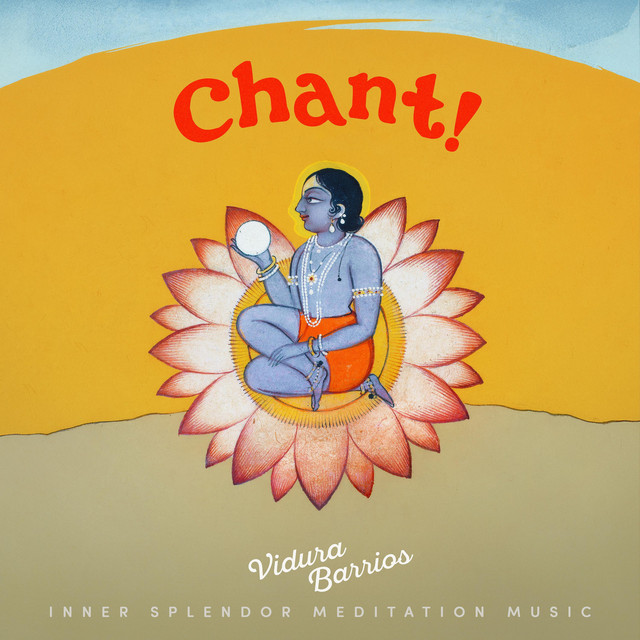
Opening track “Krishna Invocation” explores the quieter side of Sanskrit sacred music and through repetition and voice, it creates an atmosphere centred on stillness and inner peace. Brought in by choral vocal chants, the piece glides with soothing melodies to cast a mesmeric musical experience that’s transportive and calming. “Govinda Gopala Madana Mohana” draws from kirtan, the tradition of devotional chanting in which sacred names and mantras are sung rhythmically, often through repetition and accompanied by percussion. Here, the energy shifts as pattering rhythmic elements and the bright twang of instrumentation offers an engaging arrangement while airy backing vocalisations swirl around Vidura’s alluring leads.
“Rama Raghava” continues Vidura’s exploration of the kirtan tradition, offering another trance-inducing musical offering that flows with soft rhythmic sway and layers of hypnotic vocals, taking listeners on an engrossing musical voyage. The expansive “Hare Rama Hare Krishna Kirtan” follows with a subtly eerie aesthetic of pulsing percussion and twanging sitar tones as Vidura’s expressive voice hovers above to stitch repeating lines into the immersive musical fabric.
“Hare Rama Hare Krishna” offers another eleven-minute outing that presents another take on the previous piece, this time slowing the tempo reframe the composition in a more soporific and spellbinding soundscape. With “Krishna Bija Mantra,” Vidura leans back into a vocal-focused sound with the loop of chanted lines gliding above the stretch of delicate instrumental textures, crafting a concise and intriguing musical moment.
Closing the album with “108 Names of Shri Vishnu,” Vidura brings the release full circle with another piece of Sanskrit sacred music where tender vocals float on a bed of sonic atmospheric, creating a superb conclusion to Vidura Barrios’ album. Ultimately, Chant! is an exploration of sound as a means of slowing down and through voices, percussion, mantra and spacious instrumentation, Vidura Barrios creates music that moves between the joyful and the meditative, finding a shared space where devotion, contemplation and inner peace can gently coalesce.
We caught up with Vidura Barrios to find out more about his musical journey so far, his album Chant! and what he’s got lined up for the future. Check out our interview with Vidura Barrios below.

What’s your earliest memory of making music?
My mom had us take piano lessons from a very young age, mostly classical music. We were brought up in a competitive household, so I remember practicing for hours because I wanted to be better than the neighbor kid. He was older and would know all these flashy Chopin pieces.
Which artists do you draw most inspiration from?
Related to what we do, I love Uma Mohan. She sings in Sanskrit, mostly original compositions of traditional Hindu texts and devotional songs. She became an inspiration because she brings something new to the traditional music while keeping the purity of the Sanskrit language.
How else do you find inspiration for your music?
The best ideas come when you just take a moment to pause and do nothing. Maybe spend some time with nature. In this hectic world of constant connections and devices, people are losing the value of doing nothing. It is in those moments of quiet, in the moment of pause, when inspiration comes.
What do you love about the New York music scene?
I love how you can find anything and everything in New York. The biggest challenge for me is finding time. When I find a new artist, I often check their tour dates and mark the dates in my calendar. And if the planets align, I’ll go closer to the date. I prefer smaller venues and concerts these days. I refuse to pay money to scalpers and resellers for big artists. The whole scene has become a scam with overpriced concert tickets.
What would you say is the perfect setting for listeners to enjoy your sound?
Our music is mainly designed to meditate with. Yoga teachers often play our music during Shavasana or class. In the yogic tradition, it is said that the mantras purify the environment and the mind, so some people just play the music quietly in the background on loop.
How has your own style and sound evolved since you started out?
The style has stayed surprisingly consistent. I never tried to compare myself to anyone else when starting. I simply thought, what would I like to have as background music for meditation myself? At the time when we started the company 20 years ago, there was not a lot of quality meditation music that I loved, especially mantra-related. There have been refinements over time, of course, but the sound overall has stayed consistent.
How did you find making your new album ‘Chant!’?
It was a really fun process! I would compose a melody, and that same day we would start recording. I love the vocalists who lent their voices to the project: Kento, Lakshmi Marfil, and Anjali, all close people to me who also love chanting.
What message did you want to get across with this release?
I have always loved chanting. Chanting mantras makes me feel free and expanded. It is such a joy. It is an ancient tradition. The power of sound has always fascinated me. Sound has the power to move and uplift, to expand, to inspire. I hope people feel some of these things when listening to Chant!
What artist have you been listening to most recently?
I recently discovered the music of Niina Soleil. She is an indie folk and pop artist with a sprinkle of jazz. She has a beautiful, smooth, and cinematic sound.
What’s the main thing you want people to get out of listening to your music?
The practice of meditation has been so pivotal in my life. If most people meditated for 5 or 10 minutes a day, the world would be a very different place. Mantras and sound vibration are some of the portals that facilitate meditation. So if some people connect with themselves, if they find a moment of quiet and peace, that thought makes me so happy.
What’s been your favourite live performance so far?
I have to narrow it down to three: 1. Kodo, amazing taiko drummers from Japan. 2. Madonna’s Confessions Tour. 3. Danny Elfman—he conducted and sang the full soundtrack of The Nightmare Before Christmas, and Catherine O’Hara sang “Sally’s Song.” Epic.
Do you have any advice for a new artist wanting to follow in your footsteps?
My main advice for any artist would be to be consistent. Keep creating, keep sharing your work. And most importantly, learn the business side. Take financial literacy courses. Take basic entrepreneurship and business courses. Knowing the business is paramount for success. These days, to be seen, you need to know how to market your music.
Finally, what do you have lined up next?
A fun part of our little business is that we also produce holiday music. So we are rolling out some original Halloween songs and Christmas songs. We have done mainly cover songs in the past, so I am excited to have some original holiday content for the first time.
Listen to Chant! below
More from Albums

New full-length record from Divergent
While some musical ambitions take a little longer to find their moment, the journey for Iowa-based trio Divergent has been …
New album from Ashot Danielyan
Based in Moscow, pianist, composer and improviser Ashot Danielyan has spent more than a decade developing a musical output that …

Bryan Howell returns with new studio album
Originally hailing from central New York and now based in Nashville, Bryan Howell has spent more than a decade developing …