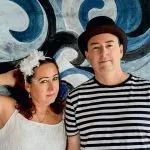





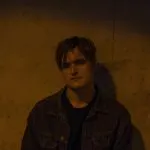







Hungarian-born artist, DJ and producer Ferenc Kondász has spent much of his life moving between different cultural environments, each leaving its mark on his relationship with electronic music. Now based in Tuscany in Italy, he operates under the name Ferkó Ferrari Molto, exploring the overlap between driving techno, experimental electronics and intriguing melodic expression. Eschewing any particular genre or stylistic label, he sees production as an ongoing process of discovery, combining physical rhythms with distortion, noise and unexpected melodic turns.
Through his independent label, Tonomoltono, he continues to develop a sound that balances dancefloor intensity with a more exploratory creative vision. His musical vision has been influenced by contrasting experiences, from Hungary during the years of rave culture to twelve years spent living in Rotterdam. Instilled in his productions is a strong sense of movement but the rhythmic energy is only the beginning; distorted textures and unique sounds introduce friction while melodic elements bring emotional tone to music that might otherwise remain focused purely on physical impact.
The Ferkó Ferrari Molto project has begun to forge its identity through a sequence of singles, with “Tubes” marking the debut last month before the follow-up release “Coastguard.” His latest outing, “Genova,” continues that progression while offering a particularly stark example of how external environments can become part of his musical language. Inspired by his personal impressions of the Italian port city, the track translates the atmosphere of a specific place into a dark, driving piece of cinematic techno filtered through the project’s experimental lens.

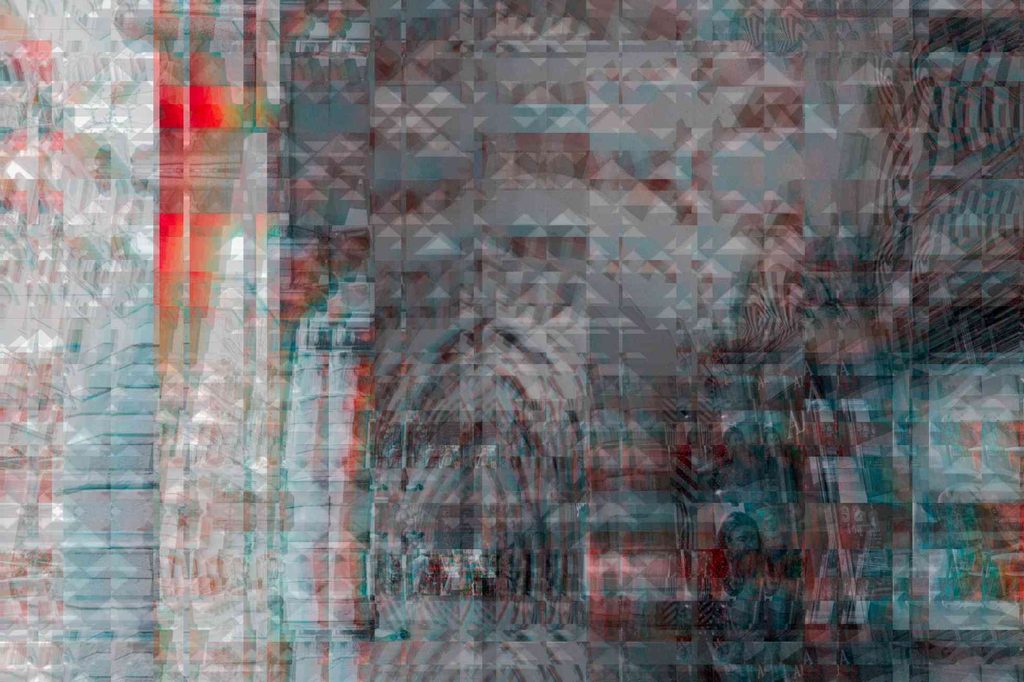
The inspiration for the track came from the contrasting elements that define Ferenc’s experience of Genoa, where the swarms of scooters, the striking divide between the historic centre and the industrial harbour and the sense of constant activity playing out against centuries of history all contributing to the composition. By not viewing the city through a conventional musical portrait, he began developing the track while experimenting with photographs he’s taken there and those images became a starting point for translating visual impressions into sound, allowing the composition to arise through a process of exploration.
That method is reflected in the track’s balance of propulsion and atmosphere, with a solid, forward-driving bass energy giving “Genova” its physical momentum, forming a persistent groove that drives the arrangement throughout. Above it, emotionally charged melodies introduce a more expressive dimension, while distortion adds a rough-edged character to the production. Brought in by the rattle of zappy synth elements and tapped percussive shots, the track rolls into a grooving dance-focused scene where pulsing bass textures contrast the buzz of the instrumentation above.
Flowing with the shimmer of stabbed synth tones and colourful timbres, offset by the punch of the beat and subtly moody aesthetic, the track casts an immersive atmosphere that’s at once mesmeric and energising, putting Ferkó Ferrari Molto’s creativity and production panache on full display. It’s a superb showcase of his fiercely original musical output, offering a hypnotic dancefloor moment that’s stacked with groove yet dashed with intricate detail throughout.
With “Genova,” Ferkó Ferrari Molto turns an encounter with a complex, constantly moving city into a piece of electronic music that feels equally engaging and exploratory. As he continues to make an impression with his sonic offering and the wider Tonomoltono label project, Ferkó Ferrari Molto firmly plants his name on the map of must watch electronic producers on the rise.
We caught up with Ferkó Ferrari Molto to find out more about his musical journey so far, his new single “Genova” and what he’s got lined up for the future. Check out our interview with Ferkó Ferrari Molto below.
What’s your earliest memory of making music?
I went to music school from the age of six for four years, although I can’t say much of it stuck at the time. Around twelve or thirteen, I was already getting involved with music at school parties, though the main DJ spot was taken! A friend and I also made our own mixes on a cheap double-deck cassette player, fooling around with all kinds of sounds. We had a lot of fun. After a break, I started DJing and producing electronic music in my early twenties, first with Buzz and later Reason. Music remained part of my life, with some pauses along the way. About ten years ago I began studying theory more seriously and picked up the guitar. Later I started learning bass guitar, because I wanted to understand groove more deeply. It brings rhythm, harmony and texture together in one instrument.
Which artists do you draw most inspiration from?
Many of my favourite musicians aren’t electronic artists. The first record I really went crazy for was Eric Burdon and The Animals. It belonged to my stepfather, who probably had to replace it after I played it so many times. Tom Waits is very important to me; his music really connects with me. I love Jack White, especially The White Stripes period, for its raw energy. Fela Kuti is one of my heroes. He could build momentum so slowly that the vocals might not arrive until five minutes in. I’ve always loved long compositions that draw you into a trance.
I’m also fascinated by Steve Reich and Arvo Pärt. After the complexity of serialism, they found very different ways to make contemporary music. Reich’s use of pulse and gradual change interests me, while Pärt can create something extraordinarily complete with little more than simple triads. That economy of means is remarkable.
In electronic music, Underworld are among my favourites, alongside Richie Hawtin and music released by the Optimo Music label. These days I play plenty of indie dance in my DJ sets; it’s fun and works very well on the dancefloor.
How else do you find inspiration for your music?
Usually by starting to work. I sketch ideas, experiment with sounds and search for connections between them. Sometimes I deliberately stir up a bit of chaos and then work backwards, taking things away. It’s a bit like starting with a large block of marble and gradually carving away the excess until the form hidden inside begins to emerge. Other people’s music can inspire me too. I might hear a track and be drawn to its atmosphere, a contrast or a particular musical idea. Then I’ll try to understand it and interpret it in my own way.
What do you love about your local music scene?
I live in Monzone, a small village in western Tuscany, in the municipality of Fivizzano. The music here tends to be more traditional. For DJ sets, I usually travel to places such as Hungary, Germany and, recently, Switzerland. I don’t mind the local musical culture at all. I’ve become less strict about what music should be, especially for other people. If people enjoy themselves and the music makes them feel good, that’s a good thing.
What would you say is the perfect setting for listeners to enjoy your sound?
I’m working on music that really shines on the dancefloor, where you can feel its physical energy in your body. That adds another dimension. But I’m also trying to find a balance: if someone hears a track on phone speakers, I still want the musical idea to come through and remain enjoyable. The dancefloor should add something, not be the only way the track works.
How has your own style and sound evolved since you started out?
I can make much more explicit decisions now. In the past I often got stuck because I was holding on to elements I liked, even when they weren’t helping the composition. Now I’m more comfortable removing them without feeling sorry about it. Studying music and practising instruments have helped, but so has simply spending time making tracks. I’m still learning.
Who would be your dream artist to collaborate with?
Jamie Jones or Guts. I have great respect for both, especially their creativity and groove-centred music. They approach it differently, which makes each possibility interesting. I’m sure I could learn a lot from either of them.
How did you find making your new single “Genova”?
It was interesting because I was working in parallel on a photograph I’d taken in Genoa, and that really shaped the vibe and atmosphere of the track. It’s not usual for me to take such a direct, explicit approach to melody, but this piece seemed to be asking for it, so I let it grow in that direction. That was probably the biggest difference from how I usually work.
What message did you want to get across with this release?
I wanted to recreate something of my experience of Genoa: the swarms of scooters, the historic centre so close to the industrial harbour, the movement and all those layers of history. But the pieces came together naturally. At a certain point, it almost felt as though the track had started making itself.
Can you tell us about the Tonomoltono label you’re also developing?
Tonomoltono is an independent record label I’m building in Tuscany. It’s still taking shape. I want it to be a home for electronic dance music as well as experimental and ambient work, without committing to a single genre or sound. Initially I’m releasing my own music and developing the label, with the possibility of working with other artists later. It’s also connected to my wider practice in visual art and my ongoing research into rhythm, generative composition and experimental creative systems. I’d like those activities to have room to develop and sometimes influence each other.
What artist have you been listening to most recently?
I’m currently doing rhythm studies and exploring approaches to generative music. That has taken me back to a lot of early techno. Richie Hawtin is one of the artists I’ve been revisiting, alongside listening references such as Robert Hood, Donato Dozzy and Rrose. I’m listening particularly for how repetition, variation and rhythmic structures develop.
What’s the main thing you want people to get out of listening to your music?
I’d like people to sink into it. In many of my tracks I use noise and distortion to create a vibe that gradually grows on you. I like music that doesn’t necessarily reveal everything at once.
What’s been your favourite live performance so far?
If we’re talking about a performance I’ve seen, probably Femi Kuti at Sziget Festival in Hungary. Experiencing that music live was just another dimension.
Do you have any advice for a new artist wanting to follow in your footsteps?
I’m not sure my footsteps are necessarily the ones to follow. Time will tell! But I’d say that as long as you have good intentions and keep your music honest, things will fall into place sooner or later. Don’t reject constructive criticism, but I think the timing really matters. When an idea is still forming, outside opinions can pull it in a different direction before you’ve had the chance to discover what it might become. Sometimes you need to let it develop first, and then be open to criticism. You know your own inner voice, and if it wants to come to the surface, do what you feel is necessary to make that happen. Be honest with yourself.
Finally, what do you have lined up next?
At the moment Tonomoltono is forming, so there’s plenty of work around the music: finishing the website and getting the releases out there. I also have three more tracks ready for release. One began with a kind of Rotterdam gabber vibe but went off in unexpected directions. It’s a fun track. Another came out of an experiment with a 303. There’s more music on the way while I keep building the label.
Listen to Genova below
More from Interviews
INTERVIEW: TATE SEDAR drops “Take It All Back”
Born in San Francisco, raised in London and now based in Los Angeles, TATE SEDAR has spent much of his …
INTERVIEW: Cinematic conceptual album from INYO
Coming out of Los Angeles, newcomer INYO is an artist whose musical vision is informed by a desire to explore …
INTERVIEW: Brand new single from Thomas Azier
Dutch singer, composer and producer Thomas Azier has spent the last twelve years making an impression in the European music …