





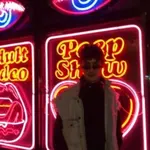









Based in Singapore, Australian composer, producer and multi-instrumentalist Dan Webb has spent close to two decades developing a musical output that eschews sticking in one place for long. Across a catalogue shaped by jazz, rock and electronic experimentation, his work has continually taken on new shapes, moving from progressive keyboard-driven rock into experimental post punk, electro jazz and increasingly adventurous fusion.
Each release has offered a new perspective on what instrumental music can become, with curiosity providing the connecting thread throughout. Albums such as Sandstorm, Oedipus The King and Exotic Erotic Concoction document the different stages of that exploration, while his more recent Sunshine/Dialogue brought critical recognition and a nomination for Self-Producing Artist of the Year at the 2024 Music Producers & Engineers’ Guild of Australia Awards.
Dan has maintained a thoroughly independent process throughout, taking responsibility for the composition and production of his work and allowing creative flair to take precedence over commercial expectations. His relocation from Melbourne to Singapore, however, has opened up an especially exciting new chapter by providing the starting point for Lion Dance, his fifth studio album and most ambitious project thus far.
A psychedelic jazz rock fusion record featuring musicians whose credits include work with Prince, David Bowie, Radiohead, Thundercat and The Rolling Stones, it brings together an expansive cast of collaborators within a concept shaped by Dan’s experiences of Southeast Asia. Penned in the aftermath of his relocation, the record absorbs the philosophies, rituals and cultural textures he encountered while travelling through the region, transforming a period of considerable personal change into an intricate musical journey.
The title came from an unexpected moment in Da Nang, Vietnam when, while walking through the city, Dan encountered a lion dance performance that brought around 200 people together on a street corner. Motorbikes stopped, the surrounding activity briefly gave way and an entire community gathered around the spectacle and the experience stayed with him, becoming the visual and spiritual inspiration for the album.

His exploration of Eastern philosophy expanded during a visit to Singapore’s Haw Par Villa, an open-air theme park filled with scenes from Chinese mythology, including the Ten Courts of Hell. The imagery introduced Dan to different perspectives on death and what might follow it, providing a setting for thinking about transition, renewal and the cyclical nature of existence. Those ideas became increasingly personal during the album’s final production period, when the loss of three family members in quick succession brought an unexpected emotional gravity to its central themes.
Opening track “Soup on the Bridge of Oblivion” takes its name from the mythological broth believed to erase memories before reincarnation, kicking off the album with a bright blend of rustling drums and twanging instrumental layers, forming a grooving slice of psych rock that’s colourful and transportive in equal measure. The playful, jazz-inflected scene of “Things Rise and Fall,” featuring Logan Kane and the the hypnotic, atmospheric soundscape of “The Self Watches Their Return,” which features Nicole McCabe continue the philosophical thread, drawing consecutive portions of a line from Laozi’s Tao Te Ching into a meditation on accepting life’s constant movement.
“KC Spider” captures the nervous energy of arriving somewhere new, borrowing its name from the Singlish expression kan cheong spider, captured in a lively setting of jittery percussion and bright lead guitar. “Thai Basil” celebrates the experience of settling into new surroundings via a smooth jam where buzzy bass synth lines, shuffling drums and intricate keys flow with woozy synth leads to craft a breezy outing that swells with fluttering brass tones. The album’s lead single, “Hungry Ghosts,” features Clive Deamer, Dennis Hamm and Bob Lanzetti, taking inspiration from Singapore’s annual Buddhist festival centred on wandering spirits and the space between worlds.
The second half shifts towards the opportunities of life, chance and play, with “4D” referencing both another dimension and Singapore’s four-digit lottery, while “Lemongrass” brings together Michael Bland, Tim Lefebvre, Dennis Hamm and Nate Werth for a funky, jazz-driven composition surrounded by psychedelic synths. “Dragon Playground,” featuring Logan Kane, offers a shorter, playful burst of funk inspired by the playgrounds found across Singapore’s housing estates.
“TR 24,” assembled during a flight back to Melbourne, reconstructs material from elsewhere on the album through reversal and distortion, before closing track “Hoi An” captures the beauty of arriving somewhere entirely new with a delicate combination of airy instrumental notes, sweeping textures and the mellow bounce of pattering percussion. From start to finish, Lion Dance sees Dan Webb bring together musical exploration, cultural discovery and personal transformation in a work that reflects the courage required to embrace the unknown and we can’t wait to see what this next chapter brings.
Listen to Lion Dance below
More from Albums
Beatdenker drops brand new studio album
Berlin-based musician Jo Wespel has spent close to two decades exploring the world of rhythm, developing a musical output that …
Upcoming album from Eliza Hull
Australian songwriter, musician and advocate Eliza Hull creates music that explores identity, relationships, disability and desire, finding emotional context in …
Brand new album from Anti Atlas
Anti Atlas is the long-running creative partnership between composer and multi-instrumentalist Ned Bigham and producer Chris Hufford, two musicians whose …