













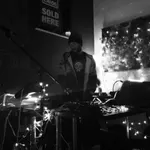


Romanian artist Remus Rujinschi has recently unveiled his debut remix, “Tears In The Club – No Tears Mix”, and it’s quickly becoming a crowd favourite racking up over 600,000 plays online. The song, a rework of his debut single “Tears In The Club” opens with a Euro pop style vocal melody that gradually transforms into a trap beat, demonstrating Rujinschi’s versatility as an artist.
With a career spanning more than three decades and performances across various genres, including EDM, jazz, rock and classical music, Rujinschi has honed his skills as a composer, producer and musician. However, it’s his latest project under his own name that has garnered significant attention, thanks to his unique approach to pop music that combines dreamy electronic soundscapes with an authentic EDM feel.
“Tears In The Club – No Tears Mix” is a perfect example of Rujinschi’s pop-oriented sound, as the lyrics and atmosphere of the song reflect on the hope and risk that comes with achieving self-realisation and walking tall in our personal galaxy path.
The fusion of electronic dance, funk and pop music creates a dreamy and ethereal soundscape that carries the listener along on an emotional journey. The infectious beat, combined with the vocals, captures the essence of what makes “Tears In The Club – No Tears Mix” such a standout track.
The track is a masterclass in how to build momentum throughout a song, with each element expertly layered to create a mesmerising and unforgettable experience. The fusion of different musical elements creates a sense of unpredictability that keeps the listener engaged and intrigued throughout the song’s duration.
Rujinschi’s debut remix is a testament to his talent as a musician and producer, with his unique approach to pop music setting him apart from other artists in the genre. “Tears In The Club – No Tears Mix” is a fantastic introduction to his work, with its infectious beat and dreamy electronic soundscapes sure to capture the hearts and minds of music lovers everywhere.
We caught up with Remus to find out more about his inspirations, his new track “Tears In The Club – No Tears Mix” and what he’s got lined up for the future. Check out our interview with Remus Rujinschi below.
Hey Remus, how’s things?
Hello. It is a pleasure to meet you, things are going well, Thank you! I have received some new requests for songs that I should write. What about you?
How did you first get into making your own music?
My life has always included music, therefore. I was exposed to a variety of musical genres when I was growing up, from a very early stage, learning professionally to play piano and I enjoyed listening to various musicians and songs.
As I grew older, I began to experiment in making my own music, and it soon turned into a passion of mine. I got started by taking music lessons before starting to compose my own songs. My inspiration came from a variety of life circumstances, and I discovered that using music to communicate my emotions was really relieving. As my confidence in my skills grew, I began playing my songs for other people.
Now, creating my own music is a vital component of who I am as a musician. It enables me to communicate meaningfully with others and express myself artistically.
Which artist first made a lasting impression on you?
Chick Corea has been a major inspiration to me because of the way he has influenced my previous musical approach as a pianist, composer and keyboardist.
As a composer, keyboardist, because he set an example for me in terms of creativity, innovation and dedication to the craft, especially in his band Ekectecta, and dedication to the craft, especially in his Elektric Band.
Chick Corea Elektric Band was a jazz fusion band, led by Chick Corea and founded in 1986 in New York, nominated twice for Grammy Awards.
Which artists do you draw most inspiration from today?
I draw inspiration from many different places, and I’m always developing as an artist. Illenium’s raw emotion performances, Oliver’s production, KSHMR’s percussion section, Avaion’s experimental soundscapes, and Chainsmoker’s black music-inspired songs are a few musicians who have recently had a big impact on me.
Black music, Avaion, and Chainsmoker’s music all share a common musical foundation that can be sharply contrasted in a variety of ways, such as melodic lines that are ruthlessly live interpreted and reharmonised when combined with contemporary production components.
How else do you find inspiration for your music?
My interests include learning and gaining knowledge from Splice and other more expensive courses, other producers’ approaches to remixing, SKIO and the competitions of well-known labels and catalogues, as well as the working processes and daw sessions of today’s top producers and music writing communities, as well as A.I. Spotify query results and trends.
What do you love about your local music scene?
I would like to express expressing my appreciation for the diversity and creativity that exists within the community and local music scene, the support that exists among local musicians as well as the opportunities for collaboration and networking including venues and festivals that showcase local talent provide opportunities for musicians to perform and connect with audiences I would like to highlight the initiative to follow the entire local music scene and support in Media.
What would you say is the perfect setting for listeners to enjoy your sound?
I am aware that nothing can match the thrill of attending a live performance.
In a live music situation, where the energy and emotion of the performance can be felt in a way that cannot be recreated anywhere, audiences may best enjoy the sound.
The acoustically perfect setting for my sound are those created especially for live music.
Thinking about the music I play: The ideal environment for your music can vary depending on the genre I perform in. For example, a room full of people may be better suited for beat-based songs
than a large audience for a cinematic or rock-based atmosphere.
Technology has made it possible for listeners to enjoy music in a variety of settings, from streaming services to home HiFi players and translation to different listening environments.
For instance, I prefer to use streaming in my car, in US,m via Peloton or theirs sport services, in US on hospitality and family entertainment businesses like restaurants, bars, bowling centres, roller-skating rinks, trampoline parks and family entertainment centres, on terraces and airports, my listeners can hear my songs in HQ 24 bit using expensive high-end or Hifi equipment or via CD format listening on
mediaplayers and similar sounding equipment through my website.
You’ve been performing for over three decades, how do you feel live music has changed during that time?
One of the most significant changes in the live music experience over the past three decades has been the technological advances that have allowed musicians to reconstruct and simulate live music and to adjust and trigger sequences including processing with effects, live post-processing, from no trigger to midi trigger, from instrument pedals to loop pedals and midi, the performers are more linked to a microphone than to an audience, the audience is linked to the hardware, musical time is reflected by a shared clock, voice can trigger instruments, a track can coordinate effects, reality can be simulated everyone uses resampled information is accessible and heavily used through a dj’s approach and techniques as well as how it impacted the live music experience for the audience.
The live music experience for artists and audiences. The way of playing changes from year to year, major genres appear more often, preferences for new harmonic lines, sounds and equipment
are now accessible all over the world.
On the other hand, the atmosphere of live music performances, whether in intimate clubs or in huge arenas, has been changed.
As well as the stage control equipment and lighting.
Musical styles have evolved over the past three decades, impacting the live music experience, from genre history to the radically evolving sub-genres that change every year.
Smartphones and social media have impacted the live music experience, as it is now possible to expand live audiences, recreate live shows, or connect with different musicians around the world.
or recreate live performances, or connect with different musicians around the world.
Audience behavior and engagement has changed, with the number of artists increasing in proportion to equipment or computer ownership.
The number of artists has increased in proportion to the ownership of equipment or computers, so today, this market continues to grow.
From my personal experience, the experience is the same only for classical music, the information boom has changed the access to music information.
Access to music information and know-how.
How has your own style and sound evolved since you started out?
I began performing live in the 1980s using Roland and Korg keyboards. In the 1990s, I began remixing well-known songs in a house underground style and presenting them through clubs and festivals.
At the end of the decade, I made my first contacts with major record labels, which led to a more commercial approach for the artists I had been supporting—preferably trance.
I have also played rock and later neo-soul live, and I even composed a jazz record. Starting in 2004, I also worked as a producer and began taking professional mixing classes.
My employment as a movie soundtrack composer came to an end in 2007, and the Great Recession, a global economic collapse, demolished me in 2008.
Two years later, I began using ghost production to assist other music producers in achieving their objectives, and ever since, the electronic sound of Great Britain has served as my main source of inspiration.
How did you find making your new version of your single “Tears In The Club”?
I have just started this project which seems to be mostly a chain of never ending requirements and resources and no music.
So at a stepping point in this project I needed also a music track in order to start, and next time I will contribute more.
It is an opening song and probably not so conclusive for the persons who expect to hear something else. I want to thank all the people involved in it and I did everything I could so the work would not be in vain, the remake is heartfelt, sonically complex and multidimensional.
I have decided to remove some things which I have considered as unappropriate for hearing in the original song, for me, and I have applied mixing workflow learned from a recent training.
and I have reprocessed the track using hardware. “No tears mix” has been mastered at Metropolis in London and I’m not particulary lucky but this time had the exceptionally chance that this track to be postprocessed by Andy ‘Hippy’ Baldwin.
What message did you want to get across with this release?
The harmony was intentionally opened up for live additions and the response theme was moved to percussion samples for more space, although the voice sounds commercial, or the song is underground and experimental, the message is about how we can walk in our own galaxy with the sense of hope and risk that comes with self-realisation.
What artist have you been listening to most recently?
Most recently I have been listening Nicholas Daniel Miller, professionally known as Illenium, his most recent being his first self titled album, Illenium, released few days ago in April 2023.
What I actually listen and and enjoy listening can be found in my essential Vibes Spotify official playlist.
What’s the main thing you want people to get out of listening to your music?
I hope that my music will evoke certain emotions in my audience, whether it’s happiness, inspiration or nostalgia.
The themes or messages in my music and how people identify with them.
Since the process is complex and personal I tried to remake the first song, a remake that was heartfelt, sonically complex and multidimensional, it’s not an average work.
If the quality sounds as you can hear it, you should know that the songs were post-processed without compromises by Andy ‘Hippy’ Baldwin at Metropolis in London who has worked with many artists including The Who, Blur, The Orb, Coldplay, Oasis and many others and the second version was done by Grammy-winning mastering engineer Chris Gehringer at Sterling Sound who has featured with many artists including Drake, Lizzo, 50 Cent, Cardi B, Chromeo, Dua Lipa, Lady Gaga, Rihanna, Harry Styles, Lana Del Rey, David Guetta, Tove Lo, Halsey, Bebe Rexha.
Why tears in the club?
The song has been rated as a pop song that leans towards this specific sub genre, but retains a subtle,
distorted and ethereal style. It is a song that expresses the the explosive beat on the dance floor.
I believe that we can trust the potential of the post-trap rhythms adopted by the newer generations but more explosive
in a true positive ethereal style.
What’s been your favourite live show so far?
Most likely out of sentimentality, my fondest live performances took place in the Warehouse events in the 1990s, at the dawn of electronic music in my nation.
Who would be 3 artists to headline your dream festival? And where would it be?
3 artists to headline your dream festival, this year would be Skrillex Fred Again and Illenium.
Where? Primavera in Barcelona.
Do you have any advice for a new artist wanting to follow your footsteps?
My advice to new artists would be to stay authentic as an artist, keep moving forward despite rejection or failure, and don’t give up on your dreams.
Take advantage of social media and networking opportunities to connect with others in the industry and grow your fan base, act purposefully, always share your work with others, train professionally and in the new business model, seek out professionals who can guide you keep creating, be persistent in creating and do it professionally.
Finally, what do you have lined up for the rest of 2023?
The starting line is already crossed, alignment started last year and is scheduled by next summer,
so far there are no delays, most topics are contractual in nature to avoid private collaborations and have priorities of financial alignment and delivery in a direct proportional way.
Listen to Tears In The Club – No Tears Mix below
More from Interviews
INTERVIEW: TATE SEDAR drops “Take It All Back”
Born in San Francisco, raised in London and now based in Los Angeles, TATE SEDAR has spent much of his …
INTERVIEW: Cinematic conceptual album from INYO
Coming out of Los Angeles, newcomer INYO is an artist whose musical vision is informed by a desire to explore …
INTERVIEW: Brand new single from Thomas Azier
Dutch singer, composer and producer Thomas Azier has spent the last twelve years making an impression in the European music …