








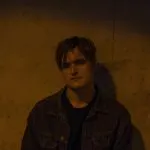













AUTORHYTHM‘s debut album, Songs for the Nervous System, is a superb sonic demonstration of artist Joakim Forsgren’s resilience and creativity in the face of adversity. Diagnosed with Parkinson’s disease, Forsgren embarked on a musical journey that explores the intersection of analogue music technology and the human experience.
The album opens with “Clairvoyance,” a track that immediately captivates with its buzzing tones and subtly danceable rhythm. AUTORHYTHM’s ability to blend experimental synth elements with engaging beats is evident from the start. As the album progresses, “Doom Variations” showcasing a bass-heavy sound and a snapping beat that pulsates with energy. The track is a testament to Forsgren’s mastery of crafting head-nodding beats and complex rhythms using his analogue vintage gear.
“Intercellular Communication,” the lead single, highlights the dynamic mix of driving rhythms and meditative soundscapes that define AUTORHYTHM’s sound. The track serves as a sonic journey, with its intricate layers and textures drawing listeners deeper into its hypnotic atmosphere. It exemplifies Forsgren’s ability to create contemporary electronic music that is surprisingly human and emotionally resonant.
Throughout Songs for the Nervous System, AUTORHYTHM avoids conventional sounds and solutions, instead embracing a creative approach fuelled by imagination and necessity. Forsgren’s vision for the album was born out of the question of what his electronic devices and machines would play if he were unable to play them himself. This exploration leads to a unique and genreless amalgamation of music, life and conceptual art.
There is an effortless quality to the music that belies its experimental nature. The compositions flow with a naturalness that suggests they could not have been created in any other way. While not a retro project, AUTORHYTHM’s music evokes a sense of nostalgia for an era when electronic music was still uncharted territory, and artists like Brian Eno were pushing boundaries and defying conventions.
With its six carefully crafted tracks, Songs for the Nervous System takes listeners on a superb journey through experimental synth music. From the opening moments of “Clairvoyance” to the machine-infused synth tapestry of the closing song, “Substantia Nigra,” AUTORHYTHM proves to be a fearless explorer of avant-garde electronic music. The album reveals the latest iteration of Joakim Forsgren’s artistic vision, showcasing his remarkable skills and his ability to create music which is simultaneously innovative, captivating and emotionally resonant.
We caught up with Joakim Forsgren to find out more about his musical journey, his debut album Songs for the Nervous System and what he’s got lined up for the future. Check out our interview with AUTORHYTHM below.
Hey AUTORHYTHM, how’s things?
In the north of Sweden, where my grandparents come from the reply would be ’jovars’ or ’huvudet upp, fötterna ner’. Google translate fails on the first one but the second translates as ’head up, feet down.’
How did you first get into making your own music?
I knew I wanted to play the bass, so I got one and learned how to play it when I was a teenager. I bough a 4-track cassette recorder and began making music from whatever I had laying around in the basement, like a hair trimmer through an envelope pedal. I quickly realised I was only good at making my own music, not so good at playing other peoples music.
Which artist first made a lasting impression on you?
Michael B. Tretow ’Professorn: Den makalösa manicken’. A highly frustrating but sonically interesting kids song where a professor explain the function of a perpetuum mobile.
Which artists do you draw most inspiration from today?
CeDell Davis and Mort Garson
How else do you find inspiration for your music?
I make music to escape the obstacles of everyday life. It is very rewarding to just focus on the sound.
What do you love about the Stockholm music scene?
Social democracy has brought many good things like public music education but more importantly, there’s been a lot of unused bomb shelters and other cheap spaces that’s been functioning as rehearsal rooms for bands. Now, with the right wing government, the fear of war and the increased focus on short term economic gain, the foundation for the Swedish music scene is under threat.
How have you found transitioning to electronic music from your previous endeavours in punk bands?
It’s easier to only have to deal with my own ego.
Do you feel that the punk energy and attitude translates into your sound today?
Yes, I’ve never been into doing the correct or expected in terms of music. I love to highlight and make use of flaws and musical imperfections.
What would you say is the perfect setting for listeners to enjoy your sound?
I just organised a three day listening installation, where the audience could come and listen to the music from great speakers in a designated space. They had to ring a door bell, were guided into the room and listened to the album in darkness. That worked really well. Almost everyone bought the album afterwards and three persons said they would also buy a record player in order to play it. A child thought his ears would fall off initially but enjoyed the experience when he realised they still sticked to his head. These days almost no one listens fully focused to an album from the beginning to the end, but I encourage you to try. It can have unexpected effects on your nervous system.
How did you find making your debut record ‘Songs for the Nervous System’?
I’ve worked on this album for the last five years. Initially it was an intuitive search for sounds and rhythms that I could get immersed in. Eventually I connected to music to my own life on a more conscious level and now it is finally ready to connect to other peoples minds.
What message did you want to get across with this release?
CeDell Davis says ’use your imagination, that’s what makes a great musician.’
How has being diagnosed with Parkinson’s disease influenced your artistic vision?
I started experimenting with how analog music technology could replace myself in improvised composing, under my supervision. I’ve also studied how sound at certain frequencies can affect bodily functions down to the cellular level.
What artist have you been listening to most recently?
ESG. They made some great stuff together with Joy Division producer Martin Hannett. I’m also really intrigued by this odd electronic track by Paul McCartney called ’Boogie Wobble’.
What’s the main thing you want people to get out of listening to your music?
If they can experience any of the pleasures I had while recording it, that would make me happy.
What’s been your favourite live show so far?
I don’t do live shows at the moment but together with my performance group Den magiska fyra we played a wedding once and an airport fountain. Some of the members later put out a great album as Tonband that has maybe 20 streams on Spotify.
Who would be 3 artists to headline your dream festival? And where would it be?
Nina Simone, Jeff Buckley and Ornette Coleman. In my breast pocket.
Do you have any advice for a new artist wanting to follow your footsteps?
Use your limits to your favour.
Finally, what do you have lined up for the rest of 2023?
I’m looking into sound for medical use, namely focused ultra sound.
Listen to Songs for the Nervous System below
More from Interviews

INTERVIEW: TATE SEDAR drops “Take It All Back”
Born in San Francisco, raised in London and now based in Los Angeles, TATE SEDAR has spent much of his …

INTERVIEW: Cinematic conceptual album from INYO
Coming out of Los Angeles, newcomer INYO is an artist whose musical vision is informed by a desire to explore …
INTERVIEW: Brand new single from Thomas Azier
Dutch singer, composer and producer Thomas Azier has spent the last twelve years making an impression in the European music …