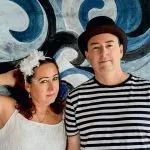












Nestled in the sun-soaked enclave of Huntington Beach resides a musical virtuoso, Brian Kassan, the mastermind behind Bloomfield Machine. This multi-instrumentalist, classically trained in a myriad of musical realms, has embarked on an avant-garde electronic journey with his latest creation, Left to Our Own Devices. This 16-track odyssey is nothing short of a sonic marvel, a true showcase of Kassan’s diverse musical prowess.
Kassan’s musical lineage is impressive. He’s not only a classically trained keyboardist, but he’s also lent his talents as a bassist, guitarist, lyricist and songwriter to various projects over the years. Notably, he was a co-songwriter and the original bassist for the band Wondermints, where he had the privilege of performing alongside legends like Brian Wilson of The Beach Boys and Clem Burke of Blondie. His songwriting chops even found their way into the HBO movie Mixed Signals with the inclusion of “Time.”
In his home studio, Kassan transforms into Bloomfield Machine, a moniker under which he’s released a series of instrumental albums. With Left to Our Own Devices, he presents an experimental electronic opus that stretches the boundaries of sound and composition. The album unfolds like a sonic tapestry, each track a thread carefully woven into the fabric of the whole. “Reality Collapse” beckons us into this electronic realm with warm synth pads, delicate bass tones, and intricate machine-like bleeps. It’s a gentle, ethereal soundscape that sets the stage for the sonic journey ahead.
“The Imperative” guides us through a trip hop-inspired soundscape, complete with a subtly snapping beat and sinuous synth melodies that evolve in intensity as the track progresses. “Looking for Leverage” infuses the album with an infectious groove, layering programmed guitar tones and organ textures to create a richly textured musical experience. “Inventing Hope” invites us into an immersive auditory dimension, where glitching percussive elements and velvety synth tones meld to craft a vivid sonic landscape. “Soul Crusher” introduces a moodier atmosphere with its bold beat and a symphony of synth textures, resulting in an electrifying composition.
The grand finale, “Levels of Infinity,” commences with euphoric dream-like synths before a crashing beat ushers in a resounding shift. It’s a dynamic composition that captures the essence of the record; bold, inventive and a fitting conclusion to this superb journey. With Left to Our Own Devices, Bloomfield Machine showcases not only his instrumental mastery but also his ability to craft a cohesive and emotionally resonant electronic album. This album is a journey through a carefully crafted electronic landscape, delivering a true masterpiece of avant-garde electronic music.
We caught up with Bloomfield Machine to find out more about his inspirations, his new album Left to Our Own Devices and what he’s got lined up for the future. Check out our interview with Bloomfield Machine below.
Hey Bloomfield Machine, how’s things?
I must say, I’m getting a lot of great feedback on this new album. It seems to have touched an emotional nerve for many people. I’m hearing the sound of it reflects the times we live in.
What’s your earliest memory of making music?
I started piano at 7 and guitar around 15, but I really didn’t start writing until my late 20’s. I joined two guys known as the “Wondermints” and was blown away by their songs/recordings. It inspired me to start writing at a higher level. And I did!
Which artists do you draw most inspiration from today?
I still draw inspiration from classic rock like Elton John, Queen, Steely Dan, Yes and Beatles, but also punk rock, new wave, synth pop, power pop. Electronic artists that really caught my ear besides the folks like New Order, Gary Human, Ultravox and Depeche mode, My Bloody Valentine, Ride—its was Casino vs Japan, Boards of Canada, Tobacco, Tycho, Flying Lotus, Dilla and newer groovier sounds that were important to the music I’m making today as Bloomfield Machine.
How else do you find inspiration for your music?
I love art, film, design. I liken the process of designing sound like painting. The vast array of amazing software allows me to experiment to find new sounds, textures and moods. It’s a very “happy accidental” process. Although I love to look at newer hardware type gear videos, I mostly work on the computer. I do like vintage sounds that I mangle with distortion and other effects. It’s like the “beautiful noise” of a great melody from My Bloody Valentine’s masterwork “Loveless”. I tend to create and leave noise/artifacts in the tracks to keep myself interested.
What do you love about the Los Angeles music scene?
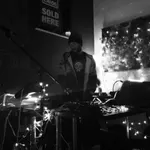
I’m not really in the “scene” these days. I did a few shows with a drummer where I played everything else, but there is no real scene for Bloomfield Machine I’m afraid.
What would you say is the perfect setting for listeners to enjoy your sound?
Good question. I think a first couple listens could be with headphones to hear all the weirdness and density! It’s a whole trip that goes by very fast since the tracks are so short. Otherwise, there is certainly an “ambient” vibe where you can be cleaning your house, or relaxing, having it in the background. There are many melodic hooks that might prevent a real “ambient” experience, but that is just part of what I do.
How has your own style and sound evolved since you started out?
I wrote clever powerpop/indie rock for many years before starting Bloomfield Machine in 2017. Bloomfield is really a confluence of all my influences thrown into a stew. With each album, I’ve definitely come upon a style that I feel is unique in instrumental/electronic music with a foot in the past and a foot in the future. I’m trying not to repeat myself, although I suspect there is a strong through line to all of it. I’m reading Rick Rubin’s new book: The creative act: a way of being. It’s giving me great ideas to explore some new ways of working. I do think evolution is important for me and hopefully the listeners. I like when my favorite artists take chances. It often results in the most remarkable work.
Has your production process changed over the years too?
For sure. I made records with bands in the days of 24-track and 16-track tape. Now, with unlimited time and tools of the computer age, the sky is the limit. It took me a long time to jump into recording on the computer, but it made total sense for me because I can play keys, bass, guitar and chop up loops or do “finger drumming” on the keys. So it literally opened up a floodgate of creativity for me. I’m always working on tracks. Sometimes I wake up on a Saturday morning with an idea and have a finished and mastered track by the days end. Pretty crazy.
How did you find making your new album ‘Left to Our Own Devices’?
I’m so blessed to be able to come up with ideas all the time. I’m almost superstitious talking about it when some fellow musicians get the “writers block”. The process is mysterious—melodies come when I’m no where near an instrument. Watching a Netflix series with a Casio keyboard on my lap—not paying full attention to either—seems to yield continued results! So this album just flowed. I listen back and wonder where these ideas come from. I don’t remember how I put them together—like I was dreaming. All I know is, I’m happy people seem to really be enjoying it.
What message did you want to get across with this release?
There isn’t any overt message—although the title and artwork seem to say something about technology. Maybe how it has evolved so fast, but we are still struggling with our lizard brains and freedom of choice.
What artist have you been listening to most recently?
I’m not proud to admit that I don’t listen to albums the way I used to years ago. I listen to Pandora stations or Spotify Playlists. I’ve discovered many great artists every day. A couple that come to mind are Spunkshine, Ulrich Schnauss, Sounds from the Ground, AM Boy… so much great music out there.
What’s the main thing you want people to get out of listening to your music?
Something new and original sounding. Discovering new things upon each listen. Something to relate to which enhances their state of being for that moment…
Listen to Left to Our Own Devices below
More from Interviews
INTERVIEW: TATE SEDAR drops “Take It All Back”
Born in San Francisco, raised in London and now based in Los Angeles, TATE SEDAR has spent much of his …
INTERVIEW: Cinematic conceptual album from INYO
Coming out of Los Angeles, newcomer INYO is an artist whose musical vision is informed by a desire to explore …
INTERVIEW: Brand new single from Thomas Azier
Dutch singer, composer and producer Thomas Azier has spent the last twelve years making an impression in the European music …