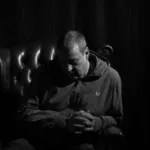







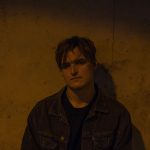











From Israel to Berlin, Fleanger has walked out a unique path through the modern electronic world over the past seven years as a producer and composer who’s become one of the genre’s most intriguing voices. He’s an artist who transforms reflective thoughts into rhythm and moments of melancholy into engaging sonic motion. His name, a creative riff on the classic ‘flanger’ effect, hints at his sound; textured, fluid and transportive, with the added ‘e’ nodding to his lifelong bond with electronic music.
Fleanger’s story begins far from the clubs and festivals where his music now rings out, growing up feeling disconnected from those around him, he turned to creativity as a means of expression, first through drawing and graffiti before discovering his truest medium, the piano. That discovery became the emotional fuel of his artistic expression, formed in the place where solitude met sound and as his output developed, so did his vision, resulting in a style that pairs emotional intimacy and exquisite production.
His influences range as widely as his sound, with classical figures like Vivaldi, Mozart, Beethoven and Schubert informing his sense of melody and structure, while the atmospheric storytelling of Pink Floyd and the electronic innovation of Depeche Mode shape his modern aesthetic. Since debuting in 2018 with “Leave Me Alone,” Fleanger has delivered a steady flow of singles, collaborations and EPs, leading up to his debut full-length record So Am I in 2020.
Each release has expanded his sonic identity and along the way, he’s also founded his own imprint, Tiefe Resonanz Records, a home for like-minded artists dedicated to musical mood and the emotional context of sound. Now, at the end of another prolific year, Fleanger brings us one of his latest releases with Behind the Smile, a two-track EP that distills his philosophy into pure form.

Released on his own label, the record explores the fragile border between restraint and release, offering two interconnected yet contrasting journeys. The first track, “Midnight Between Montmartre & Mitte” wades into the nocturnal, delivering a hypnotic progressive journey inspired by the cities of Paris and Berlin. The track drifts into focus with the delicate plinks of piano notes and stretching atmosphere as whispered vocal samples float above, conjuring the sense of moving through a city half-asleep, half-awake.
Its cinematic flow captures both motion and memory via a love letter to the twin creative worlds that continue to shape Fleanger’s sound, wrapped up in a soundscape that develops with the steady build up of pulsing beats, flickering piano flourishes and euphoric dance music vibes. On the flip side, the title track, “Behind the Smile,” is a minimalist deep house composition revolving around warm piano motifs, airy textures and a smooth groove that seems to breathe with life. It’s the sound of quiet reflection, tracing the emotional space where deep thought becomes its own rhythm.
Set up by the muted punch of kick and soft rattle of synth, the track gradually rolls with slick forward motion and mesmeric lead instrumental flashes, casting an uplifting electronic music experience packed full of energising rhythm and memorable melodic moments. Ultimately, Behind the Smile isn’t designed to dazzle with excess nor shake with relentless energy, it’s a work of intricate emotional construction, offering music that connects through feeling, built on silence as much as sound and in Fleanger’s hands, electronic music becomes something thoroughly human again.
Listen to Behind the Smile below
More from EPs

Il Coltello releases debut EP
In Michael Hellquist's artistic vision, the creative worlds of food and music have always been intrinsically linked. Based in Gothenburg …

Debut solo EP from Nick Carver
Hailing from the coastal town of Inverloch in Victoria, Australia, Nick Carver is a songwriter, multi-instrumentalist and sonic experimenter whose …

Why Another drops ‘The Color Is Off’ EP
New York-based alternative rock outfit Why Another have built their shared musical vision around the questions that tend to surface …